

Annual Science Potpourri sparks kids’ interest in sciences
Story and photos by Jonathan Wasilewski
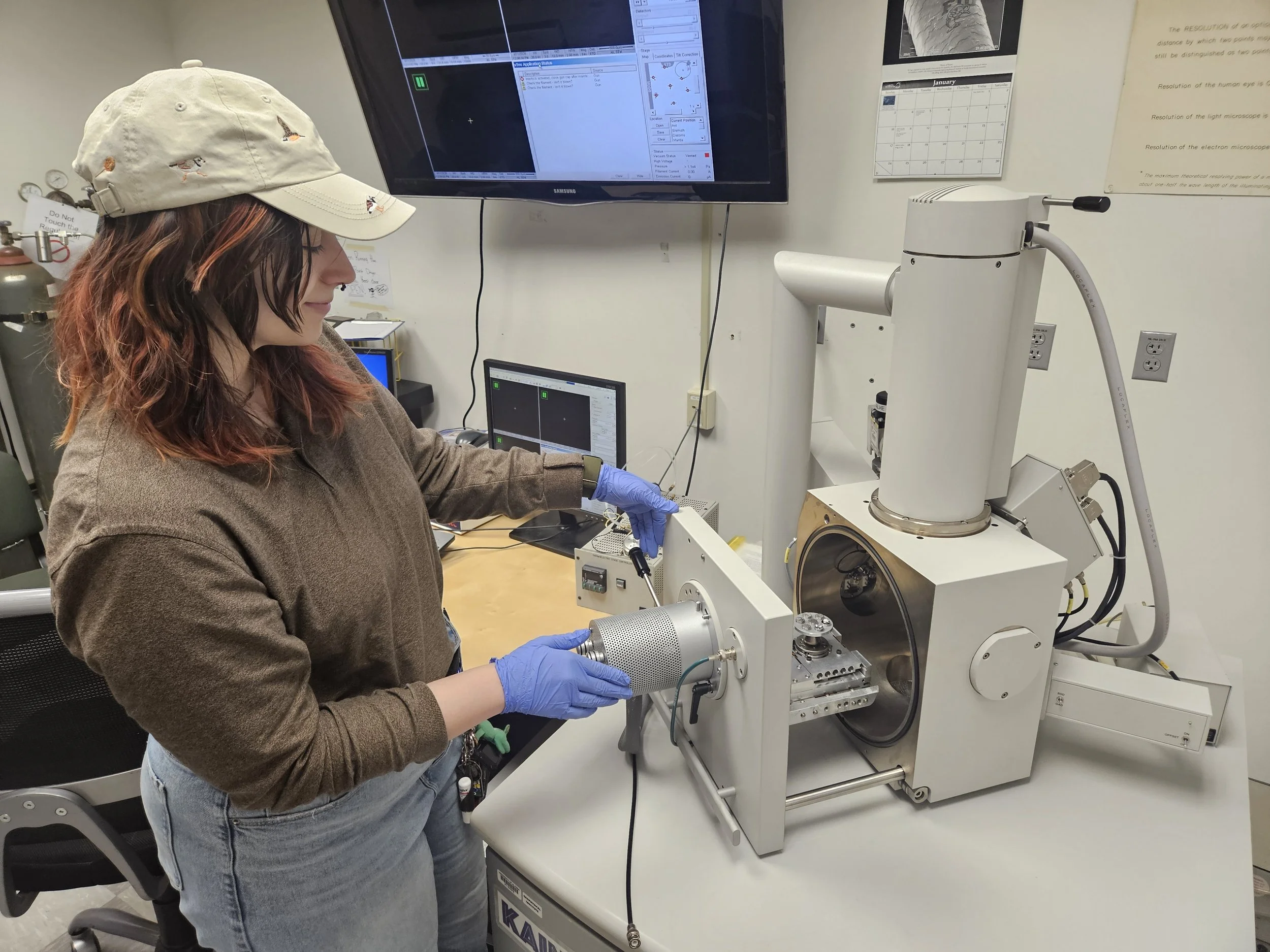
Freshman Ky Nash opens the SEM to reveal the specimens inside it at the Science Potpourri April 11.
The University of Alaska Fairbanks held its annual Science Potpourri Saturday to the delight of the children in attendance. Laughter and “oohs” and “awws” were heard many times as the event held demonstrations with explosions, microscopes, museum curation, and other items to get children interested in science. Director Alex Boyle, who is the lab manager for UAF’s Department of Chemistry and Biochemistry, said sparking a scientific interest in children was the goal of the event.
“You don’t know whether or not you like chemistry until you start seeing it in front of you,” Boyle explained. “We have all kinds of different stuff here.”
The event was created in the 1980s by Marlys Schneider, a store clerk and lab manager for the same UAF department. Boyle said Schneider was inspired to start an event that had outreach and shared science with the community; the event has lasted from its inception in the ‘80s to today, although it was canceled for a few years due to Covid. The event has taken place at the Reichardt building on UAF’s campus since 1994.
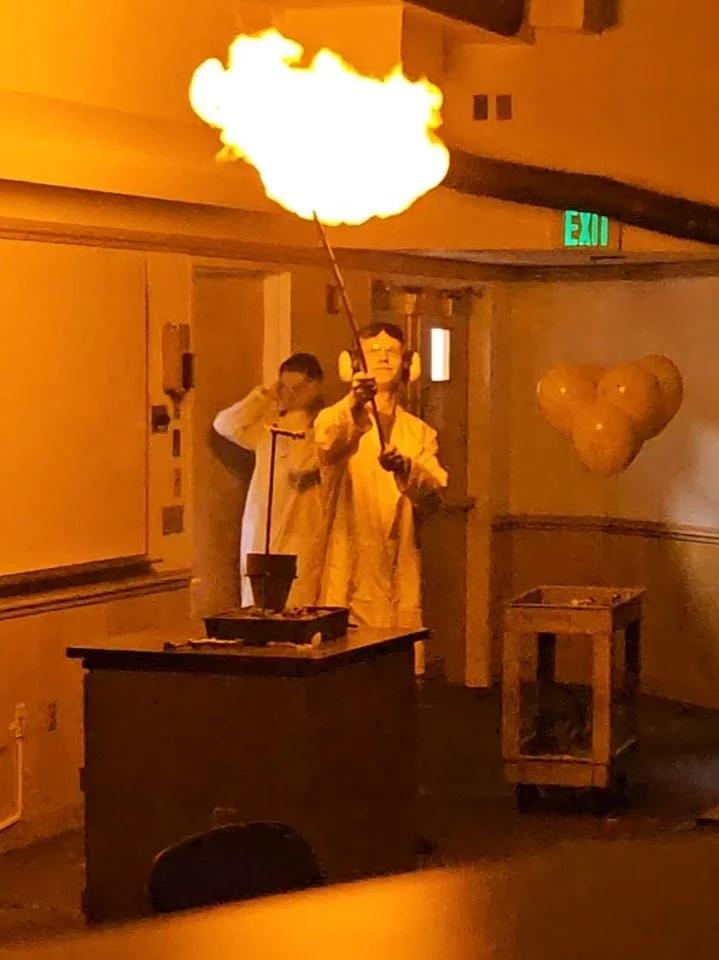
A balloon explodes as hydrogen and oxygen combine under the care of Dale Baurick at the Science Potpourri April 11.
A demonstration put on by Dale Baurick, Carl Murphy and Dexter Delaney had balloons filled with nitrogen, salt and other substances that were popped with varying amounts of explosions and increasingly loud sound-levels.
“Everybody remember to cover your ears,” Baurick said to the kids. “What color is it [the explosion] going to be?”
Children shouted out colors and their jaws dropped.
Another demonstration by Baurick, Murphy and Delaney involved liquid nitrogen in a Mountain Dew bottle thrown into a bin of water, which exploded.
Director of the Advanced Instrumentation Laboratory at UAF Nathan Graham and freshman Ky Nash put on a demonstration involving different natural science specimens such as volcanic ash from Mt. St. Helens and insects in a scanning electron microscope, or SEM. Before he began his presentation to some children watching, Graham explained that some microscopes use light to see objects up close, but the SEM uses electrons instead.
“The reason why you want to use electrons is that you can focus them to a really, really fine point, less than a micron in size,” he said.
According to Graham, the SEM presentation has been going on since the potpourri began.
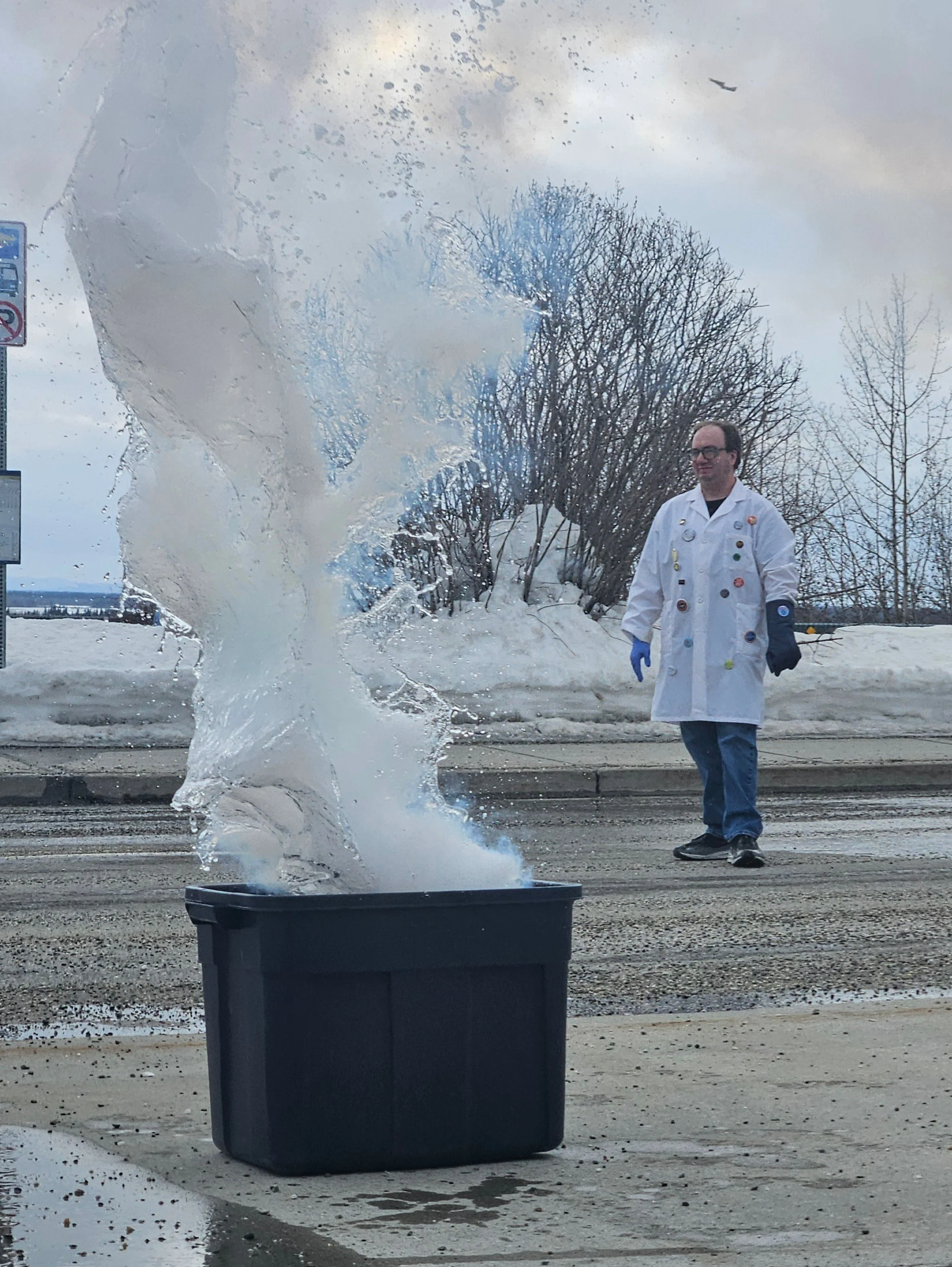
Carl Murphy stands back as liquid nitrogen in a Mountain Dew bottle explodes at the Science Potpourri April 11.
Nash, who took Graham’s class and talked to children at the event, said that working on the SEM is a “really cool” opportunity she wouldn’t get at other universities.
“Kids love visualization, and being able to see cool things under the SEM helps foster their curiosity for the natural world,” said Nash.
One demonstration presented by Angela Linn, senior collections manager at UAF’s Museum of the North, involved teaching kids about deterioration.
Objects such as a picture from the 1920s, a wood carving, mukluks, a cigar holder and a pan from the famous Into the Wild bus 142 were spread out upon a table.
“Each of these items is affected by at least one agent of deterioration,” she said.
Some agents of deterioration are improper relative humidity, water damage, light fading and vandalism. Linn taught them how to properly display items in their homes, opening their eyes to the “material sciences,” and the idea that conservation is a profession. After the event concluded, Boyle referenced Schneider and said that good ideas continue if people like them.
“I just heard from our info desk that they have a count of 722 people who came. It’s probably more than that; probably 900 or a thousand,” he said.