

Arctic Research Open House showcases Arctic research
Story and photos by Gabriele Rigaudo
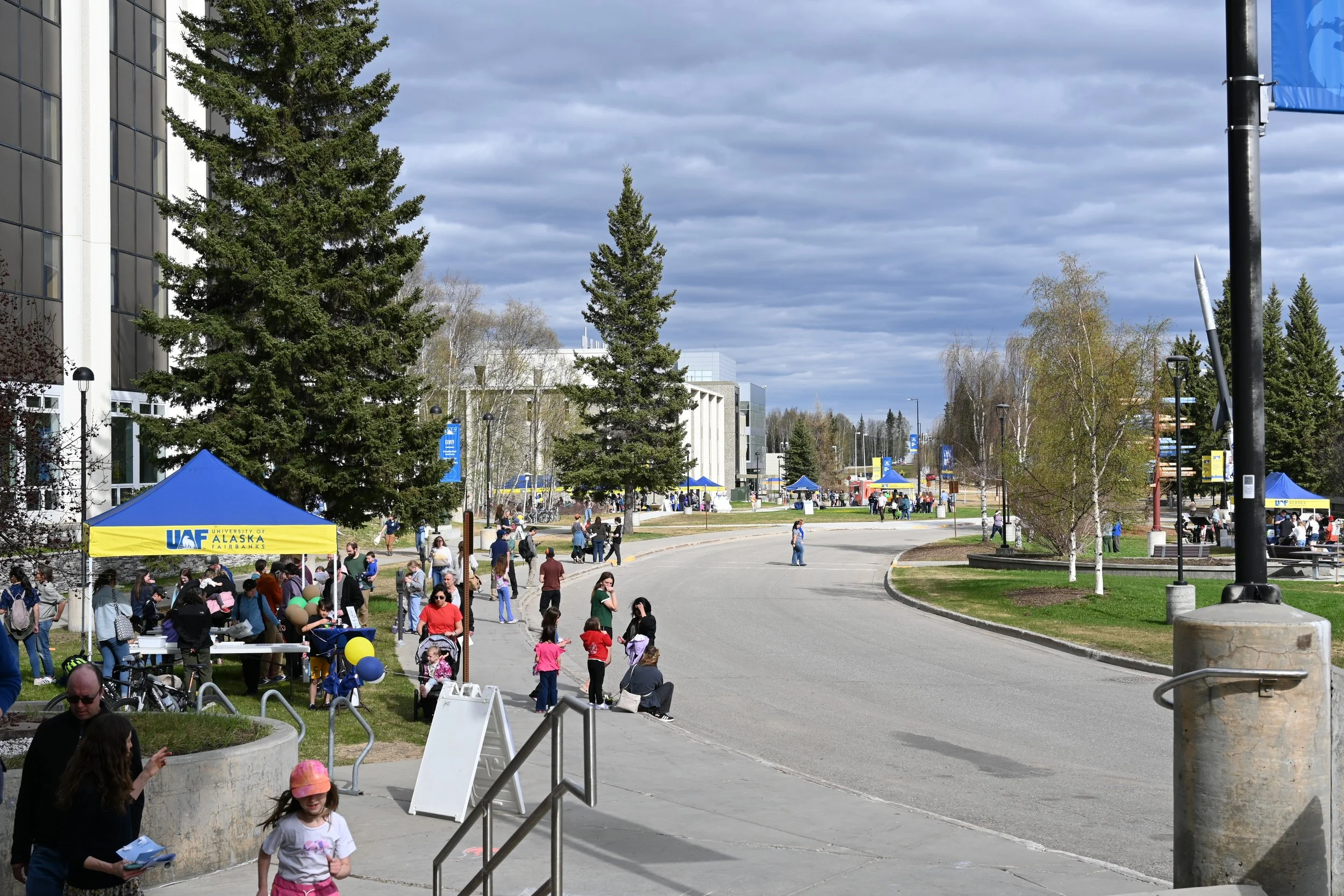
UAF’s Arctic Research Park during the Arctic Research Open House on May 14th, 2026.
The University of Alaska Fairbanks hosted the annual free Arctic Research Open House on May 14. The event featured verbal and hands-on demonstrations from scientists across multiple departments and institutions, highlighting the diverse scope of Arctic research at UAF. Topics ranged from Earth science at the Geophysical Institute to space research with NASA-affiliated ASF, as well as sociology studies on storytelling and botanical studies focused on improving crop yields for Alaska farmers.
Anyone walking through the UAF campus cannot help but notice the multiple antennas across campus. Wade Albright, director of the Alaska Space Program, offered both his expertise and hands-on activities for the community to better understand the role of the technology. Established as NASA’s northernmost ground station, the facility put Fairbanks on the map in the early 1990s. Today, ASF still provides valuable information to the country.
“The polar-orbiting satellites converge at the poles, so we can see more space traffic than any other place in the U.S.,” Albright said.
Though smaller in number, projects affiliated with the College of Liberal Arts also participated. One project, “Bridging Generations, Sharing Stories: Common Benefits and Learning Experiences Across Digital Storytelling and Mentorship Programs in Alaska Native Communities,” is conducted by the Center for Alaska Native Health Research and aims to provide a way to communicate stories across generations in Alaska Native communities.
Britain Wallace, a UAF alumnus who still works on the project, said the program helps preserve cultural connections through storytelling.
Inna Rivkin, a psychology professor at UAF, said collaborative storytelling among elders, role models and youth fosters mentorship.
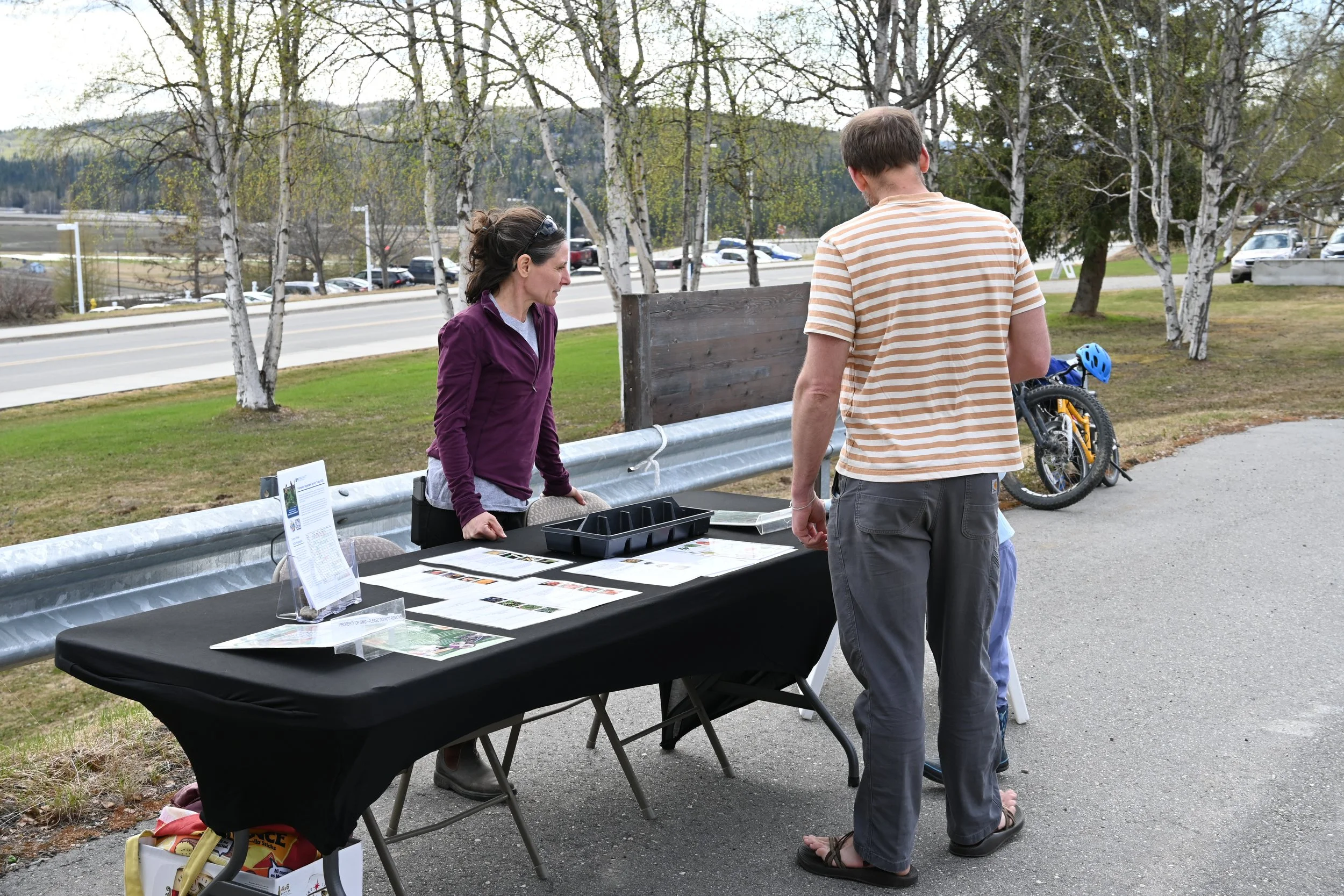
Katie DiCristina explaining the Alaska Variety Trial via a game challenging people to recognise different seeds during the Arctic Research Open House on May 14th, 2026.
“The youth have somebody in the community that they can turn to during times that are difficult, challenging, to know more about their cultural identity, and to build connections between the youth and the elders through the process of intergenerational storytelling,” Rivkin said.
The scope of Arctic research even extends to agriculture. The Alaska Variety Trial project provides Alaska farmers with data on yield, days to maturity, weight, uniformity and taste of different varieties of vegetables and fruits grown in the state.
“All the descriptions of those vegetables are based on trials that happened in the Lower 48,” said Katie DiCristina, lead technician for the Alaska Variety Trials program.
DiCristina said the trials are important because many commercial crops are optimized for soils and environments in the contiguous United States.
Satellites, stories, carrots and much more — the Arctic Research Open House gave scientists the opportunity to share the work being done daily at UAF. The goal was simple: to inspire the community to appreciate and support university research while sparking curiosity in younger visitors who may one day drive the future of academia.