

Discussion and history of returning Indigenous remains and objects act
By Jonathan Wasilewski
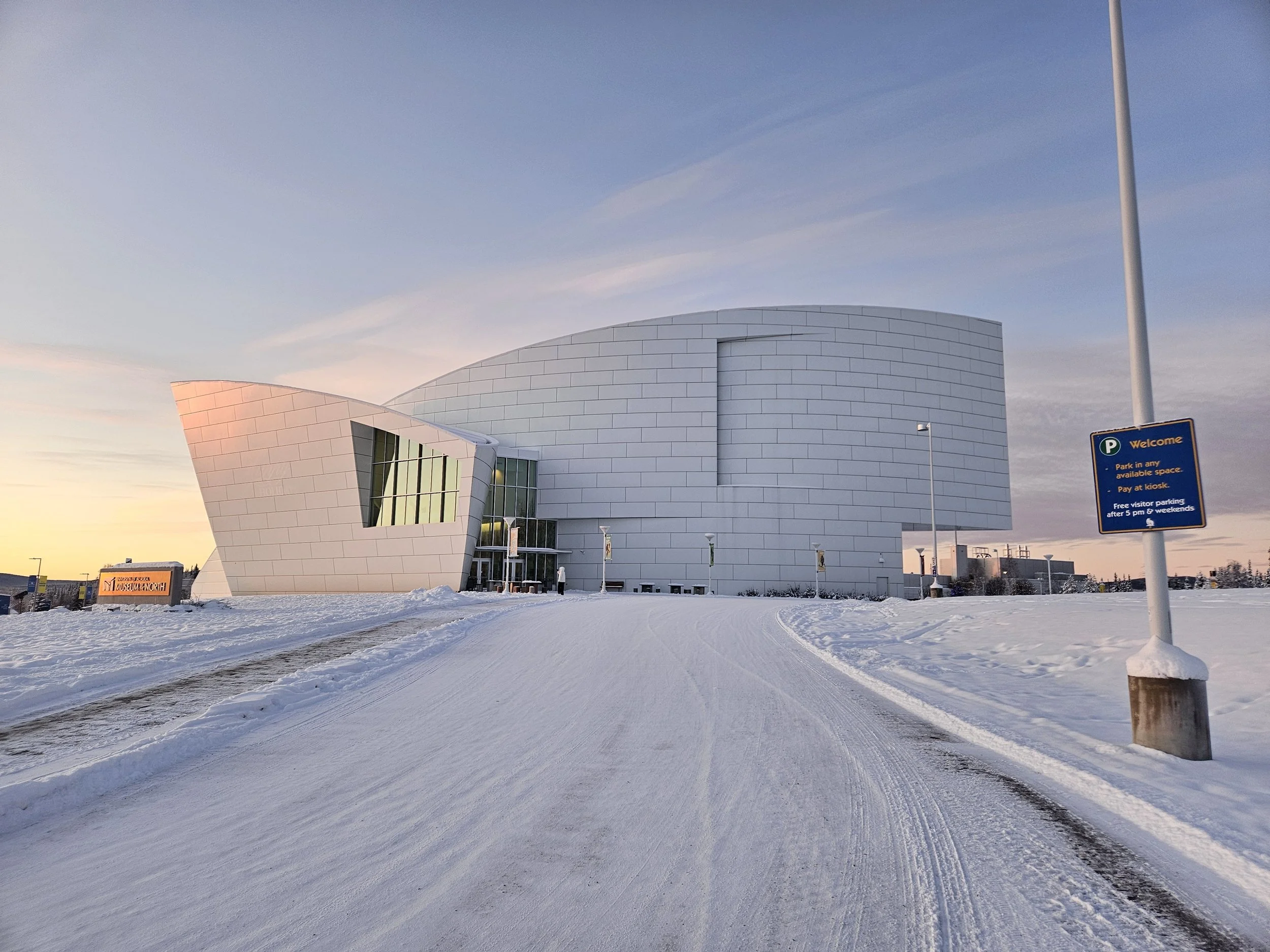
Photo by Jonathan Wasilewski
The University of Alaska’s Museum of the North awaits the public at Nov. 24, 2025.
Across America, museums and other institutions are working on repatriating Native American artifacts and human remains, restoring history and bringing back respect and honor. The University of Alaska’s Museum of the North also participates in this cultural work.
The Native American Graves Protection and Repatriation Act, or NAGPRA, is a federal law that requires museums and other agencies that receive federal funding to inventory their collections for Native American artifacts and human remains, and then report their findings to the tribes. The act was put into place in the United States in 1990 and is administered by the National Park Service, or NPS.
Angela Linn, senior collections manager at the University of Alaska Fairbanks’ Museum of the North, explained the effects of the act.
“Our job is to follow the regulations but to always let the individual tribes lead the way to each unique resolution,” Linn said.
Institutions and museums were required under law to review claims, determine eligibility, and release the items in question if the claims were deemed to be valid by the museum or institution.
According to a 2023 ProPublica article that Linn referenced, funding from the NPS has led to museums and tribes in the U.S. repatriating over 83,000 individuals, 1.78 million funerary objects, and 21,000 cultural items.
The Museum of the North has been working with tribes all over Alaska since the inception of the act. According to the Curator of Archaeology Joshua Reuther, the Museum of the North has had 36 repatriations in 36 years and is in the process of finalizing a few more. A repatriation is when objects, cultural items or bodies are sent back to the tribe.
Reuther wrote that the 36 repatriations consisted of 680 ancestors, more than 9,000 funerary objects, and four culturally significant and sacred objects. The remains were stored where visitors couldn’t see them, Ruther said. Some tribes have wished to keep their remains at the museum.
According to Linn, many people in different professions raised “unfounded” worries about the act.
“Many in the museum profession feared that their collections would be lost to this process,” she wrote in her dissertation about the development of museums in Alaska. Museum collections took a long time to create, and people in the field were worried about losing their hard work. Linn mentioned that others were concerned about research and science being halted because of the act.
Aaralyn Hall, a freshman anthropology minor at UAF, said she thought differently than those who were concerned.
Hall first learned about NAGPRA while in high school, where she read a book about the act.
“The way certain anthropologists behaved when interacting with Native Americans was extremely disturbing,” Hall said.
Qapqan Brantley, an Iñupiaq student whose family is originally from Kotzebue, talked about anthropologists’ and researchers’ intent. If the remains were taken to study them, used to learn more about history and returned without bad intent, she said that would not be disrespectful.
“If it’s just for the purpose to conquer and just show it on display, that would be disrespectful,” Brantley said.
Over the past summer, Brantley worked at the Alaska Native Heritage Center, and said that their gallery was closed for a week because they had received skeletons. They wanted to give the bodies a proper burial ceremony.
“By them being returned in their original form, not only was our history brought back, but their respect and honor as well,” Brantley said.
In Reuther’s perspective, the act has been successful in compelling museums and agencies into a dialogue with tribes, leading to the return of objects and remains. He also noted that the revisions to the act were beneficial, and that there is increased representation of tribal voices in museums.
“It’s really good the act is in place because too many people have been removed from their original homelands,” said Brantley.