

Hibernation: not just a long winter’s nap
Story and photos by Katie Everett
The dark, cold days of Alaskan winters often make everyone want to crawl back in bed and sleep until summer comes again. Unfortunately for us humans, that is not possible. However, for some critters, it’s normal. Winter hits and they get to go into their caves or underground systems and fall asleep. When spring brings longer, warmer days, these animals wake up and return to life above ground.
This process of hibernation has been studied by researchers in Alaska for about 75 years, as they try to understand the physiological processes the animals go through to get them to a state of torpor, which is when they depress metabolism and enter hibernation. Here at the University of Alaska Fairbanks, many different researchers are looking into hibernation and how it can be applied to human medicine.
The puzzling part, though, is that these animals experience pretty much no negative effects from hibernation. Despite eating nothing for six to nine months, slowing their heart rate to almost nothing, and dramatically lowering body temperature, these animals go through the process of waking up and come out of hibernation with no ill effects on any organ system.
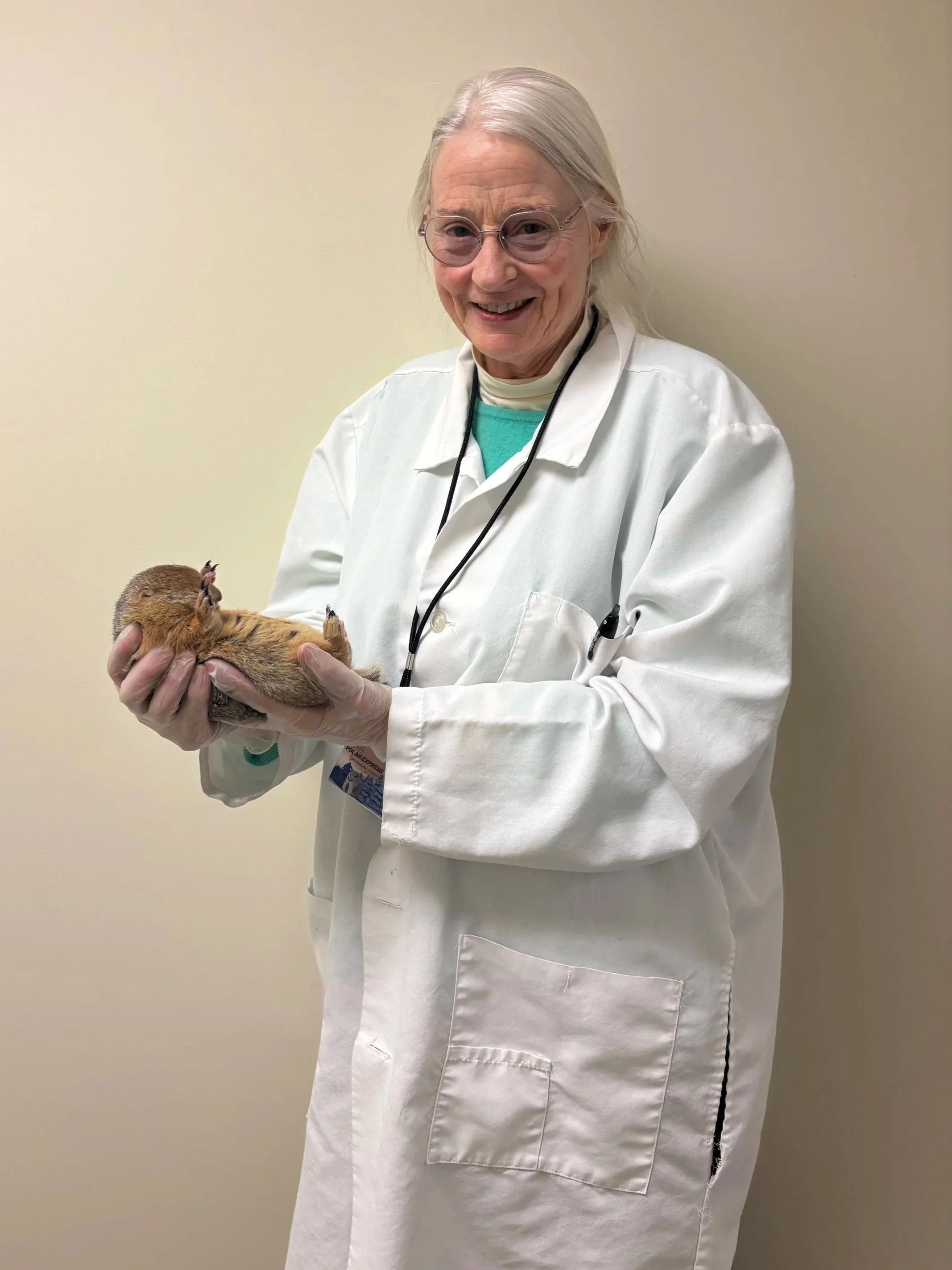
UAF professor Kelly Drew holds hibernating arctic ground squirrel.
Kelly Drew is a professor and researcher focusing on arctic ground squirrels. Drew completed her undergraduate degree at UAF in psychology, then went on to earn her Ph.D. in pharmacology at Albany Medical College.
She eventually returned to UAF, where she met Brian Barnes, a hibernation researcher, while working in a lab at the Arctic Health Research Building. Barnes was studying ground squirrels at the time.
“He walked into the lab one day, and he handed me one,” Drew explained.
In this moment, everything changed.
Drew immediately knew that she wanted to become involved with hibernation research. She wanted to know what this squirrel was thinking, and how he managed to get his body temperature down to about two degrees celsius without freezing.
The squirrels hibernate in a little ball, with their tail covering their face and their hands and feet curled in. They barely breathe and their heartbeat is so slow it almost cannot be felt.
“They’re one of the most extreme hibernators of small mammals,” Drew explained, while holding the small animal in her hands.
In fact, their heart rate goes from about 200 beats per minute to three to five per minute. Additionally, their blood flow slows to the same rate as a human having a stroke, with no ill effects. This makes these animals almost stroke resistant, which is something that Barnes was working on researching when he first handed the squirrel to Drew.
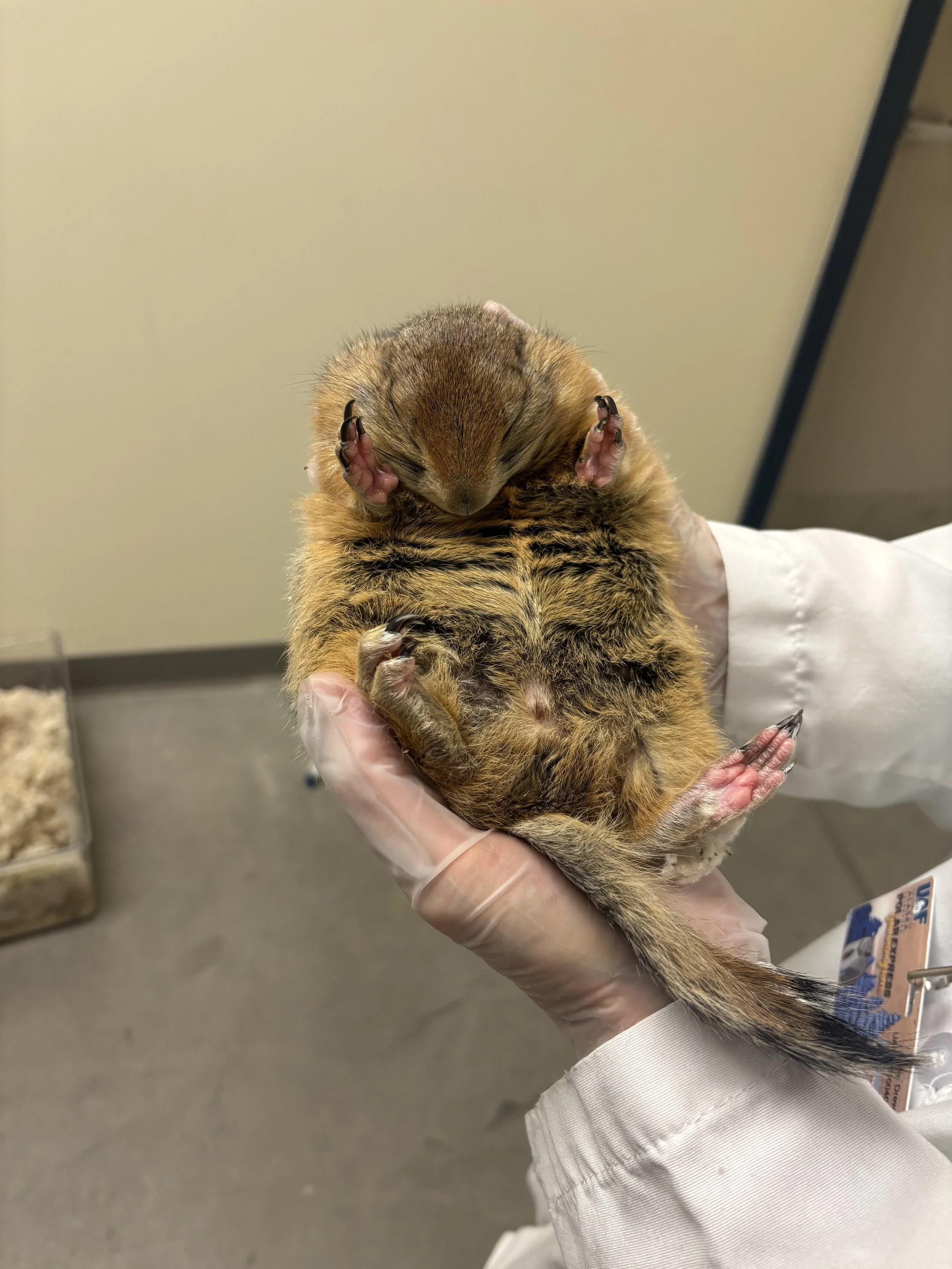
Hibernating arctic ground squirrel unrolling after being taken out of hibernation room on November 20, 2025.
Drew decided that she wanted to look at the underlying mechanisms in the animal’s brain that provoked and maintained hibernation. She started looking at adenosine receptors, proteins that regulate the sleep-wake function of adenosine, and found that the animals sensitize to these during the winter. Drew believes that once these receptors become activated, either by drugs or the changing of the season, the animals enter hibernation. She also explained that they show this hibernation phenotype only in the winter, not in the summer, meaning they are driven by seasons.
Throughout her career in the hibernation field, Drew landed on her current focus: neurocritical care, which is the field of medicine that deals with critically ill patients suffering from neurological conditions. More specifically, Drew has studied how hibernation processes in animals can aid humans who have undergone a stroke or a cardiac arrest event. The process of cooling is a big one that Drew decided to study. Cooling can help reduce inflammation, narrow blood vessels, and help the brain recover after an injury.
Research has also uncovered the fact that during hibernation, these animals do not have synapses firing, meaning their neurons aren’t communicating. However, when they wake up, their synapses come back and their brain continues functioning like normal. This could have many applications in human care, particularly after a brain injury to help the brain heal.
Drew is not the only one researching hibernation at UAF, though. Many others like Anya Goropashnaya, Vadim Fedorov and Sarah Rice are also looking into hibernation and how it could help human medicine.
Sarah Rice has also studied arctic ground squirrels, as well as bears. In her research, Rice has worked with bear tissues. She explained that bears hibernate very differently from other animals, because they are the biggest mammals that do so. Bears tend to differ in their body temperature and patterns in which they hibernate.
“So the degree of temperature a bear hibernates when they go in for the season is actually very, very similar to the temperature they put humans under for therapeutic hypothermia,” Rice explained.
Rice is looking into the metabolism and nutrition side of hibernation, how these animals can go so long without eating and still maintain organ function and muscle mass.
Research has shown that bears can actually synthesize amino acids during their hibernation, which has helped them maintain their muscle mass and not become malnourished while fasting. Rice has worked on researching how all the different organ systems of the body help contribute to giving the body the nutrients it needs, all while the bear is asleep and has suppressed its metabolism by about 75%.
Both Drew and Rice aim to use the physiological hibernation processes in animals as a blueprint for human medical care, as many of the processes the animals use could be useful when translated to human medicine.
While their research is still ongoing, both scientists have contributed significantly to their field and are excited to move forward to learn more about hibernation and its benefits.