

Local poets gather for annual Solstice Poetry Cycle
By Amber McCain
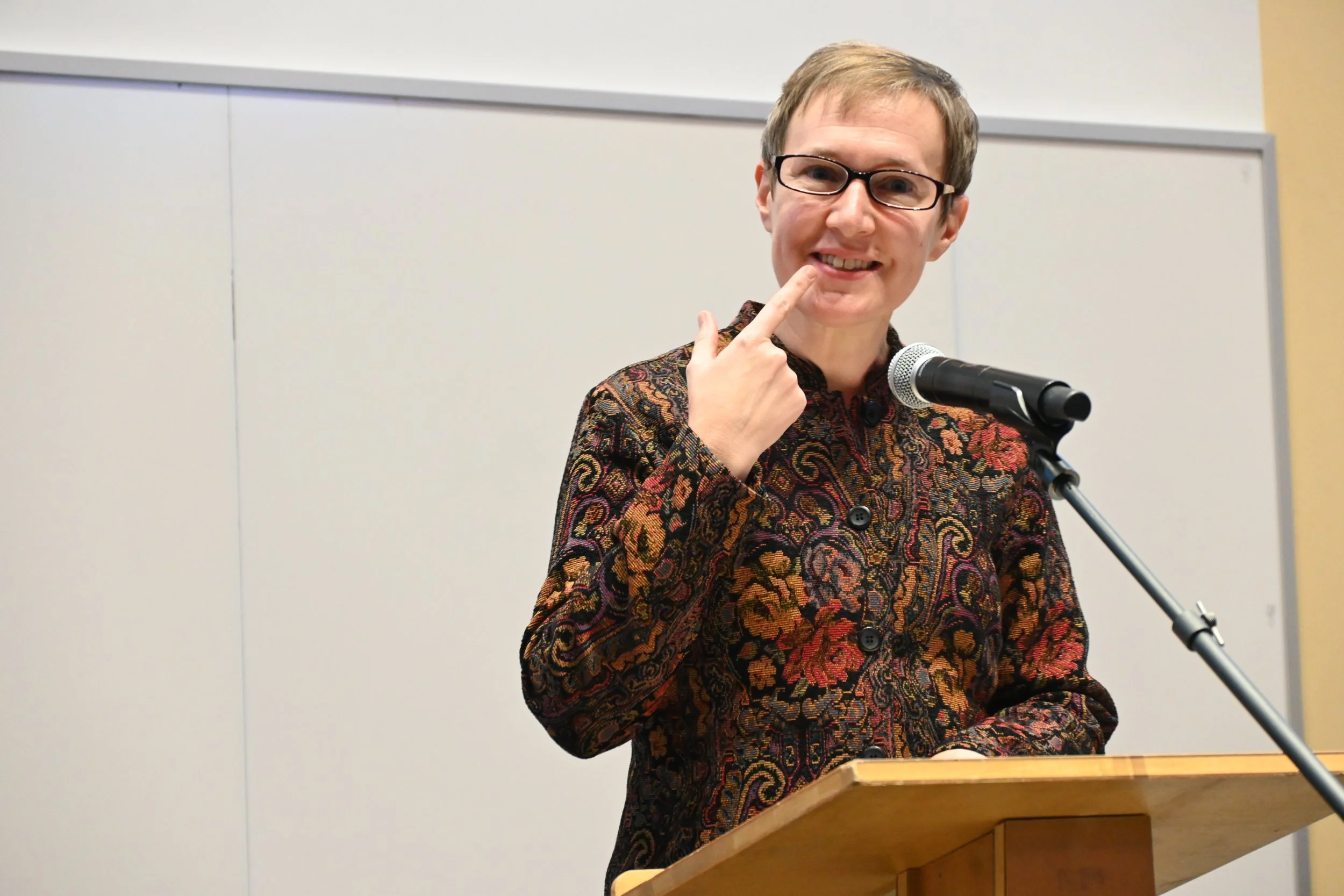
Photo by Colin A. Warren.
Carrie Heimer shares her work on Jan. 16, during the 2026 Solstice Poetry Cycle.
On a night shaped by winter’s darkness, the Schaible Auditorium became a place of shared attention as 28 poets took part in the annual Solstice Poetry Cycle. Local poets flooded the auditorium with a stream of their work reflecting love, grief, humor, memory and everyday life, presented by the Midnight Sun Visiting Writers Series.
There were no introductions and no small talk on Jan. 16 — only poems, shared one after another with an audience ready to listen.
Joe Holt, associate professor of the English department at the University of Alaska Fairbanks, opened with lighthearted remarks about coordinating dozens of writers while reminding the audience that the event was meant to function like a gathering: orderly, welcoming and communal. Poets were asked to limit their remarks to the title of their poem, the poem itself and the name of the next reader. Applause was held for transitions, allowing focus to remain on the work.
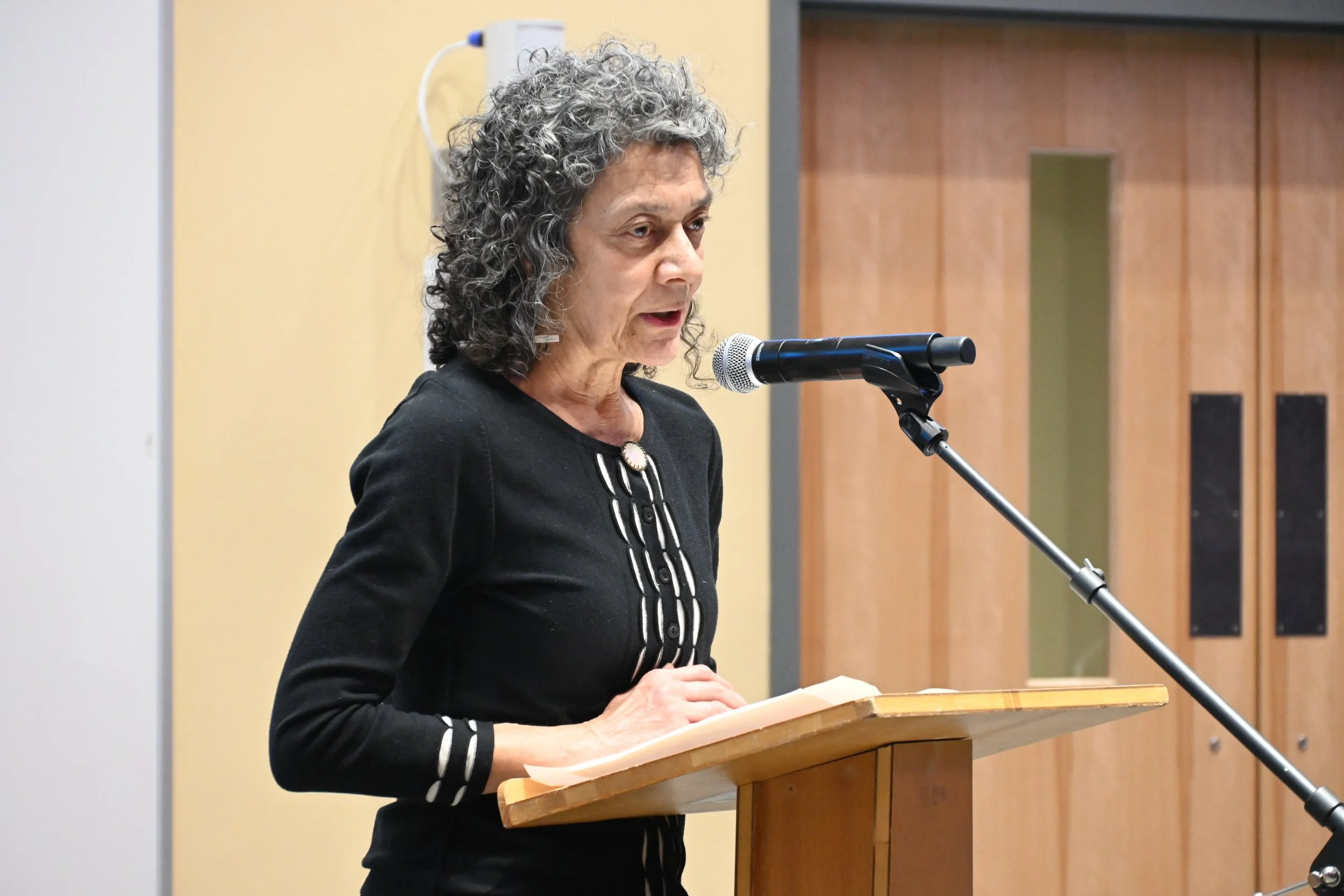
Photo by Colin A. Warren.
Susheila Khera shares a poem during the Solstice Poetry Cycle held in Schaible Auditorium on January 16, 2026.
The result was a reading that moved steadily, voice to voice, uninterrupted. Poems ranged from meditative and abstract to personal and raw. Themes of Alaska’s long winters, relationships, identity and time surfaced repeatedly.
Delivery styles varied widely. Some poets read with emphatic gestures, passionately pounding fists on the podium with raised voices. Others showed a sense of shyness and restraint.
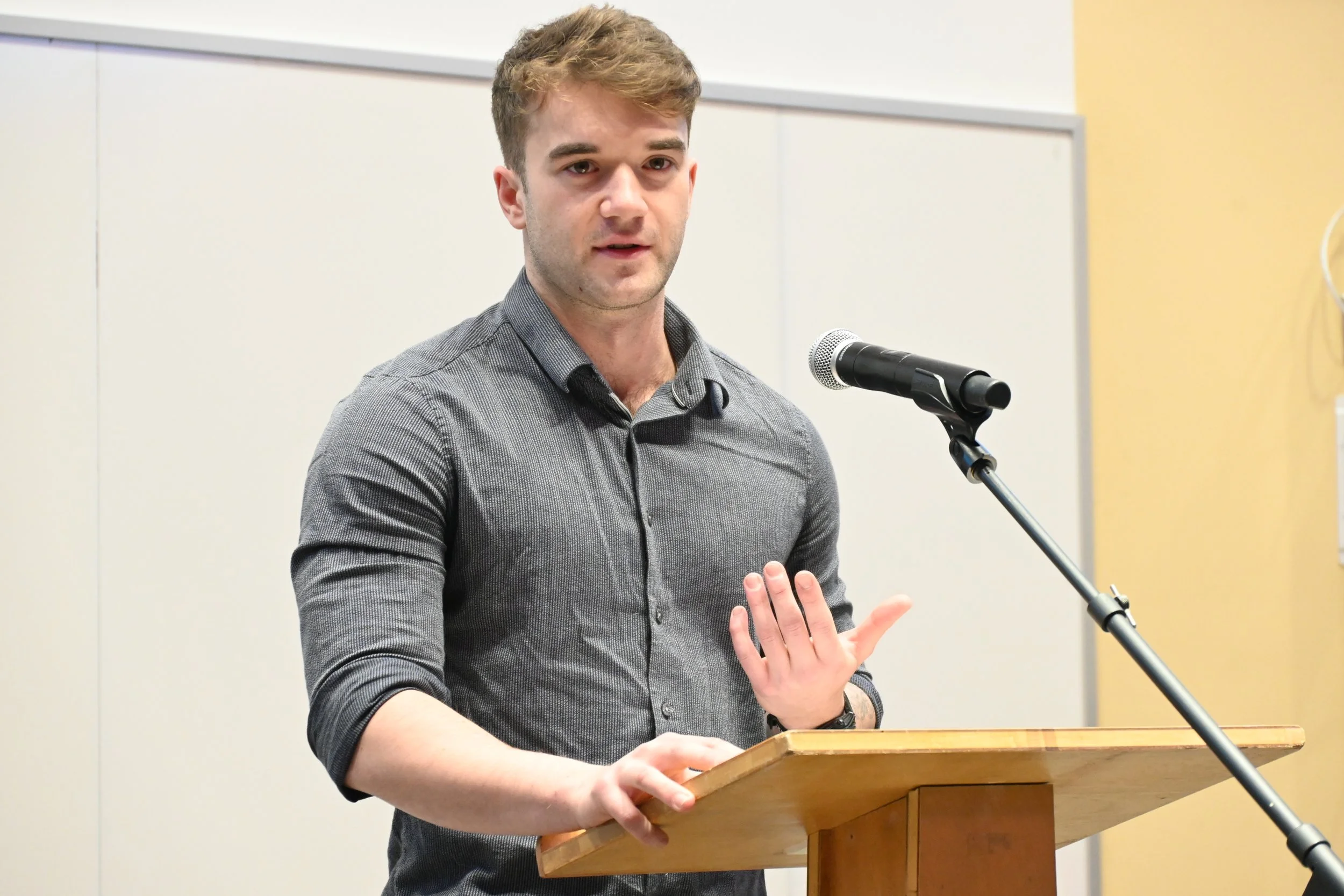
Photo by Colin A. Warren.
Addison Hurt reads a piece of his work to the audience during the Solstice Poetry Cycle 2026.
Elyse Guttenberg, an Alaska-based writer known primarily for her fantasy novels, drew quiet laughter with a playful structural turn midway through her poem, a numbered list that included the line, “Skip this one. I’m making them up as I go along.”
Samuel Farrell’s poem posed the question, “For what is poetry with purpose,” while Olivia Cole opened her reading with the line, “The phones have killed the eulogy,” a fantastic reminder of the power of a strong first sentence.
Several poets represented the next generation of writers, including students from North Pole, Lathrop and West Valley high schools. Their inclusion reinforces one of the series’ goals: creating space where emerging writers can share the stage with established voices.
Poets read in reverse alphabetical order by last name, an intentional break from tradition that allowed Buck Casie Ashagawa, a frequent opener in previous years, to close out the night.
Without a formal ending, the night dissolved naturally, its final echo not applause but shared quiet.