

Museum of the North: behind the scenes
By Britany Adorno-Alicea
By Luz Y. Serrano
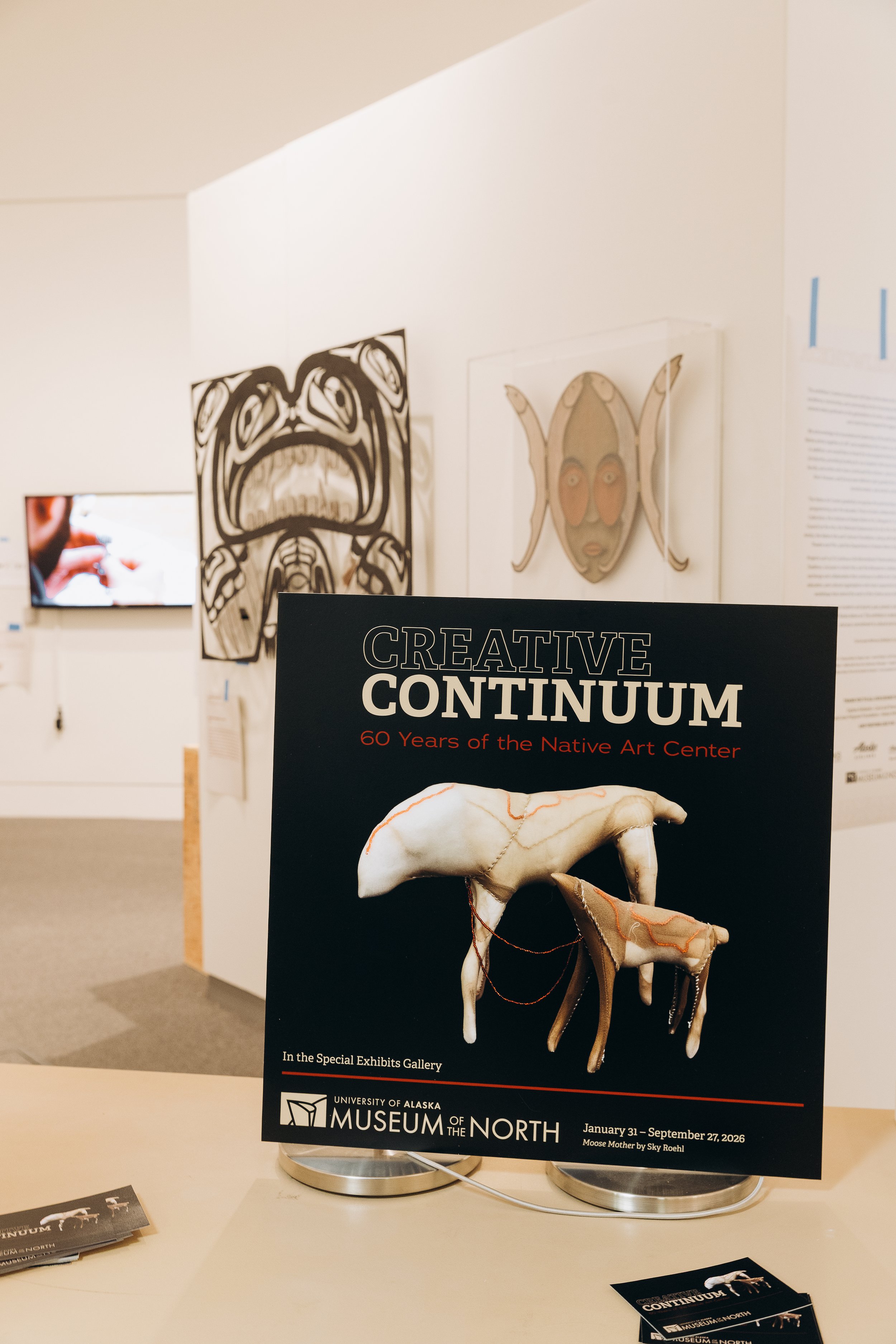
Preview of the upcoming special art exhibit.
The University of Alaska Museum of the North offered a chance on Saturday for family and friends to come and get a chance to look at what happens behind the curtains.
Starting at noon, visitors had the opportunity to visit the usual museum exhibits and from there take a tour to the lab spaces where all the magic happens. The behind the scenes tours usually run for 10 dollars a person on Tuesdays and Fridays, but for this special occasion, the tour was free for all.
Visitors kicked off the tour by visiting the wet specimens lab, getting to view some of the collections preserved in liquid. They contained more than just fish and other aquatic species. The tour continued by taking a trip down to the bottom floor of the museum through the different areas of research. Researchers and graduate students were available to talk and answer questions.
Entomology volunteer graduate student Hashini Jayakody offered some useful information about bees when guests entered the entomology room. “Bees need to stay hydrated during the summer so it would be very beneficial to them to leave out small plates of water for them,” Jayakody said. “It’s also important to plant different kinds of flowers during the summer months, because they offer different nutrients to them that they can’t get from just one kind of flower.”
By Luz Y. Serrano
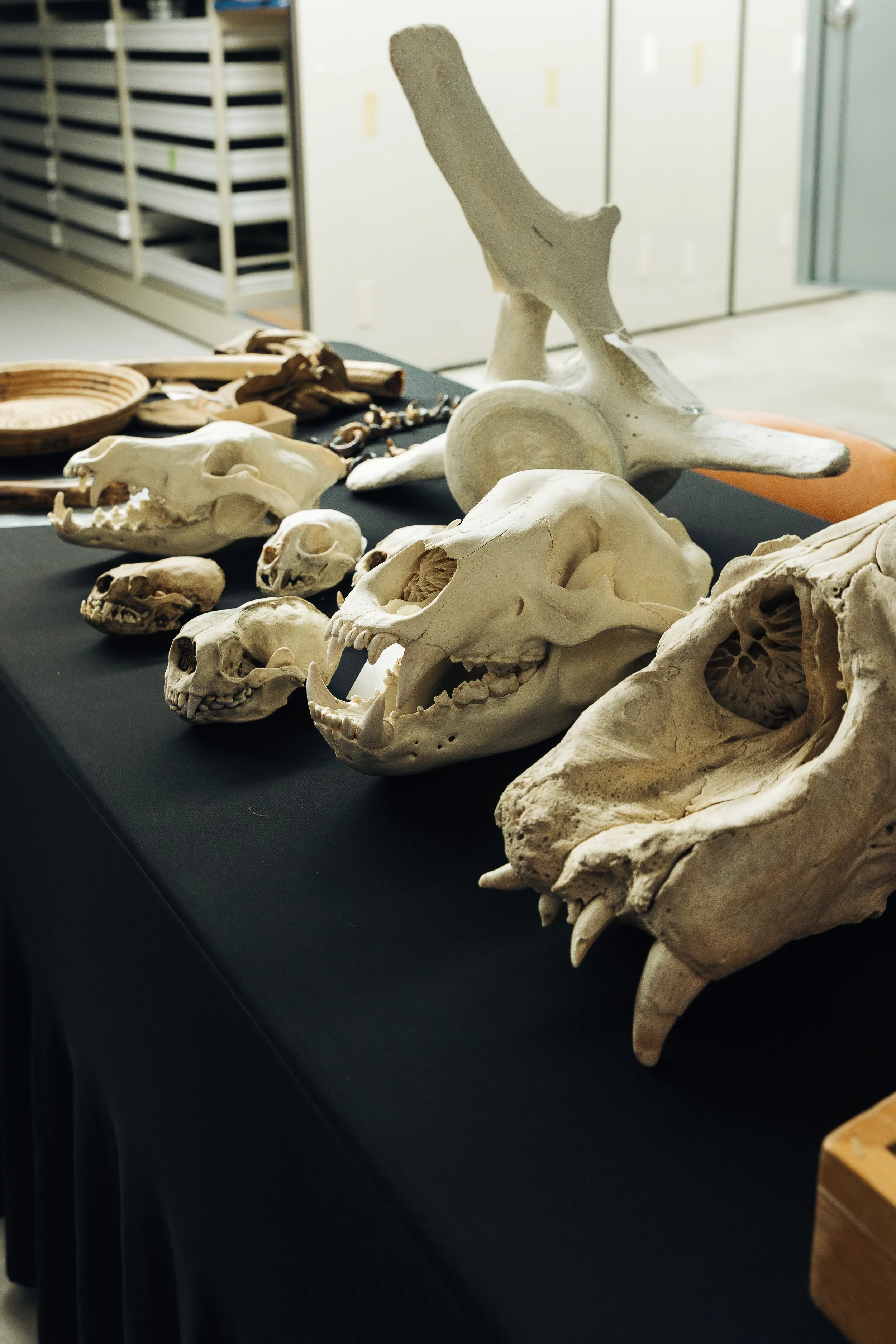
Mustelidae skulls (otters and wolverines) on display from the Museum archives.
Staff members from the archeology, earth sciences, entomology, herbarium, and ornithology departments came to show off some of their cool research. Some of the specimens on display were from our very own state of Alaska, and others were from out of state. The ornithology department said 47% of their birds are native to Alaska, while the rest of their collection comes from the Lower 48. The entomology department, on the other hand, said a majority of their collection are native to Alaska.
Visitors could also see artifacts from the genomic resources, a frozen collection featuring samples of various specimens, and see artifacts from their big archives collection - like sea and river otter skulls, wolverine skulls, and orca vertebrae - from all the different departments that conduct their research in the museum. The big archives collection is an 11,000 square foot room that houses over 25 million different artifacts.
By Luz Y. Serrano
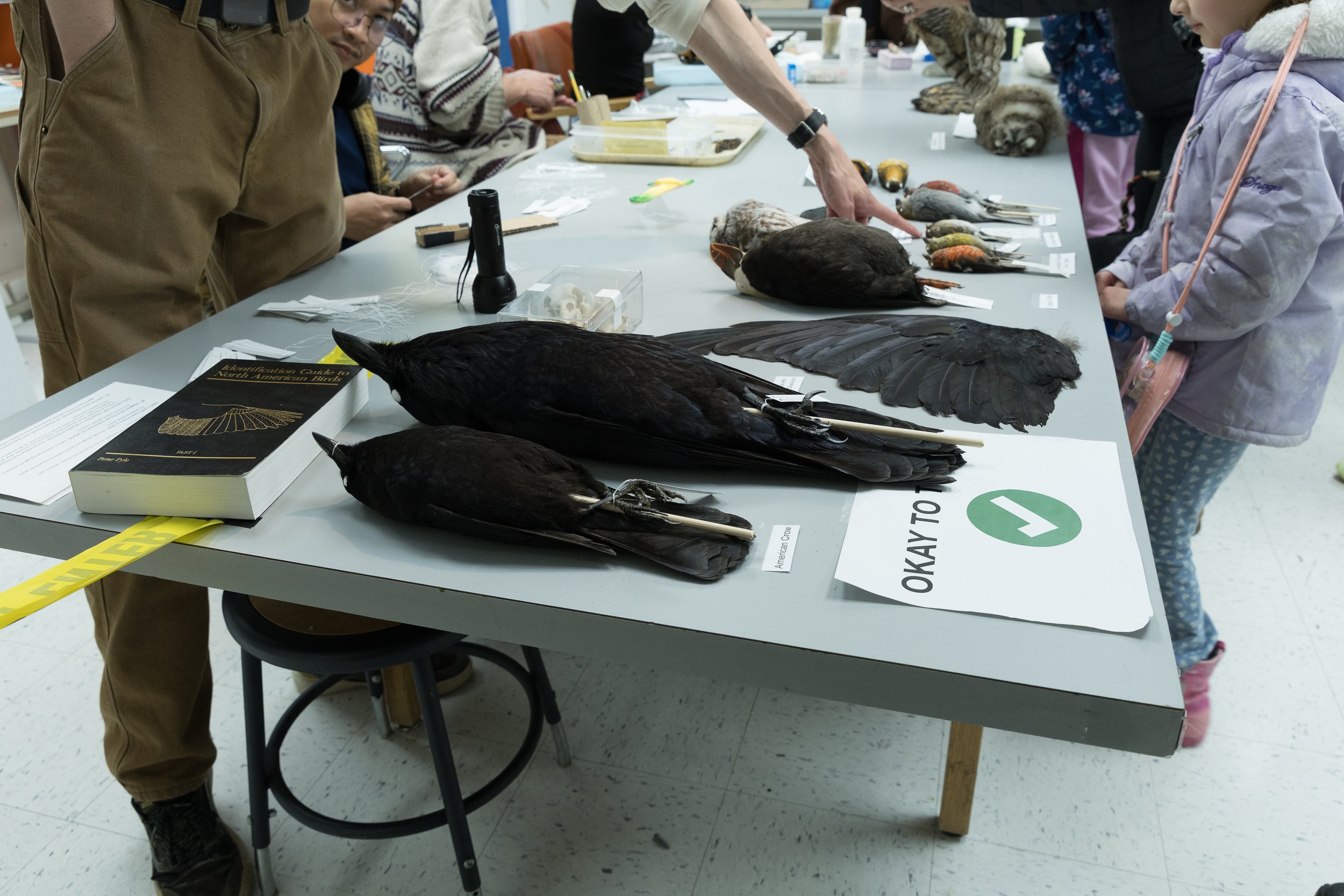
A taxidermied raven and crow sit on a table in the ornithology room during the open house.
Many of the department rooms laid out display examples of the kind of artifacts that they study, many of which were allowed to be touched. The archeology department had skulls of muskox that were free to touch, as well as slides showing the growth of dinosaur bones. The ornithology department also had displays of taxidermied birds that were open to the public to touch and feel the softness of the birds. Finally, the herbarium had a fun activity set up with mushrooms to make prints of the rings found underneath the mushroom caps.
New changes are coming to the museum with a special exhibit gallery opening up next Saturday, January 31. The Creative Continuum: 60 Years of the Native Art Center, will celebrate six decades of the UAF’s Native art center’s artistic excellence and community, featuring art from various Native artists. This offers an opportunity for people to visit and take a glance at the work and dedication of various artists over the years to their culture.