

Research mixer kicks off semester with opportunities
Story and photos by Britany Adorno-Alicea
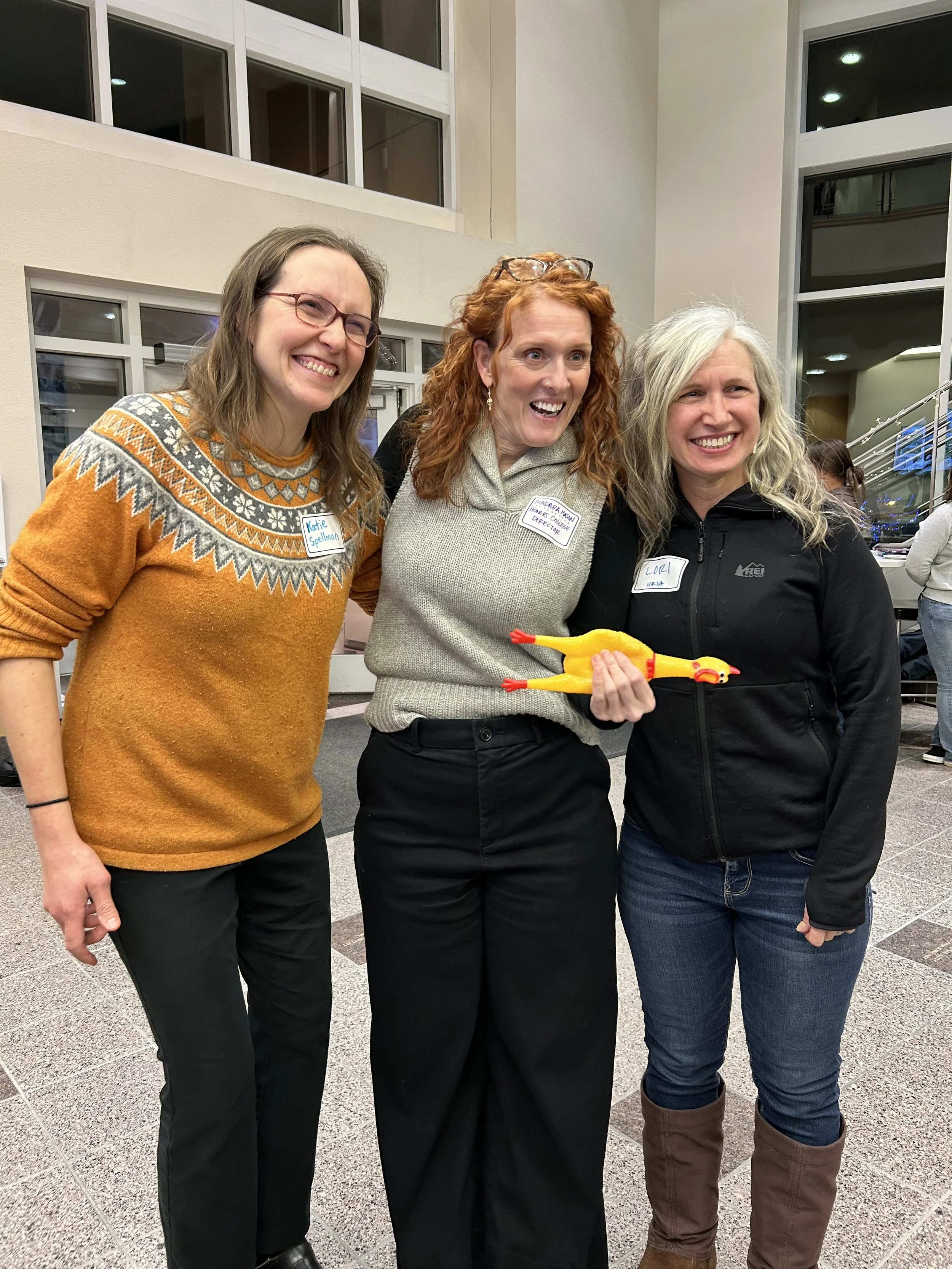
Katie Spellman, left, Madara Mason, middle, and Lori Gildehaus, right stand with the chicken that silenced presenters.
The University of Alaska Fairbanks Honors College, International Arctic Research Center along with the Undergraduate Research and Scholarly Activity departments hosted an intimate event, offering opportunities to students from staff and faculty members across different departments. Each presenter was given one minute to present their proposals, making it possible for more speakers to attend and share their research projects with students who would like to be involved in their research. While the event was offered to honors students, all were welcome to attend and find research opportunities that align with their interests.
Over 20 presentations were showcased at the research mixer, each one offering vastly different opportunities for students that would allow them to develop new skills, get hands-on experience in an area that spoke to them, and broaden their horizons. The event had a good turn out, with an estimated attendance of 100 people.
“I believe the turn out for this event was fantastic,” said Madara Mason, explaining this is her first year as the honors college director. “Anything that connects students to researchers is a success to me.”
“Its such a strong community here at UAF,” said Undergraduate Research and Scholarly Activity, URSA, director Lori Gildehaus. “We want students to get involved and make it accessible.” There’s skills students need to have, and Gildehaus says there’s a “real desire to help students.”
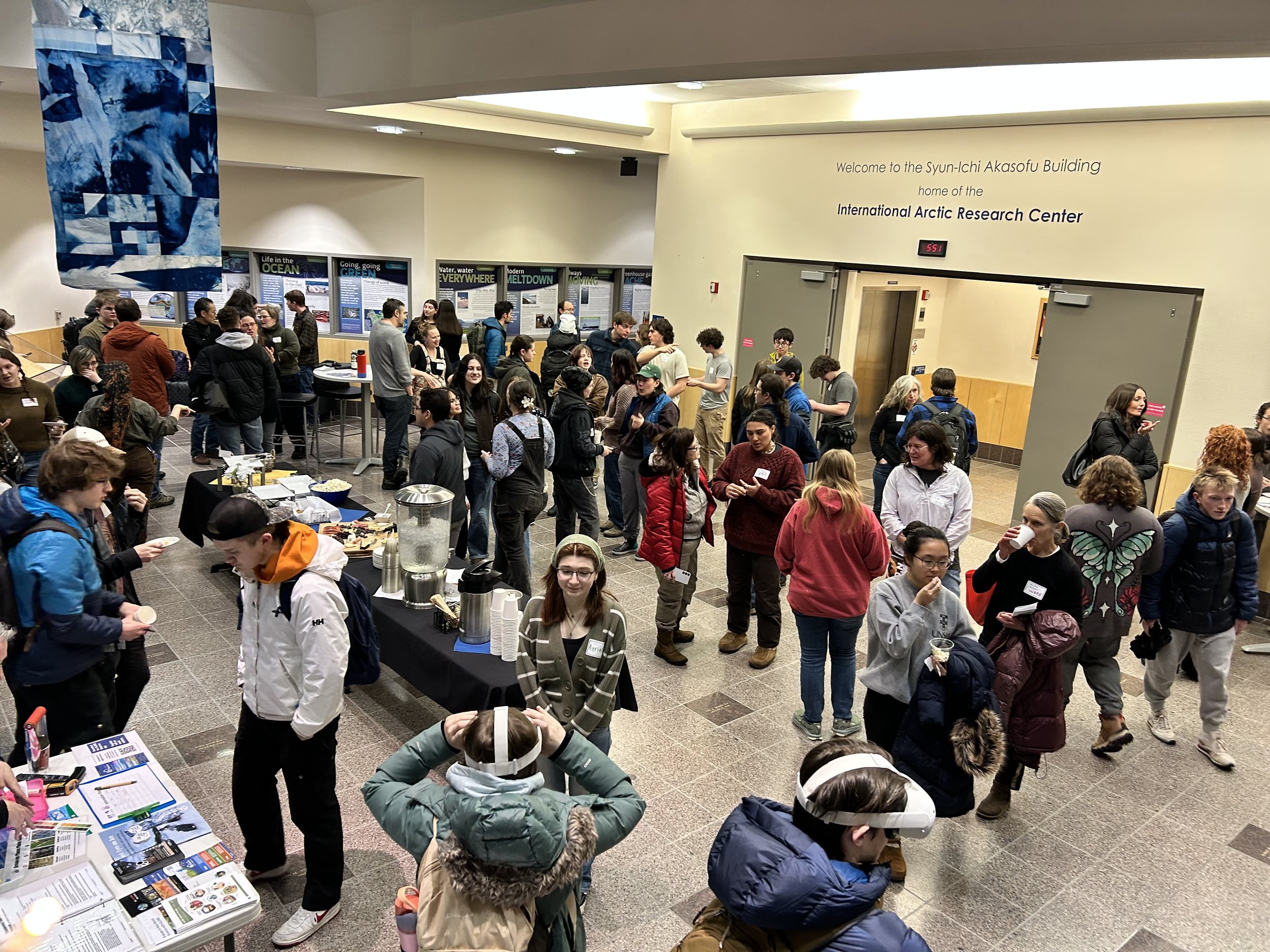
Community members, professors, students and researchers mingle after the 2026 Research Mixer held at the Akasofu building on January 28, 2026.
With only a minute to present, speakers delivered their research opportunities swiftly.
Fisheries science assistant professor Jeff Muechlbauer spoke about a research opportunity to study streams around Alaska.
Science communication researcher Patrick Ansah shared an opportunity on behalf of the International Arctic Research Center, or IARC. “We are working on how to improve public understanding and response to climate risk. We are working on understanding how decision makers think about avalanche information.” Students interested would be able to assist with interview coding, survey design, and literature reviews to aid in others' understanding of environmental and climate risks.
Geospatial data analyst Hannah Mair spoke on behalf of the Geographic Information Network of Alaska, or GINA, where students interested will be comparing NASA snow observations of snow in Alaska to snow models and seeing how well those models perform in Alaska. “We are looking for an undergraduate intern for the summer and part-time fall to help us on a snow project. We want someone with GIS or coding experience, but you don’t have to be an expert.”
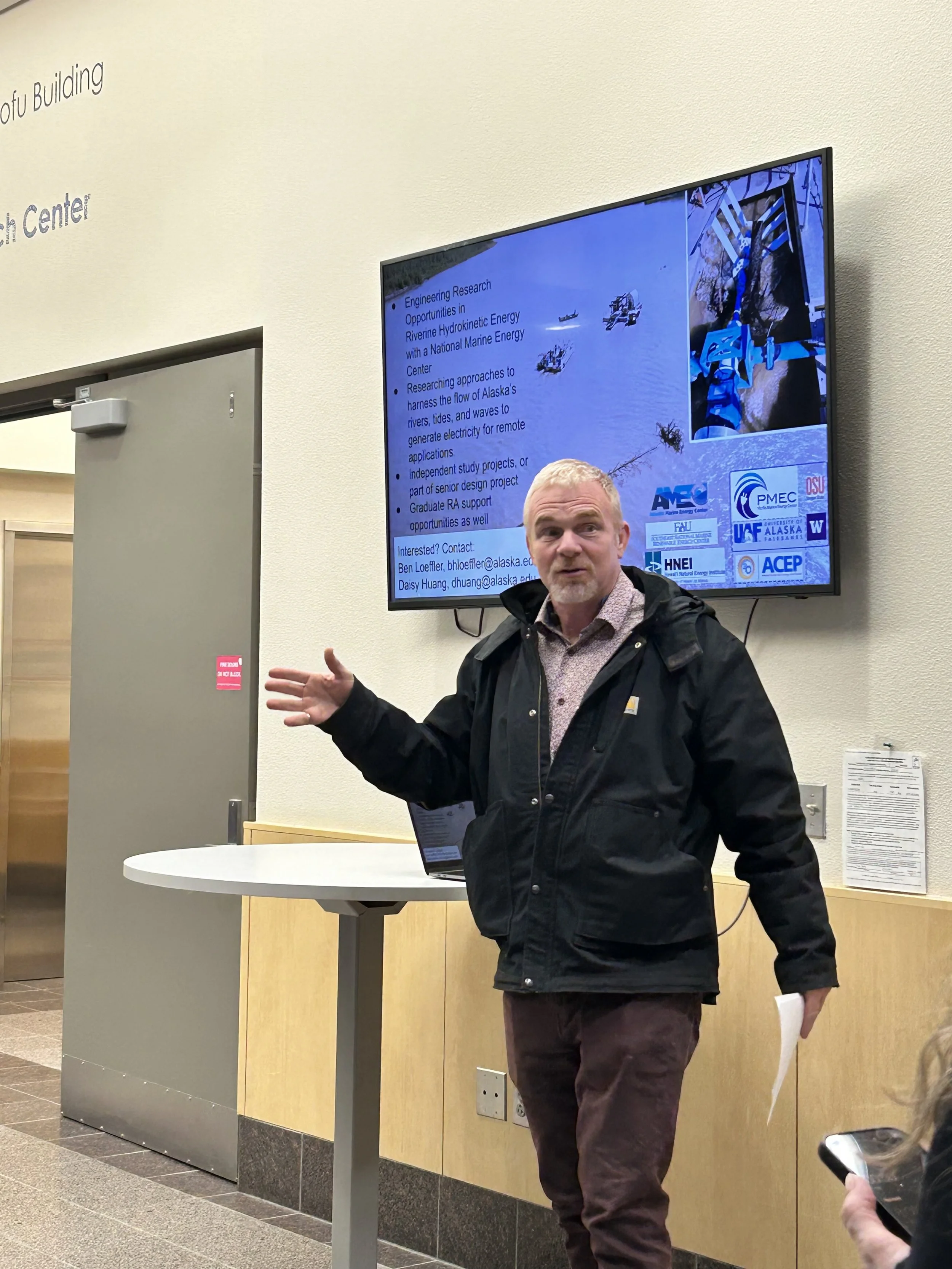
William Schnabel, dean of of the college of engineering and mines, presenting engineering research opportunities.
“We want to put turbines in the rivers and generate power. The problem is that trees and fish get stuck and hurt the turbines,” said William Schnabel, dean of the college of engineering and mines, who presented on behalf of the Alaska Center for Energy and Power, ACEP. “We are looking for undergraduate researchers who are interested in helping us figure out how to keep the fish out of the turbines.”
English department chair Sarah Stanley gave a presentation on an opportunity to help aid in the development and evolution of a video game. “The game is going to involve people who have been impacted by the justice system and they are going to find ways to collaborate and abolish prisons.”
Winding down the event, students were able to talk with speakers whose proposals spoke to them, leaving with connections to projects they would be interested in participating in or future endeavors.