

UAF Celebrates Indigenous Peoples’ Day through Elders’ stories, dance and traditional arts
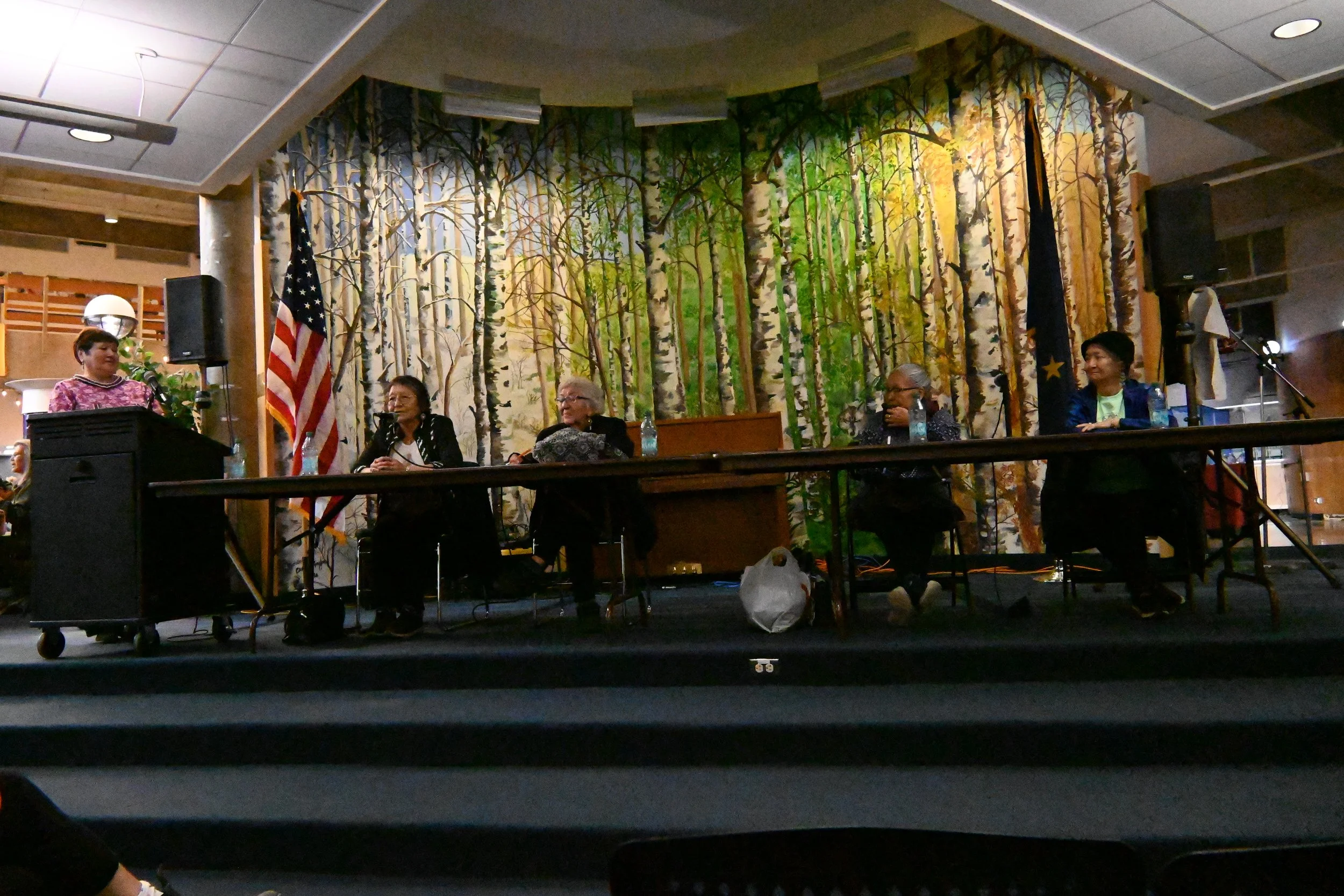
Left to Right: Sharon McConnell, Executive Director of Denakkanaga. Dr. Lorraine David, former instructor of Denaakk'e at the Alaska Native Language Center and former Project Director of the Indigenous Language Project at the Fairbanks Native Association. Rev. Dr. Chief Anna Frank, first Chief of Denakkanaaga and acts as an Elder Advisor to the Fairbanks Native Association. Eliza Winfield. Yvonne Dodds.
By Amber McCain
The University of Alaska Fairbanks celebrated Indigenous Peoples’ Day on Oct. 12, bringing students and community members together to honor Alaska Native cultures through storytelling, traditional arts, dance and games.
The event featured vendor booths showcasing beautiful handmade beadwork, crafts and other Indigenous artwork, giving visitors an opportunity to appreciate and support local artists.
Attendees could also participate in an elders panel, watch cultural dance performances and learn about traditional Alaska Native games.
The elders panel featured Dr. Lorraine David, Rev. Dr. Chief Anna Frank, Eliza Winfield and Yvonne Dodds. Sharon McConnell, executive director of Denakkanaaga, moderated the discussion. Julie Biddle introduced the panel, with opening remarks from Teisha Simmons, dean of the College of Indigenous Studies at UAF.
Throughout the discussion, the elders shared personal stories about growing up in Interior Alaska villages, learning traditional skills and navigating Western education. Several spoke
about the challenges they faced in school, including being punished for speaking their Native languages.
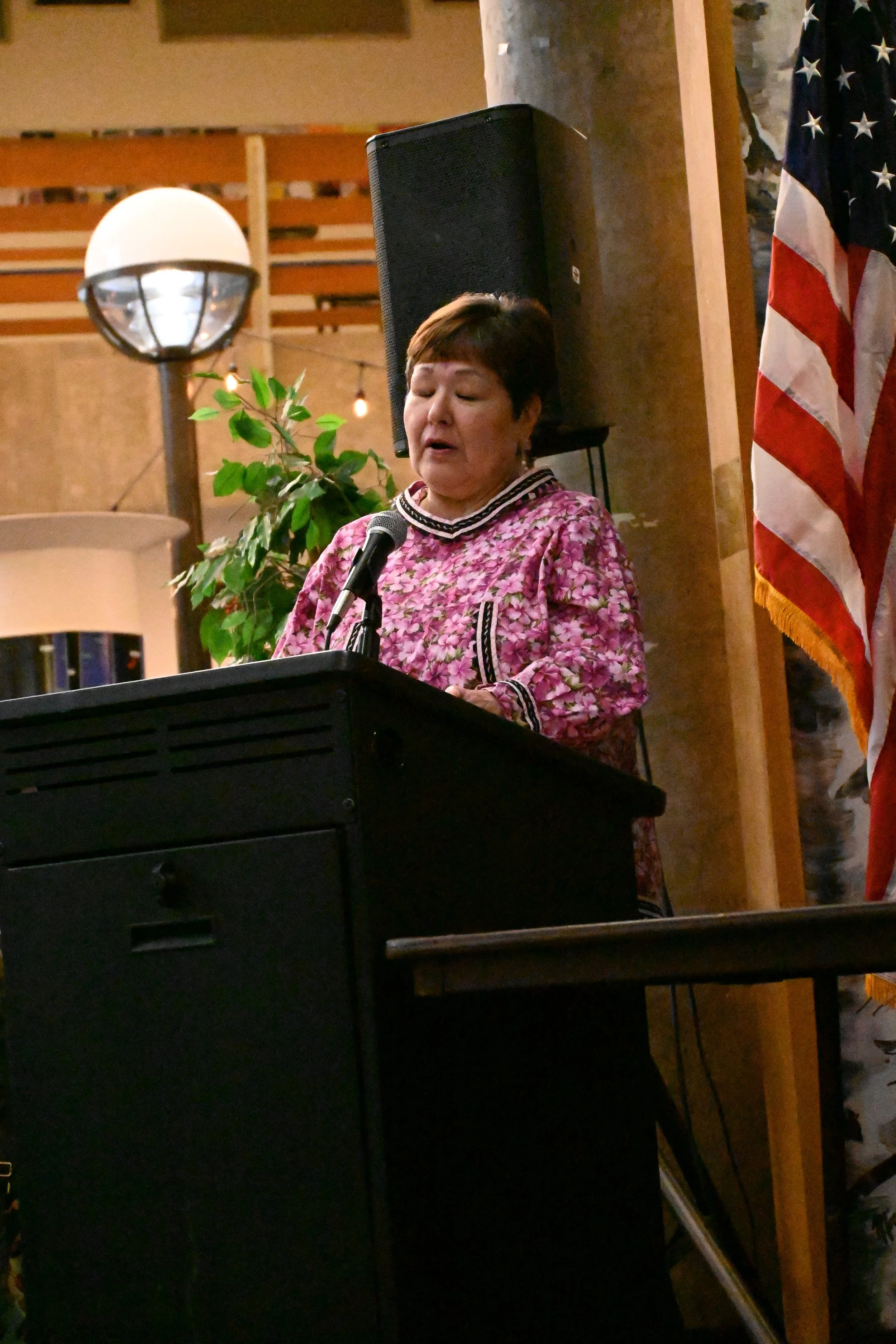
Sharon McConnell, the Executive Director of Denakkanaga serving as moderator for panel.
David, a longtime Denaakk’e language educator, described how her experiences inspired her lifelong commitment to preserving Indigenous language and culture. She continues to share her knowledge with people interested in learning the language. Frank, who grew up in Minto, encouraged students to pursue education and use their knowledge to support their communities.
“That's why we want you to go to school,” Frank told the audience. “You have a voice.”
She reminded students that their communities need them and encouraged them to speak up for people whose voices might otherwise go unheard. The elders also discussed traditional values such as respecting elders, learning from family, living off the land and passing cultural knowledge to younger generations. Their stories highlighted how traditions continue through language, subsistence activities, beadwork, songs and everyday relationships.
After the panel, attendees could stay for cultural dance performances and demonstrations of Native Games. Vendors also showcased handmade beadwork, crafts and other artwork, adding to the day's celebration of Indigenous culture and creativity.
The elders left students with a message about the importance of education, cultural identity and community responsibility. Their stories showed how knowledge passed down through
generations can help young people preserve their heritage while working toward a stronger future for their communities.