

Alaska climate specialist explains warmer Fairbanks temperatures
By Jonathan Wasilewski
Alaska Climate Specialist Rick Thoman sat down with The Sun Star to discuss Fairbanks’ recent warm weather and seasonal patterns in our land of extremes.
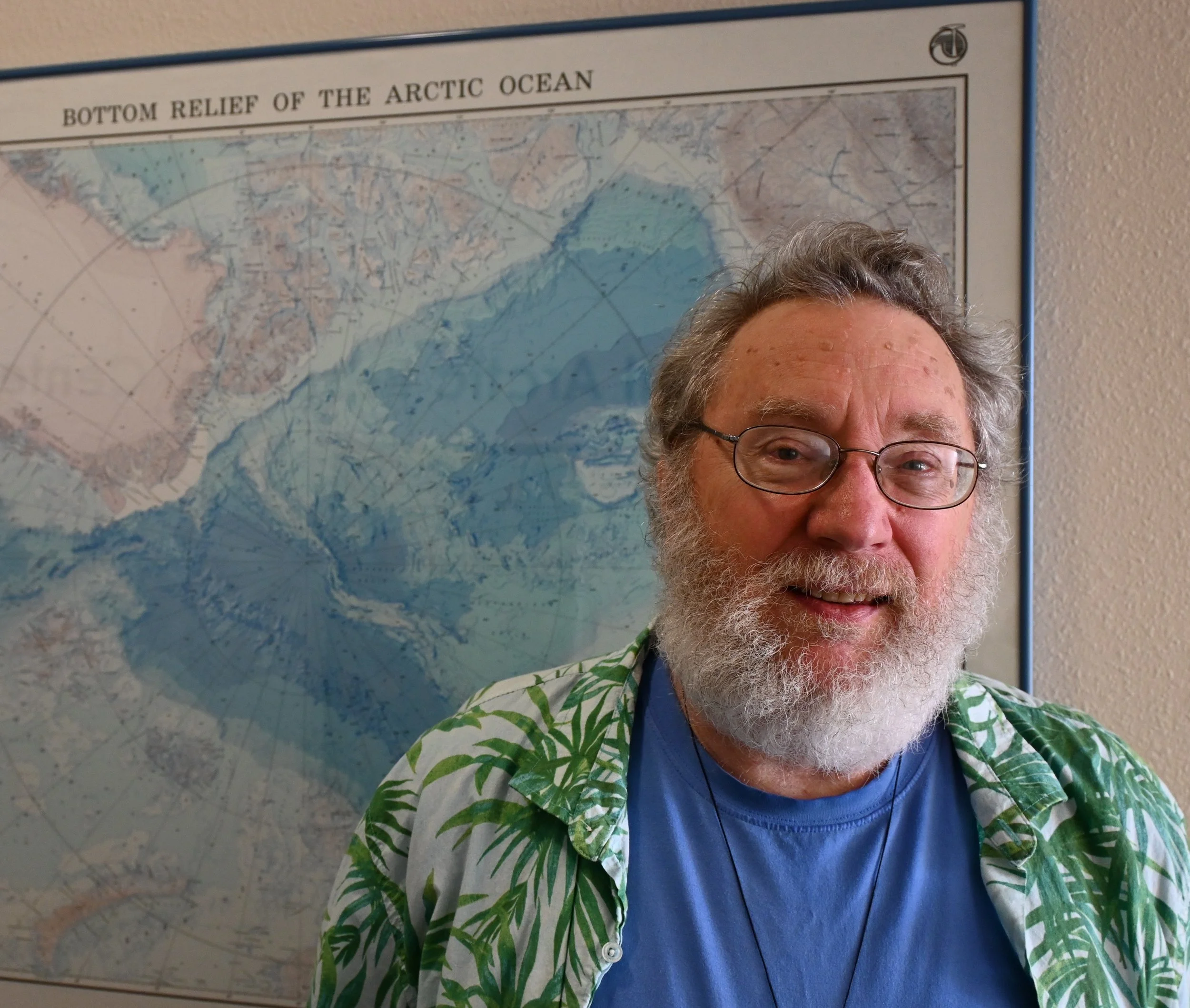
Photo by Colin A. Warren
Rick Thoman is an Alaska and Arctic climate specialist who currently works for both the Alaska Center for Climate Assessment and Policy and the International Arctic Research Center at the University of Alaska Fairbanks.
Over most of Alaska, including Fairbanks, it has been a mild fall season with fairly low amounts of snow, though Fairbanks had one of the wettest Octobers on record. “The vast majority of that precipitation at valley level came as rain,” he said.
Thoman explained that Fairbanks had ten days or so of “coolish” weather, but now has transitioned to a warmer weather pattern. There have been several storms moving up through the Bering Sea with the south winds bringing in warmer air.
Fairbanks has experienced temperature inversions as well. Valleys have much colder air than areas just a few hundred feet up. “Eariler this week, for instance, the upper elevations of Chena Ridge and Farmer’s Loop Ridge were 25 to 30 degrees warmer than the valley floor,” Thoman said.
When asked to speculate on if this year’s winter will become more of a frigid kind, Thoman talked about the worldwide climate patterns El Niño and La Niña. La Niña, the cooling phase of the waters in the eastern Pacific, is characterized by swings of temperature in interior Alaska. El Niño, the warmer phase, contributes to more mild winters throughout the course of the winter.
Since Alaska is currently experiencing a weak La Niña, there may be a few weeks of warmer weather or vice versa. His confidence in a typical La Niña winter is very low.
Like previous years, 2024-25 was a weak La Niña, but 2023-24 was one of the strongest El Niños on record. “[It] was like nothing we would have ever expected,” he said. There was sustained 40 below weather two winters ago, but the airport never reached that temperature last year.
This year, he said, is not cold by historical standards.
The coldest temperature Thoman ever experienced in Fairbanks was a whopping minus 58 Fahrenheit on February 2, 1993. “I was a forecaster with the weather service at the time, and it was 58 below that morning. That was a cold drive in [to town],” he said. Thoman noted that Fairbanks just doesn’t get into the minus 50s anymore.
When asked next about climate change, Thoman said that there is always year-to-year variability in weather, offering a metaphor: “Imagine that you’re going up on an escalator and you have a three-year-old with you,” he said. At times, Thoman explained, the child runs down fast enough that they actually go down, but the escalator keeps going up, continuing their upward trajectory.
He explained that oceans have heat, and they cover 71% of the Earth’s surface. They are warming Alaska.
As for the warmest weather he’d ever experienced in Fairbanks, Thoman said it was 94 degrees Fahrenheit on the summer solstice of 1991.
As Thoman put it, “Interior Alaska is a place of extremes.”