

Alaska’s plumaged inhabitants - How the 49th state hosts an incredible variety of birds
By Gabriele Rigaudo
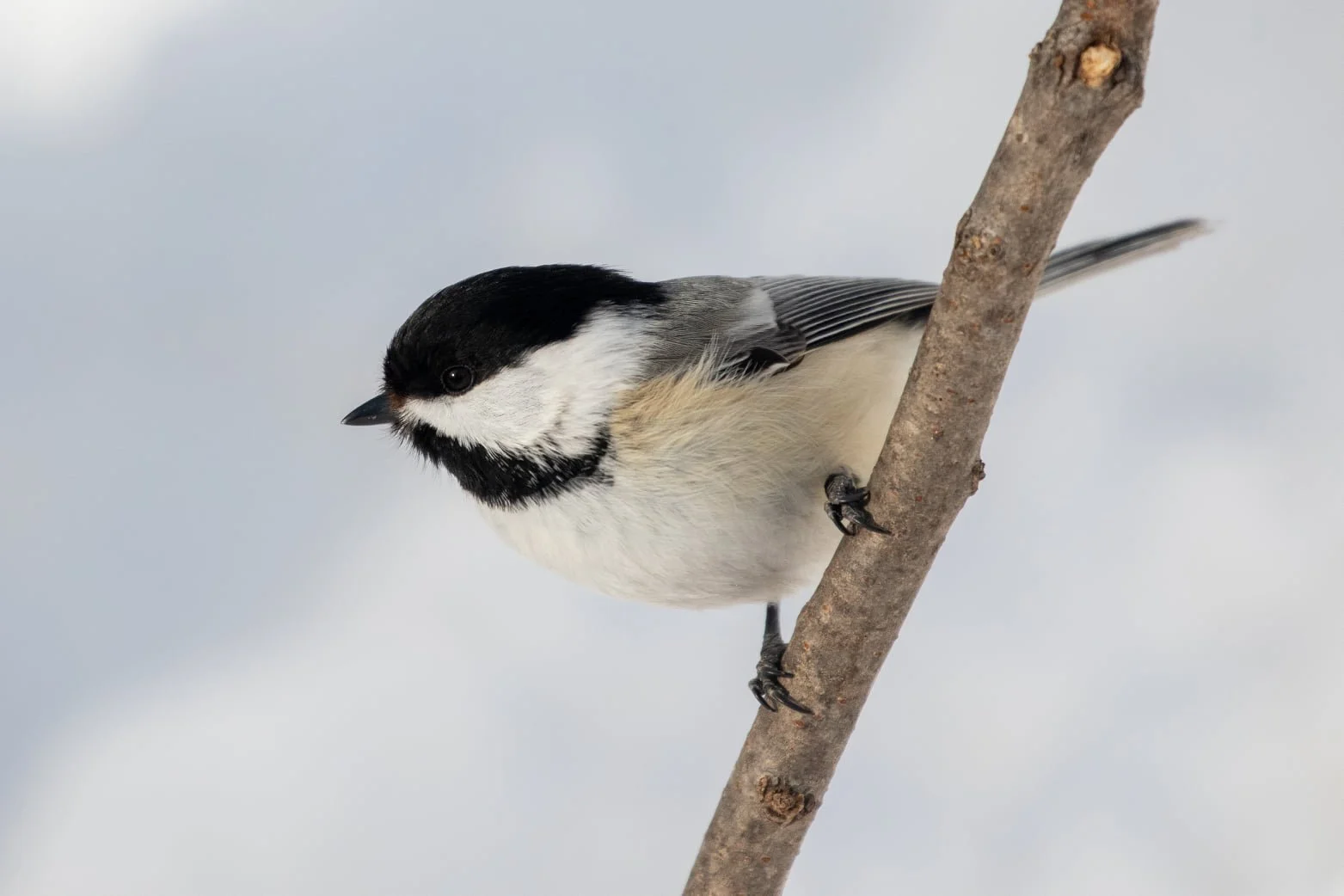
Photo courtesy of Robert Larson, U.S. Fish and Wildlife Service.
A Black-capped Chickadee, one of the two species of bird central to Dobrish’s work.
Every year, birds from around the world migrate to Alaska during the spring. Alaska’s vast landscapes, nearly 24 hours of sunlight, and the abundance of food make the state particularly appealing for birds trying to provide the best growing conditions for their offspring. Because of this, hundreds of thousands of birders visit the 49th state each year, hoping to observe firsthand this natural exhibition.
A key contributor to Alaska's economy, birding accounts for a large portion of the state’s tourism revenue. A study by the University of Alaska Fairbanks highlighted how the average birder spends, on average, 58% more on trip-related expenses than other visitors. In 2016 alone, birding-related expenditures generated $378 million for Alaska’s economy.
Wetlands spanning thousands of square miles, boreal forests reaching past the horizon, a coastline longer than the mainland’s, and millions of lakes are among the reasons Alaska supports such an incredible diversity of birds.
Alaska is home to more than 530 bird species, according to the Alaska Department of Fish and Game, with some remaining year-round residents and others arriving only seasonally. Generally, the fauna in habitats that are closer to the poles tends to be less diverse than warmer, tropical regions. Still, Alaska has some tricks up its sleeve, making this effect less prominent: “Many of the migratory species come here to take advantage of the long daylight and abundant food to raise their young. Long summer days mean they can feed their young around the clock, chicks grow fast with all the food, and many species tend to lay more eggs per nest than more southerly populations,” explained Phred Benham, Assistant Professor of Biology at UAF, who focused most of his research career on bird evolutionary ecology and conservation.
In addition to this, Alaska sits extremely close to the Asian continent, with the Bering Sea not representing that big of a hurdle for migratory birds. At its closest point, the continents are separated by about 53 miles (85 kilometers). Combined with islands that provide useful stepping stones and favorable seasonal weather windows, these factors facilitate bird migration.
Still, the Bering Sea used to be, during the Ice Ages, even less of an obstacle. On the contrary, with the lower sea levels characterizing those years, Beringia, a land stretch that used to connect Alaska and Russia, represented a true “glacial refugium,” meaning it provided isolated habitable lands while much of today’s continent was covered by enormous ice sheets.
This isolation contributed not only to the survival of bird species throughout a freezing time on our planet but was also key in the speciation of “a large number of species found nowhere else in the world, but around Alaska and the Bering Sea,” said Benham. These species are considered endemic, meaning they are restricted to a specific geographic region.
While millions of birds call Alaska home just for a period of the year, before leaving the state once the temperatures fall below zero, few species remain. While most of the year-round birds that survive in Alaska are found in the milder coastal regions, even fewer evolved to endure the long, dark, and cold interior winters.
Among those hardy year-round residents is one of the most important birds in Alaska’s history, the Willow Ptarmigan. Found throughout Alaska, it was proclaimed the state bird in 1955 for both its importance as a food source and for its distinctiveness, as it is not found in the Lower 48.
Still, other, less famous birds are of interest for researchers.
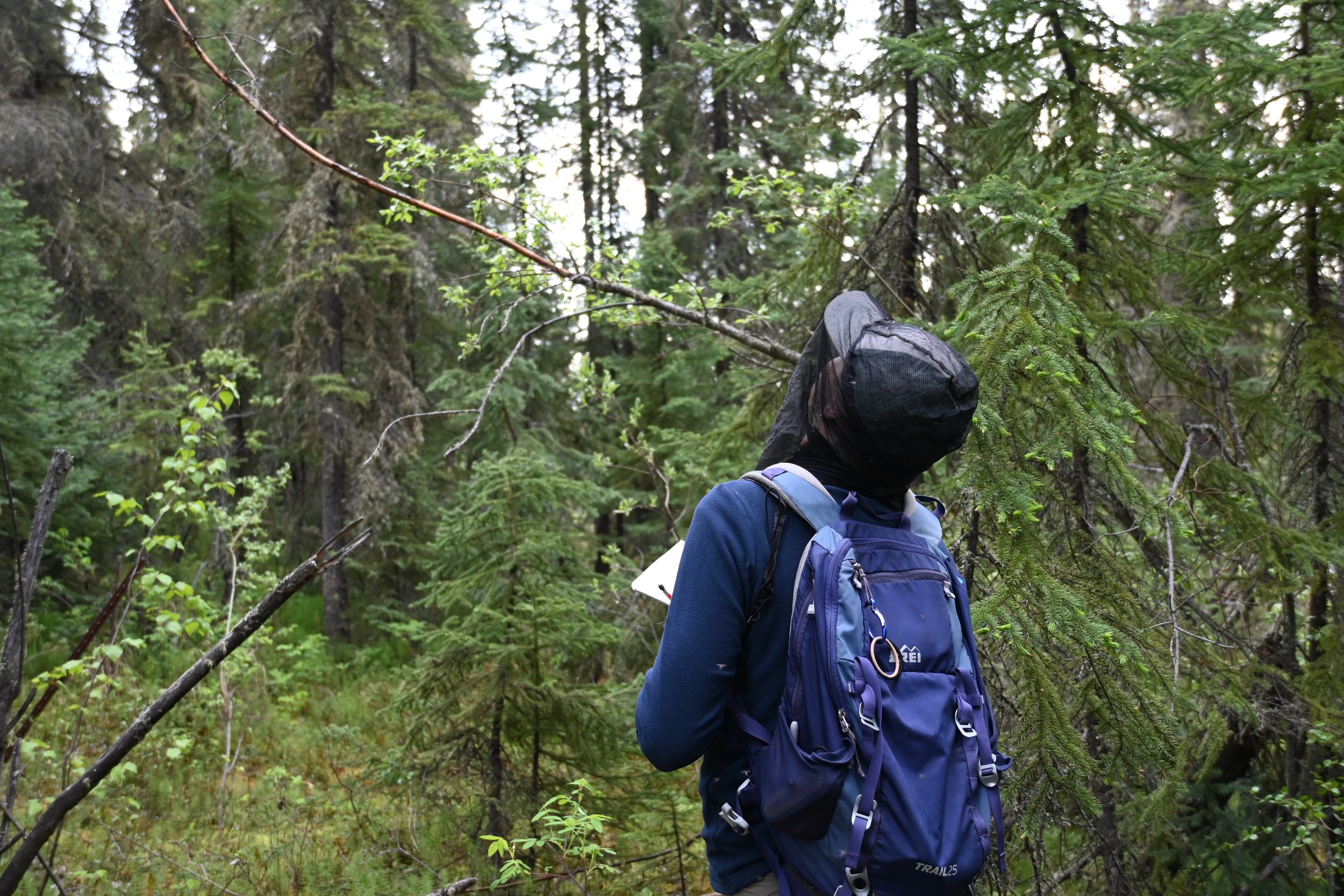
Photo by Gabriele Rigaudo
Kolibri Dobrish during one of her on-site data collections.
The Boreal and Black-capped Chickadees are extremely small – about the weight of three nickels – songbirds that survive the interior year-round. To cope with the frigid temperatures of the interior, they rely on both their plumage and shivering, similar to humans, according to Benham. Still, an improved down jacket and some rapid movements are often not enough when you are just a few inches tall. “Chickadees … become hypothermic overnight, dropping their body temperature by over 10 degrees Celsius,” said Benham. Not only that, they show behavioral changes too, such as huddling in communal roosts.
Kolibri Dobrish is a master’s student in Dr. Benham’s lab. Her master’s project combines ecology and physiology to better understand how these small creatures (both Boreal and Black-capped Chickadees) cope with the ever-increasing temperatures at the poles.
“We analyzed 121 different sites in the Fairbanks surroundings,” Dobrish explained. Dobrish’s job was to record the chickadee population by sight and sound, while simultaneously measuring the local habitat conditions. The goal is to understand why Boreal Chickadee populations are becoming increasingly restricted to cooler forest microclimates, while the more adaptable Black-capped Chickadee can withstand a broader range of environments.
The second part of the study focuses on the physiological response of chickadees to heat stress. “We will measure O2 consumption and evaporative water loss in a respirometry chamber to quantify how much heat each chickadee species tolerates,” Dobrish said. The study will follow approved animal care protocols, and the birds tested will be safely released back into their habitat.
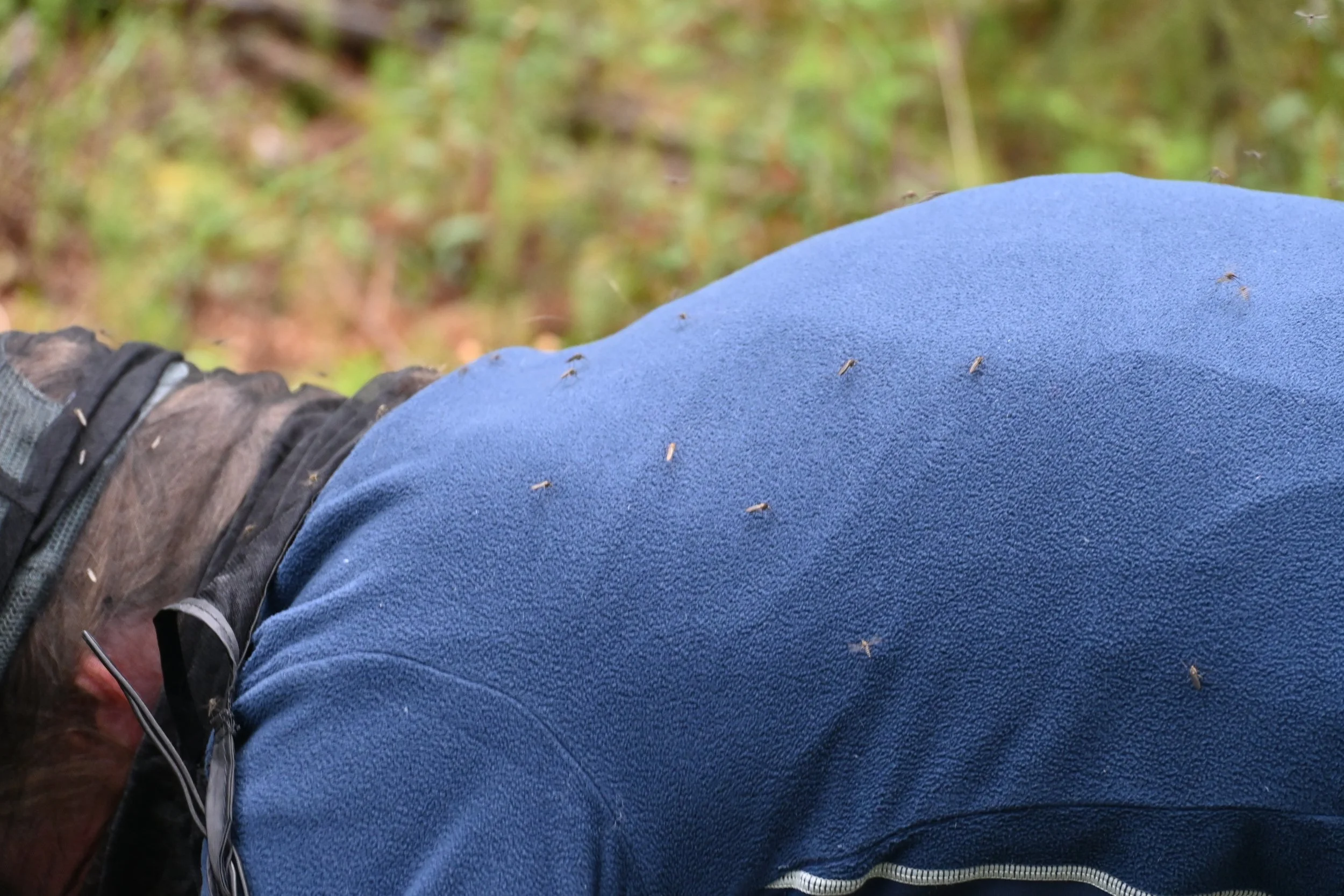
Photo by Gabriele Rigaudo
Bugs represent one of the challenges of fieldwork in Alaska. Still, their proliferation represents an extremely valuable source of food for Alaska’s birds.
Dobrish’s work on chickadees is only one of the many research projects aiming to assess birds’ response to the warming climate.
As insect emergence in Alaska occurs earlier each year, some birds are adjusting their migration timing to keep pace, while others are struggling to adapt, according to Benham.
Furthermore, there is evidence that birds are changing not only behaviorally but also morphologically. “In lots of places birds tend to get smaller in body size,” said Benham. While this general rule, stating that birds in warmer climates shrink in body size and enlarge appendages, was first described as early as the 1800s by Bergmann and Allen, little is known about how this might affect a warmer Arctic, Benham said.
For anyone interested in experiencing Alaska’s bird diversity firsthand, it is worth noting that there are rules and regulations every individual interested in the matter should follow.
As Benham said, the American Birding Association updates its Code of Birding Ethics regularly.
Regarding Alaska’s birds, Benham also recognizes the economic impact of birders in Alaska: “It is great that so many people are traveling to come learn and experience the bird life in the state,” he continued. “Both enthusiasm for bird life and economic impact can increase funding for bird conservation and habitat protection.”