

Fairbanksians grapple with high fuel prices
By Aaron Thomas
As students prepare to travel home, high fuel and energy prices squeeze Fairbanksians.
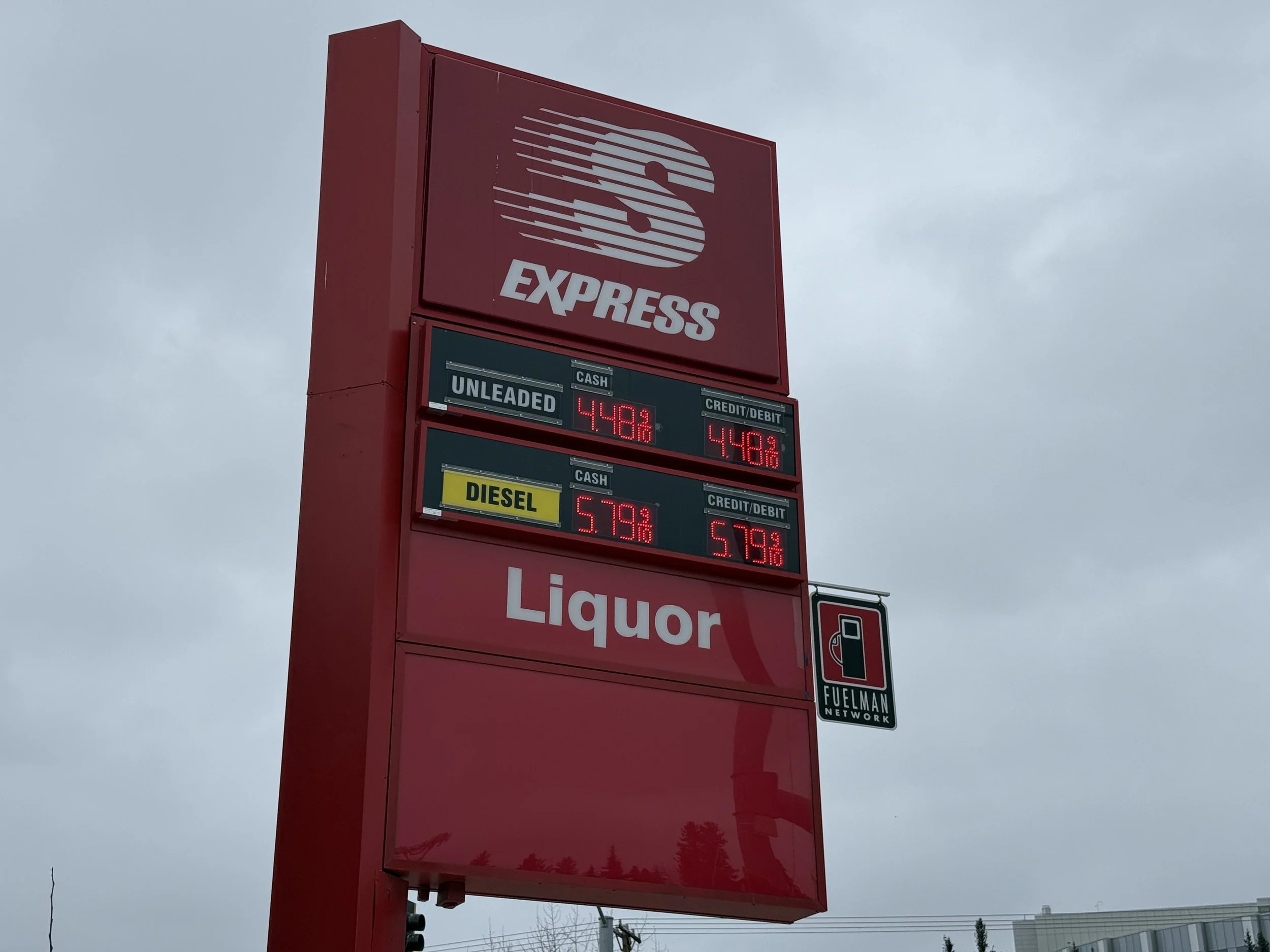
Gas prices at the Speedway Express gas station on College Road and University Ave on April 12, 2026.
The ongoing conflict in Iran has led to the closure of the Strait of Hormuz, a shipping corridor off the Arabian peninsula. The Strait of Hormuz is critical to the global energy supply, with approximately 20% of the world’s crude oil passing through it.
The blockade has pushed crude oil prices in excess of $100 per barrel, driving higher gas prices across the world.
“It’s expensive to drive, especially with a truck, " said Matthias Lang, a student at UAF. “It’s probably getting close to $100 per tank, compared to $60 or $70 [before the conflict].” Lang said he was “not looking forward” to his drive home to Wasilla with increased gas prices.
Students traveling home over summer break find themselves facing higher airfares as the price of jet fuel increases.
“It definitely affects my savings,” said Amina Downs, a student at UAF flying home to Houston, Texas over the summer. Downs said she is looking at tickets for a trip later this summer and said she was shocked by the increase in airfare prices.
Airlines such as Alaska Airlines have increased baggage fees to compensate for the rising price of jet fuel. Alaska Airlines cited “ongoing volatility in fuel prices and an uncertain global environment” as justification for the price increase. Downs said she was disappointed by the additional baggage fees. “I know they have to get the money from somewhere, but no one has any money to give at this point,” said Downs.
“I'll probably have to work a bit more to save up for more next year,” said Downs.
Several other airlines such as Delta and Hawaiian Airlines have also increased their baggage prices due to fuel costs.
Smaller airlines in the state such as Alaska Seaplanes have also announced price hikes. Alaska Seaplanes now charges a 6% fuel surcharge, citing a 40% increase in the cost of fuel since the start of the conflict in Iran.
Students traveling home by car are also feeling the effects of rising costs. In March, gas prices in Alaska crossed the $4.00 per gallon mark for the first time since 2022. According to AAA, fuel prices have increased nearly a dollar per gallon since the start of the conflict in Iran.
“When it was really expensive, I wasn't even able to fully fill up my tank because the gas stations would you know shut off the pump off at about $70,” said Matthias Eilertson, a senior at UAF. Eilertson said that his drive down to Anchorage this April cost him more than double what it usually does.
Matthew Crisafi-Lurtsema, an engineering student and commercial fisherman in Prince William Sound, said that high fuel prices could affect the commercial fishing industry. Crisafi-Lurtsema said that seasonal profits are “split between what the boat needed for maintenance and fuel and whatever other costs there are” and that rising fuel prices would cut into profit margins “a little bit more.”
“I’d imagine communities where fuel is already expensive, you know, it's going to hit them the hardest,” said Eilertson.