

Saving lives, stopping blood at UAF
Story and photo by Tane Timling
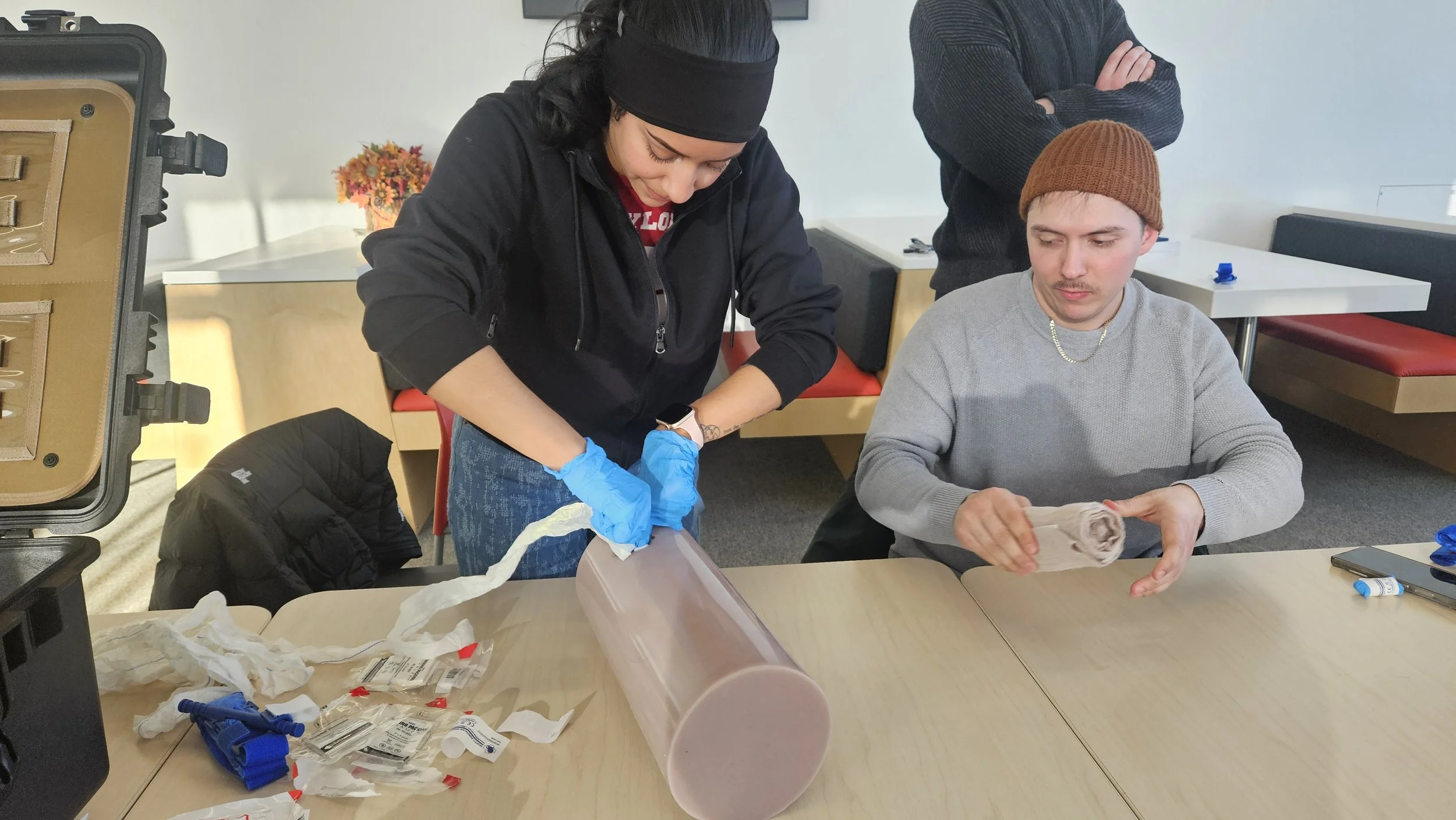
Students packing a simulated wound for UAF Pre-Health Society's Stop the Bleed course.
The UAF Pre-Health Society hosted a Stop the Bleed training course, which is licensed by the U.S. Department of Defense, this past Thursday at the Margaret Murie Building. President of the Pre-Health Society Shea Geller said the primary purpose of this course is for people to be able to “protect themselves and take care of themselves in a life threatening situation.”
The Department of Homeland Security provides statistics for the course which states 40% of trauma related deaths are from bleeding out. Participants are trained on the use of tourniquets and how to pack a wound with gauze to stop a bleed.
UAF Pre-Health Society uses this course as an educational opportunity. Geller first taught the course to staff last semester and is now teaching the course for the Pre-Health Society, which helps teach it to the student body. “It gives them a chance to see what it’s like teaching medicine to people who aren't in the field," said Geller.
The course has students partner up and practice the use of tourniquets on themselves and on others with the intent to experience how it feels. This is intended to prepare students for the patient's reaction to having the circulation cut off from a limb. The tourniquet clamping down on a limb is quite painful, but that is necessary to apply enough pressure to seal off the arteries providing blood to the limb. The limb will start to turn greyish and have no detectable pulse, which are all signs that tourniquet has been successfully applied and a wound would stop bleeding.
The next part of the course uses a rubber simulation wound which students are then tasked with packing a wound with medical gauze using the mantra “peel, push, pile, pressure.” The process layers gauze into a wound and keeps it tightly packed to keep pressure on the wound until medical assistance arrives on the scene. According to Geller “it can take more than seven minutes for an ambulance to get to you, you need to be able to take care of yourself because there is a good chance that you’ll bleed out before they get there.”