

Tribal leaders convene at UAF for 2025 Governance Symposium
Story by Amber McCain
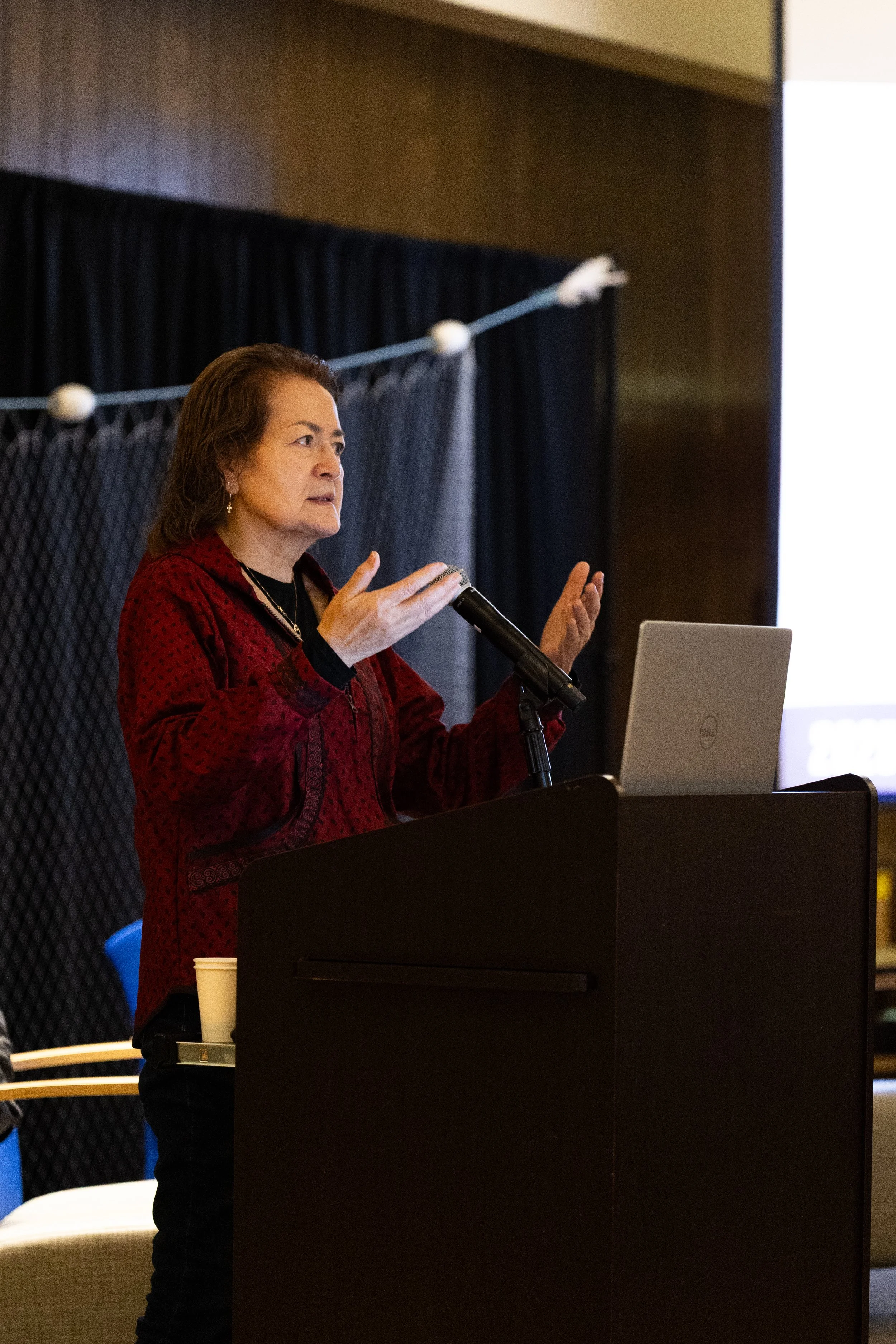
Photo by Elvie Underwood
Anna Huntington-Kriska, founder of UAF Tribal Governance program gives a tribal education keynote at the 2025 Tribal Governance Symposium.
Tribal leaders, scholars, and elders from across Alaska gathered together at the University of Alaska Fairbanks from Oct. 28–30 for the 2025 Tribal Governance Symposium, a three-day event centered on traditional leadership, sovereignty, and the future of Indigenous governance.
The event opened with an elder blessing and traditional songs by Sonny Luke and Ariella Derricksen. UAF Interim Chancellor Mike Sfraga and Fairbanks Native Association Executive Director Melissa Charlie welcomed participants.
Charlene Stern, UAF’s interim provost, said the Tribal Governance Program has grown in direct response to Alaska Native communities’ needs in a sit-down with The Sun Star.
“The program started years ago as Tribal Management, and in 2022 it became Tribal Governance,” Stern said. “It began as an occupational endorsement and certificate, then an associate degree, and now they’ve just submitted for a bachelor’s degree, which is really exciting.”
She described the program as “homegrown out of the needs of the tribes in the state,” with most students already serving in leadership roles while pursuing their education remotely.
“It’s been unique because it was one of the first programs built around what tribal leaders and administrators were asking for,” Stern said. “Students can call in from wherever they are across Alaska, even before that kind of distance learning was common.”
Stern said hosting the symposium back on the UAF campus “is so meaningful.”
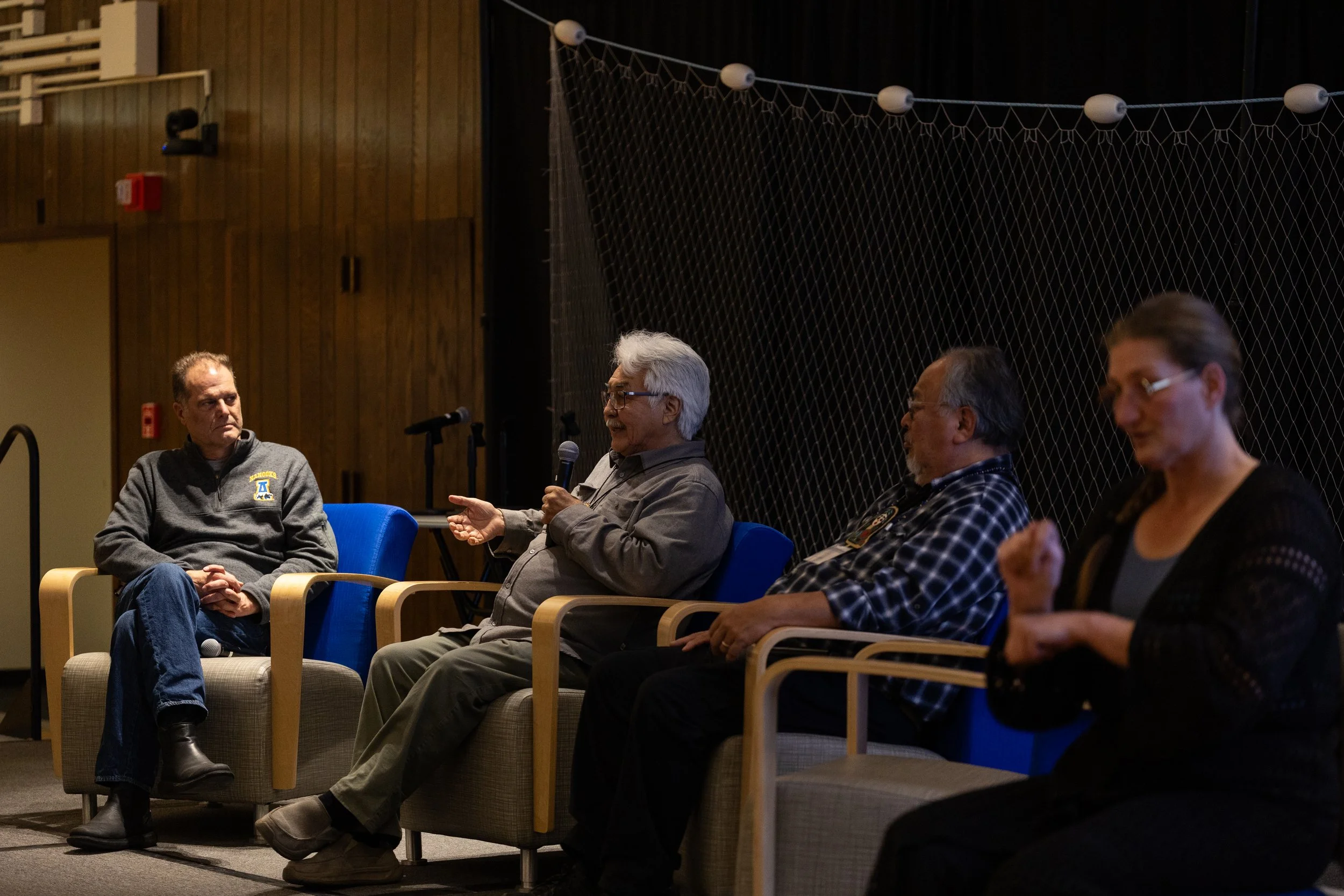
Photo by Elvie Underwood
Left to right, Kevin Illingworth with the UAF Department of Tribal Governance, Wilson Justin, Mike Jackson, Lisa Kemble, ASL Interpreter, at the 2025 Tribal Governance Symposium.
“It brings together chiefs, presidents, council members, students, elders, a rich few days of sharing and learning,” she said. “To have all those tribal representatives here makes an impact, and it keeps UAF responsive to the needs of the tribes and the students we serve.”
Bryan Uher, UAF interim vice chancellor for rural, community, and native education, spoke on the university’s long-standing commitment to Indigenous knowledge.
“For us to be hosting the Symposium again on campus… it means a lot,” Uher said. “The first peoples, we mean it, because it is part of our heritage at UAF. We had 200 people sign up… they’re choosing with their time, which is the most valuable thing anybody can give, to be here to share their knowledge and be with this community.”
Dawn Jackson, executive director of the organized village of Kake,recounted experience from her childhood in Cape Gloucester, Alaska during her keynote and the lessons passed down through the community. Jackson shared stories of youth learning from the land through cultural programs and science-based explorations, including examining core samples more than 11,000 years old.
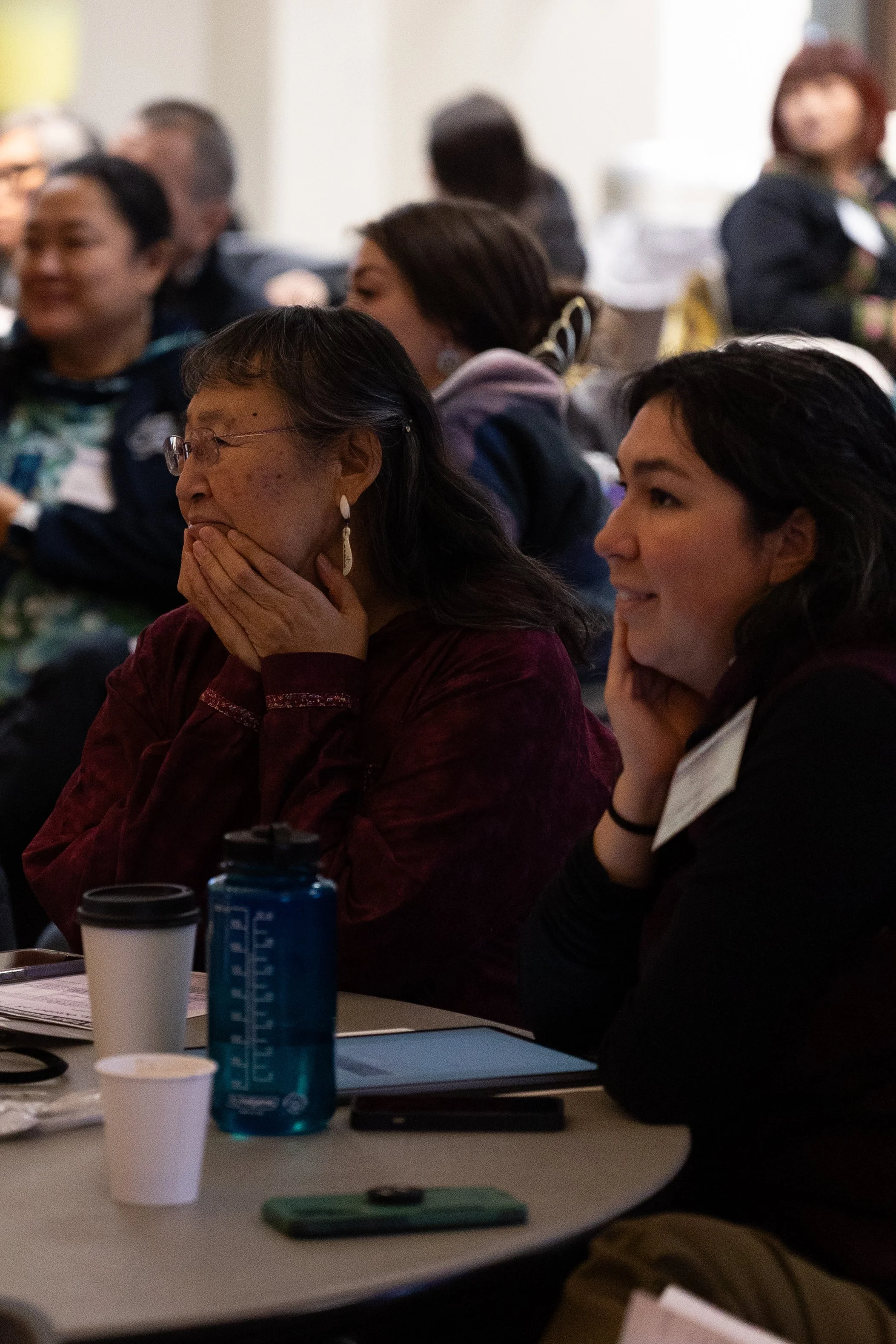
Photo by Elvie Underwood
Symposium attendees Lenora Carpluk, pictured left, and April Hostetter.
Panels throughout the symposium addressed traditional governance, tribal education, and sovereignty. Moderated by UAF faculty, discussions included elders and tribal officials such as Wilson Justin and Mike Jackson spoke on consensus-based decision-making and maintaining cultural continuity through reciprocity and responsibility.
Other panels, including “Being Sovereign” and “Practicing Sovereignty,” explored modern applications of tribal authority; participants included President Joel Jackson, Chief Galen Gilbert, and Joel Isaak. They talked about balancing federal agencies and preserving tribal self-determination while emphasizing the importance of traditional governance practices by living them, weaving ancestral values of balance, storytelling, reciprocity and service into the daily practices of governance, education, and community life.
Some events from the three-day event included “traditional trades” with Bruce Ervin as well as “the land loves us” with Tia Tidwell.
The symposium concluded reflecting back on its theme, “Yesterday, Today, Tomorrow,” linking ancestral wisdom and modern leadership. Daily blessings and performances honored elders and traditions.
“The symposium reminded us that tribal governance is not just about policy, it’s about people, community, and sustaining our culture for generations to come,” Jackson said. “It’s about making sure our youth see that it can be done and that they are supported every step of the way.”