

UAF’s new leaders share vision for university’s future
By Amber McCain
University of Alaska President Matt Cooper and University of Alaska Fairbanks Chancellor Russ Vander Lugt outlined priorities for research, enrollment and student success during UAF’s 2026 fall convocation.
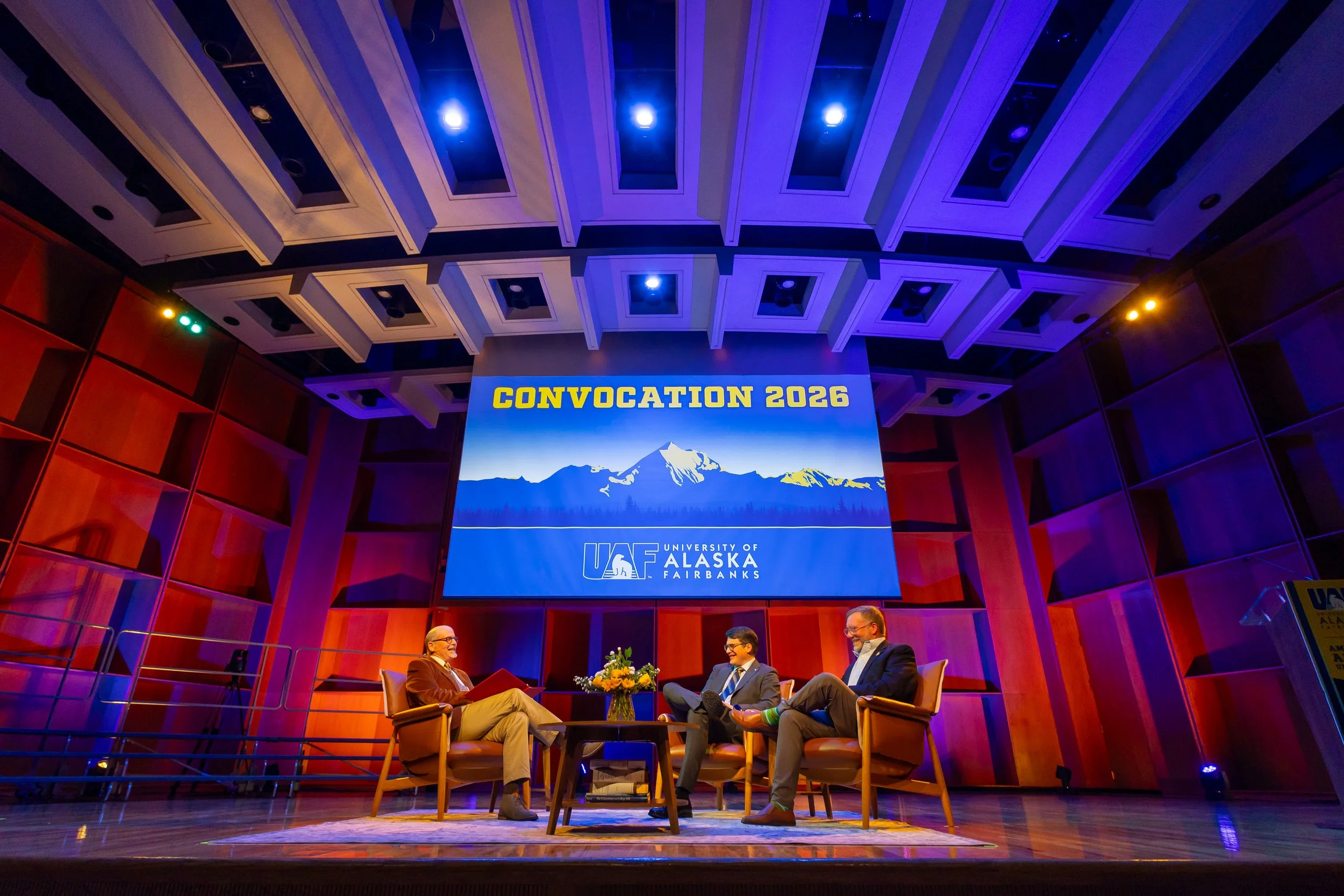
UAF Photo by Eric Engman/University Relations
The discussion, moderated by longtime Fairbanks broadcaster Robert Hannon, introduced the university’s new leaders and gave the campus community an opportunity to hear about their backgrounds, leadership philosophies and plans for UAF.
Both leaders emphasized collaboration, financial stability and listening to the university community as they begin their new roles.
“Leadership fails when it’s a person saying, 'You do this,’” Cooper said, describing his collaborative approach to leadership. He said leaders should encourage constructive disagreement and empower others to contribute to decisions.
Vander Lugt, a former U.S. Army Black Hawk helicopter pilot, said his military experience shaped his approach to leadership, which centers on building trust, establishing a shared purpose and helping others succeed.
He is conducting a 100-day immersion process to meet with UAF’s colleges, institutes and campus community. This will help shape the university’s long-term priorities.
“It’s not my strategic plan. It’s the university’s strategic plan,” Vander Lugt said.
Research and funding
Vander Lugt expressed optimism about UAF’s research future, citing opportunities in Arctic security, space research and critical minerals.
He said the university’s research funding remained steady at approximately $250 million in fiscal year 2025 and $251 million in fiscal year 2026. He also highlighted recent interest from NASA and the university’s Arctic and Homeland Defense Center as potential avenues for growth.
Cooper, meanwhile, said uncertainty surrounding Alaska’s state budget presents challenges for higher education. He estimated that the state needs an additional $500 million to $600 million to maintain its previous budget after accounting for rising fixed costs.
The university system is developing funding requests focused on recruitment, retention, graduation and job placement, Cooper said. He added that the university will continue advocating for state support while pursuing federal research funding and other partnerships.
Student success and enrollment
Both leaders identified student success as a central measure of the university’s future.
Cooper said enrollment efforts across the University of Alaska system have helped stabilize or increase student numbers compared with previous years. He said the university must also reduce administrative barriers that can make enrolling and remaining in school difficult.
“If you have to go through eight offices and click a whole bunch of boxes to register, that’s a barrier,” Cooper said.
Vander Lugt pointed to UAF’s Arctic location, Alaska Native student population and connections to military communities as strengths that distinguish the university from institutions elsewhere in the country.
He also cited planned changes to nonresident tuition and efforts to improve tuition transparency as ways to attract students. However, he said the university must ensure its facilities and infrastructure can accommodate future growth.
Looking ahead
Cooper said the university system has a strong foundation following years of financial challenges and the COVID-19 pandemic, creating an opportunity to establish long-term priorities.
Vander Lugt said feedback from students, faculty and staff will help shape UAF’s direction. The university is also preparing to begin a provost search, with listening sessions planned for November.
Both leaders encouraged community members to participate in upcoming discussions and submit questions ahead of town hall meetings.
Cooper said his long-term vision is a financially stable university system that meets Alaska’s educational and workforce needs. Vander Lugt emphasized the importance of pursuing research and enrollment opportunities while building a shared sense of purpose.
Both leaders said the university’s future depends on supporting students and strengthening its role in Alaska.