

20 Years of Expansion: How the UA Museum of the North has evolved
By Adisen Thomas
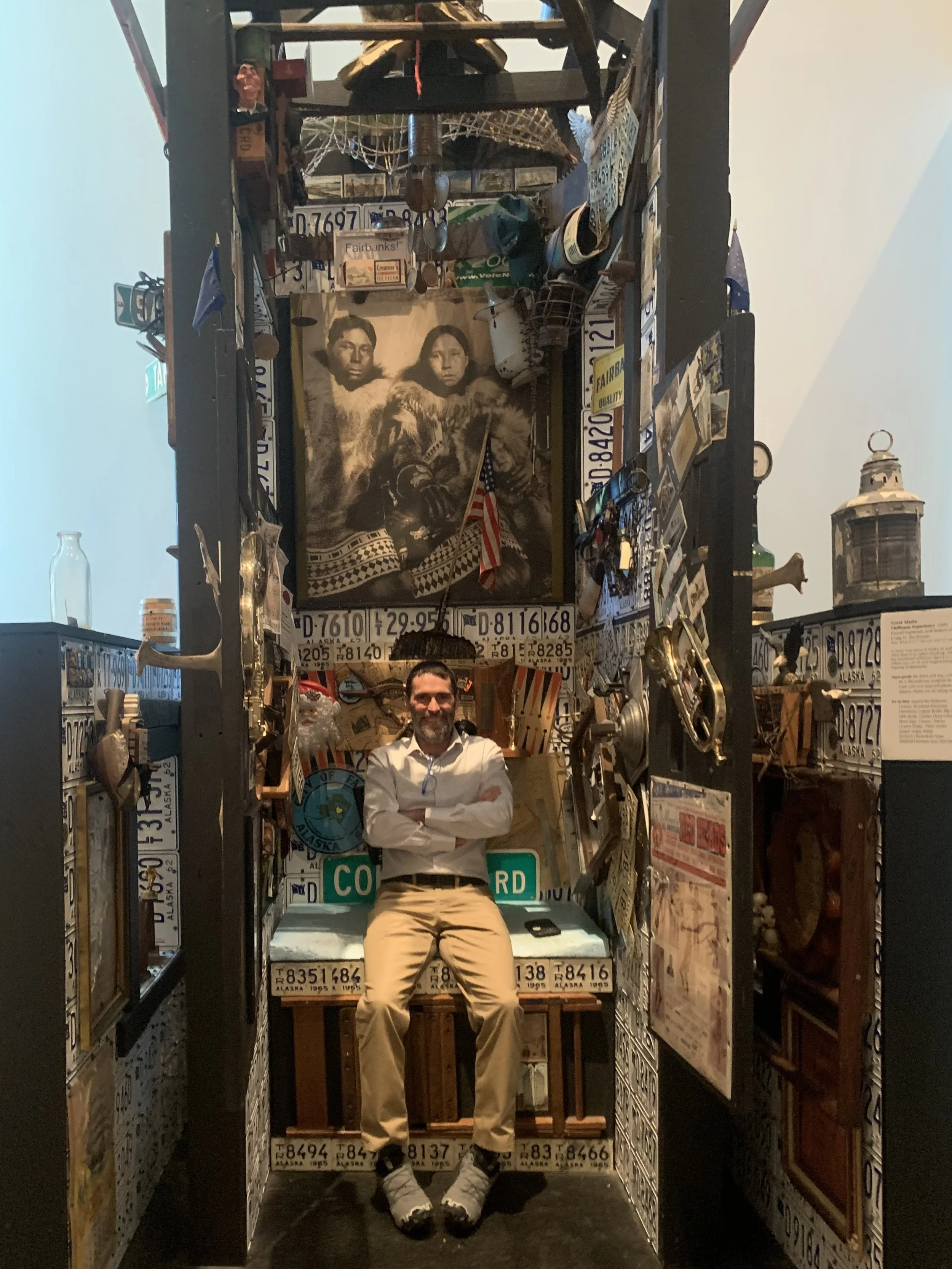
Museum Director Patrick Druckenmiller poses with Craig Buchanan’s “Great Alaska Outhouse Experience” in the Rose Berry Alaska Art Gallery at the University of Alaska Museum of the North.
The University of Alaska Museum of the North underwent a $42 million expansion in 2005, nearly doubling the facility’s size to 83,000 square feet.
More than two decades later, the expansion’s effects can be seen throughout the museum. The additional space has created opportunities for community artists, introduced visitors to Alaska through art, science and natural history, and given researchers and students more room to study Alaska and the Arctic while preserving millions of objects and specimens.
The Rose Berry Alaska Art Gallery was part of the expansion and opened in 2006. The gallery showcases more than 2,000 years of Alaskan art, ranging from photography to original ivory carvings.
“We have a really amazing mix of art, from stuff from Indigenous cultures to more modern Western art,” Museum Director Patrick Druckenmiller said. “One of the things we’ve done recently is open a space for community art exhibits.”
The rotating art exhibits keep the gallery fresh, especially for local audiences. The space also gives Alaskan artists an opportunity to showcase their work and allows community members to contribute to exhibitions. Artist Ree Nancarrow’s quilted work “Observations: Two Decades of Change” is currently on display.
“You might expect this museum in New York City or Los Angeles. I feel like people are surprised at the quality of the museum,” Druckenmiller said.
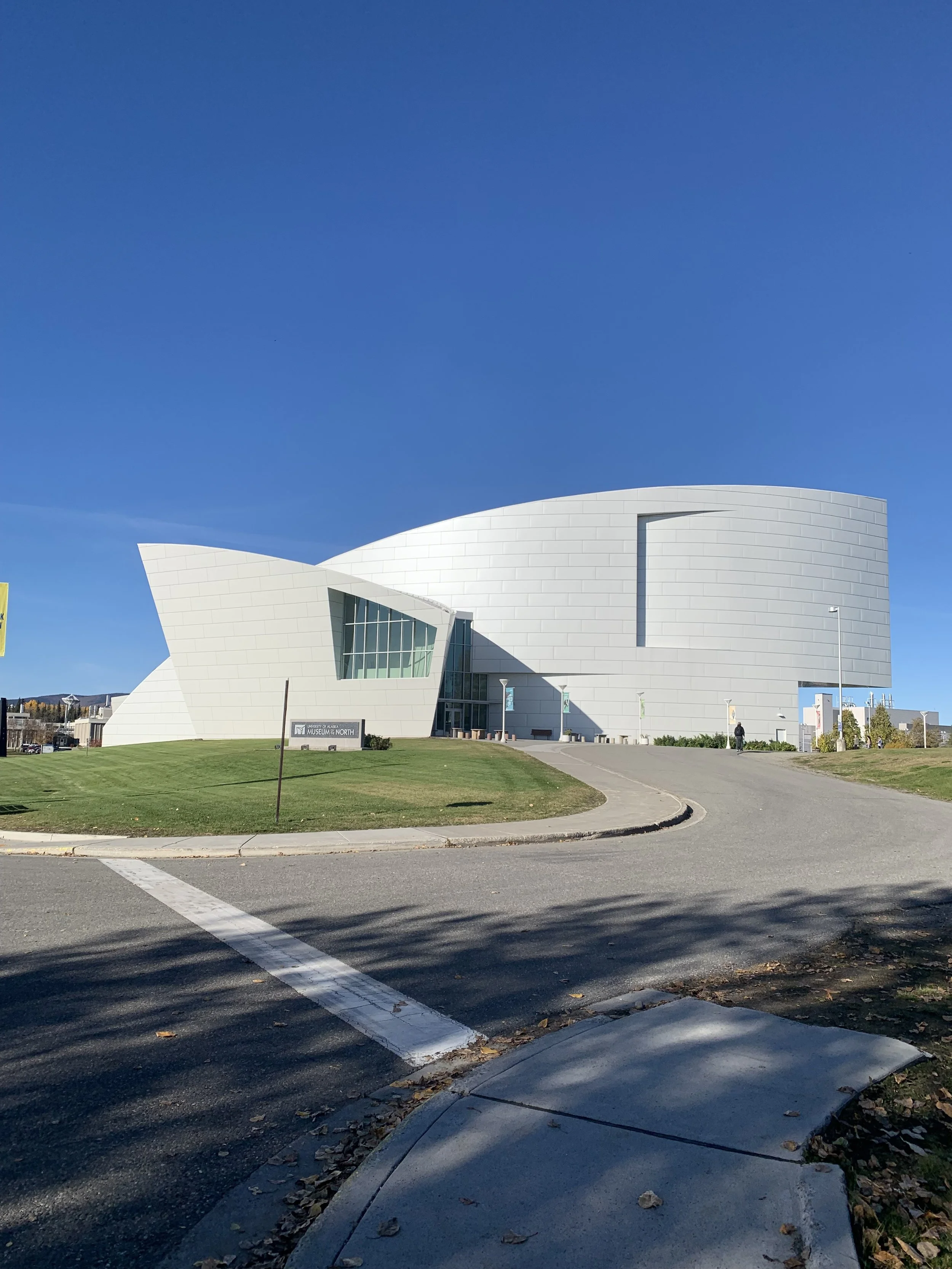
The University of Alaska Museum of the North’s modern exterior, photographed Sept. 25, 2026.
The famous bowhead whale skeleton is displayed between the museum’s upper and lower levels, catching visitors’ attention as they head upstairs to the art gallery. Reflecting on students’ reactions, Druckenmiller said, “I’d walk through the lobby, and a bus of kids just arrived. When they walk in, right away there are dinosaur skeletons, and they see the bowhead whale . . . it ignites so much excitement.”
The expansion also included “the Range,” an 11,000-square-foot main room that houses much of the museum’s estimated 2.5 million objects.
The museum’s collections span a wide range of subjects, from archaeology and fine art to marine life, mammals and botany. The expansion provided departments with new offices, laboratories and research space, strengthening the museum’s role as a research center.
“Our insect collection, for example: The current curator, Derek Sikes, has built that collection up to one of the most significant Arctic insect collections in the world,” Druckenmiller said, adding that the mammal department has the world’s largest collection of marine mammal specimens.
Looking ahead, Druckenmiller said the museum continues to develop its programs and visitor experiences. The Walt and Marita Babula Planetarium opened to the public in April 2026, adding another way for visitors to explore science and the natural world.
More than two decades after the expansion, the museum continues to bring art, science, research and community programming together under one roof.