

How I discovered I’d been living on a microgrid for years without knowing it
By: Kjrsten Schindler
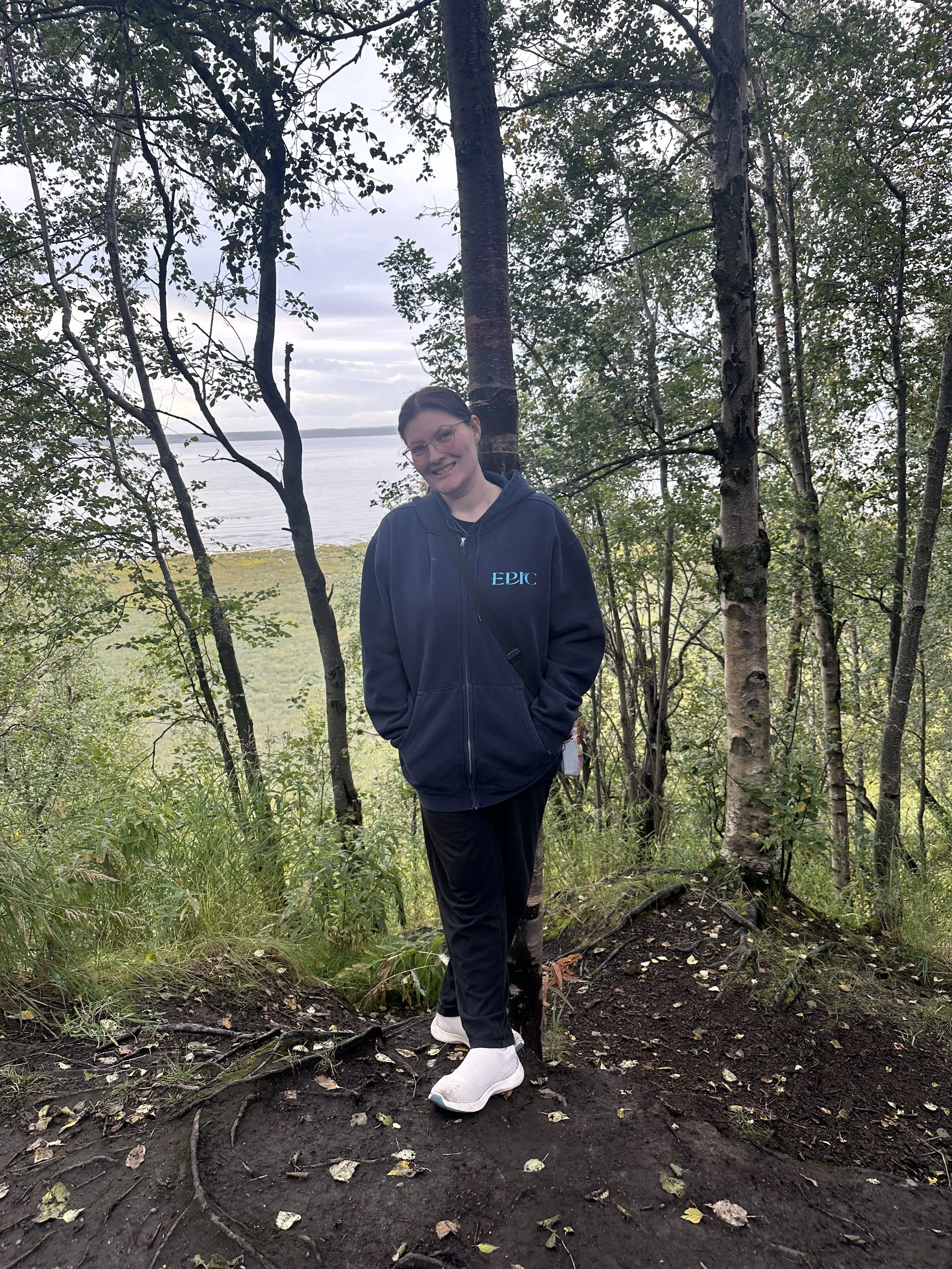
Photo credit: Jeanne Schindler
Kjrsten Schindler, whose experiences growing up in an off-grid Alaska home helped her discover a personal connection to the microgrid research conducted at ACEP.
When I first came to Alaska in 2012 as an 11-year-old, I had no idea what a microgrid was. In fact, I didn’t even know the word “microgrid” existed until I began my journey at the Alaska Center for Energy and Power (ACEP) at the University of Alaska Fairbanks (UAF). Little did I know, I was about to learn a lot about microgrids and power without realizing it.
When I first moved to Alaska, I never really thought about electricity. You flipped a switch, the lights illuminated, and life went on. That changed pretty quickly. The first memorable power outage after moving to Alaska actually wasn’t a power outage at all. We simply didn’t have power for the first two or three years. During those years, my family relied on small generators in our semi-converted motor home.
Eventually, my family developed our own power system, although getting there was anything but straightforward. The family originally handling our construction told us they could do everything, including the electrical work. Later, a licensed electrical inspector examined what had been installed and condemned the entire system. Among other problems, there were no grounds, creating serious risks of electrical shock, fire, electrocution and even explosion. And yes, I said “and”—there was a risk of more than one of these happening at the same time. We essentially had to start over, this time working with an actually licensed electrical engineer to rebuild the system correctly. Later, when we built our house, we developed a new system with generators, batteries, inverters and solar panels.
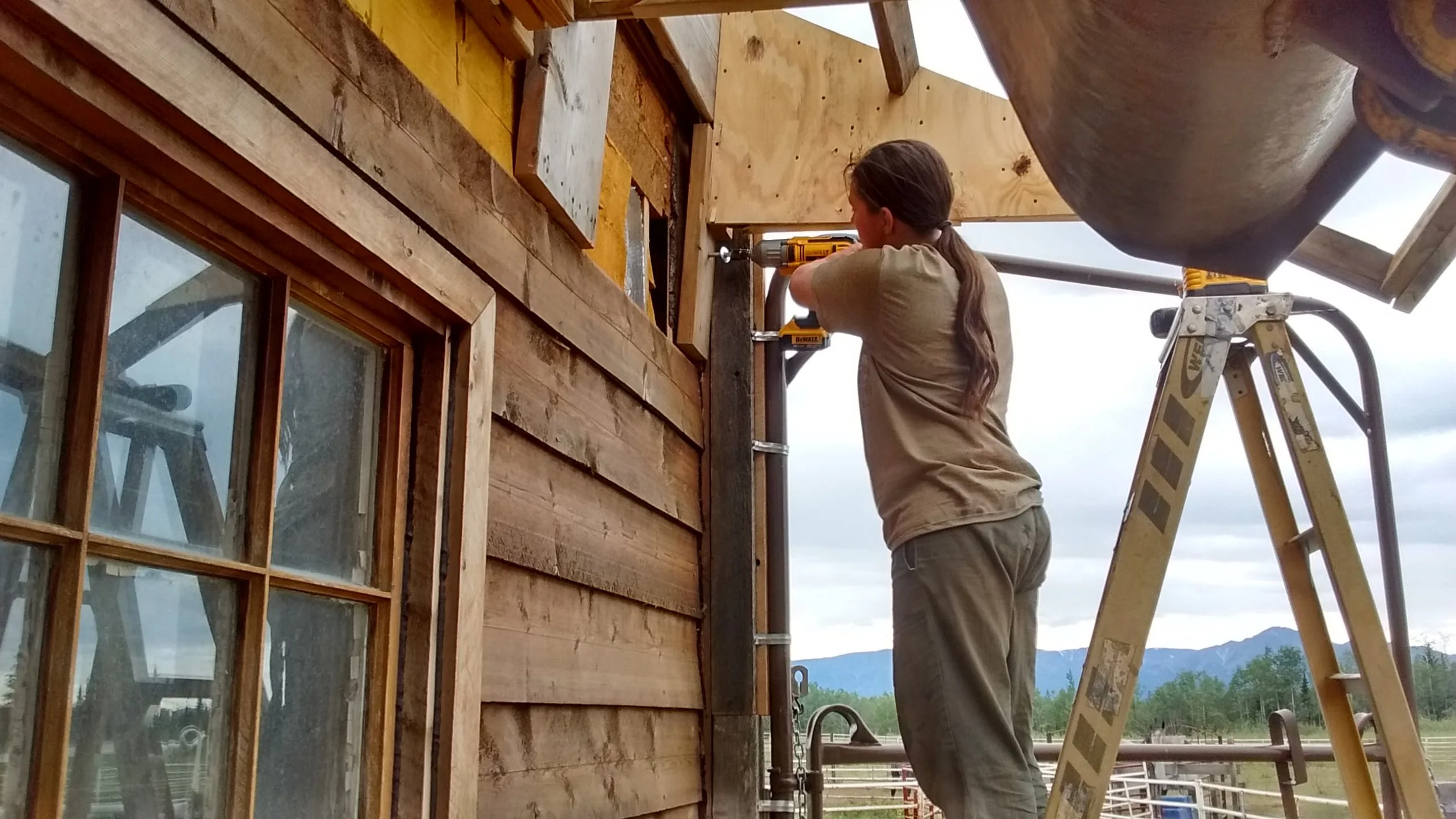
Photo credit: Jeanne Schindler
Kjrsten Schindler working on the family's barn during construction. Building and maintaining the family's property was part of growing up in rural Alaska.
Having our own power system is great, although it also means a “blackout” looks a little different at our house. Sometimes, when we called our neighbors, or when I called my mom while I was living in Fairbanks, they told her there was a blackout. Living off-grid means we don’t experience the kind of blackouts people connected to a larger grid do. Our blackouts usually mean our generator's autostart didn’t trigger and the batteries are empty. This can be especially frustrating on Mondays, when I attend my graduate school classes over Zoom. If the power goes out during class, I lose internet and most of my cell reception. This means Zoom
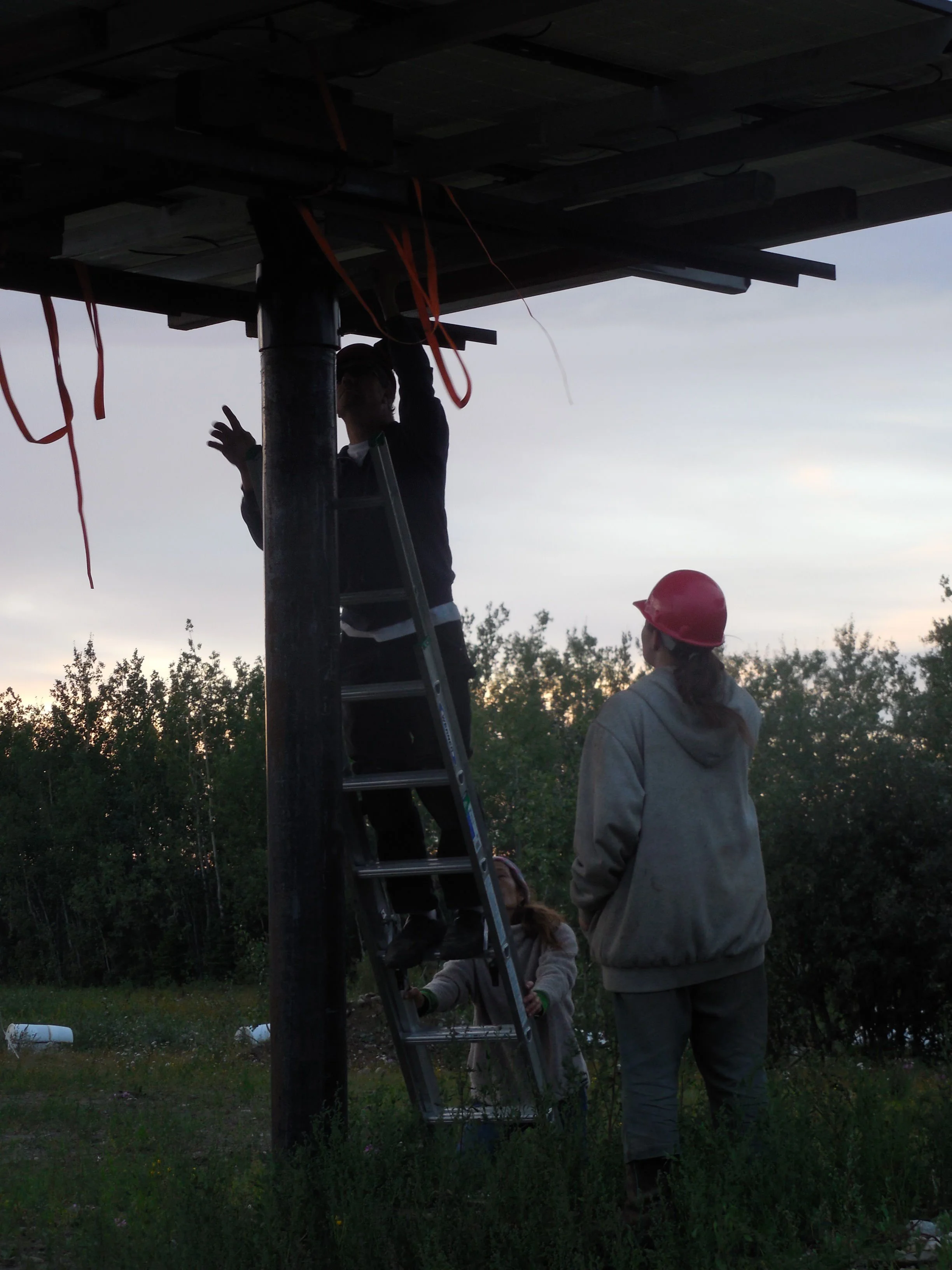
Photo credit: Jeanne Schindler
Our electrical administrator installing our first solar panel array in 2017. This installation marked the beginning of a solar system that would eventually expand to include multiple arrays.
freezes, and I usually can’t even text my professor to let them know what happened. My mom or I then have to go to the generator room and start the generator manually.
Even after it starts, everything in the house takes a few minutes to come back on, and the internet takes a few more minutes to reconnect. By the time I’m back in class, I can have missed up to 10 minutes—and potentially something important.
I knew how our system worked from helping rebuild and later install it, and from years of living with it, but I didn’t have a particular name for the whole thing. As far as I was concerned, we just lived off-grid.
That changed during one of my first meetings with Vanessa Raymond at ACEP. Vanessa used the term “microgrid,” and when she explained what it meant, it sounded suspiciously familiar. I told her about my family’s power situation: we were off-grid, not connected to the main power grid, and had our own generator, batteries, inverters, solar panels etc.
Right after I described our power system, Vanessa told me we had a microgrid, and asked if I had been living on one this whole time without knowing it.
“I guess so,” I replied, shrugging my shoulders, and we both laughed.
During that same meeting, Vanessa told me that Alaska has 10-12% of the world’s microgrids, with more than 200 rural communities operating independent microgrids. The number surprised me because I hadn't realized how common these systems were. At the same time, it somehow didn’t surprise me at all. This is Alaska, after all (and apparently my new catchphrase). With communities spread across enormous distances and many places disconnected from a larger electric grid, it suddenly made sense that so many Alaskans would have their own microgrids.
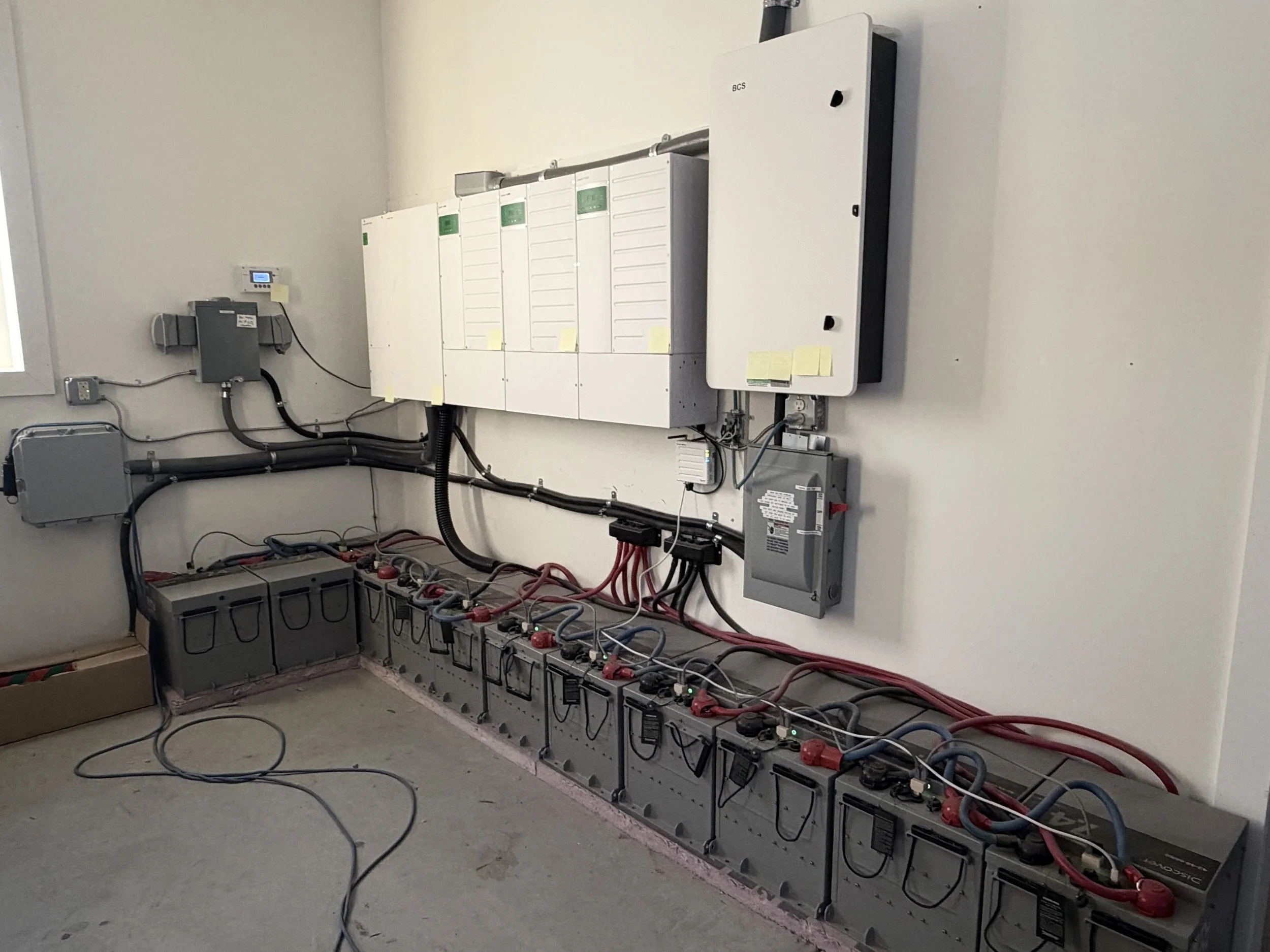
Photo credit: Kjrsten Schindler
Batteries and inverters are essential components of our family’s off-grid electrical system, helping store and manage the electricity used every day.
Working at ACEP as the ARCTIC Storytelling Coordinator gave me a new perspective on something that had simply become normal life for me. I spent years living off-grid, hearing generators turn on, watching battery levels, using solar power and knowing that if something went wrong with our system, we had to fix it ourselves. I had never really connected those everyday experiences to the larger energy challenges communities across Alaska face. While my family’s microgrid is much smaller and simpler than the systems powering entire communities, many of the basic concerns are familiar: Where does our power come from? How do we keep it reliable? What happens when something fails? And how can different energy sources work together to keep the lights—and everything else—on? ACEP didn’t introduce me to living with a microgrid; it gave me the language and a much larger context for understanding the one I had already been living with.
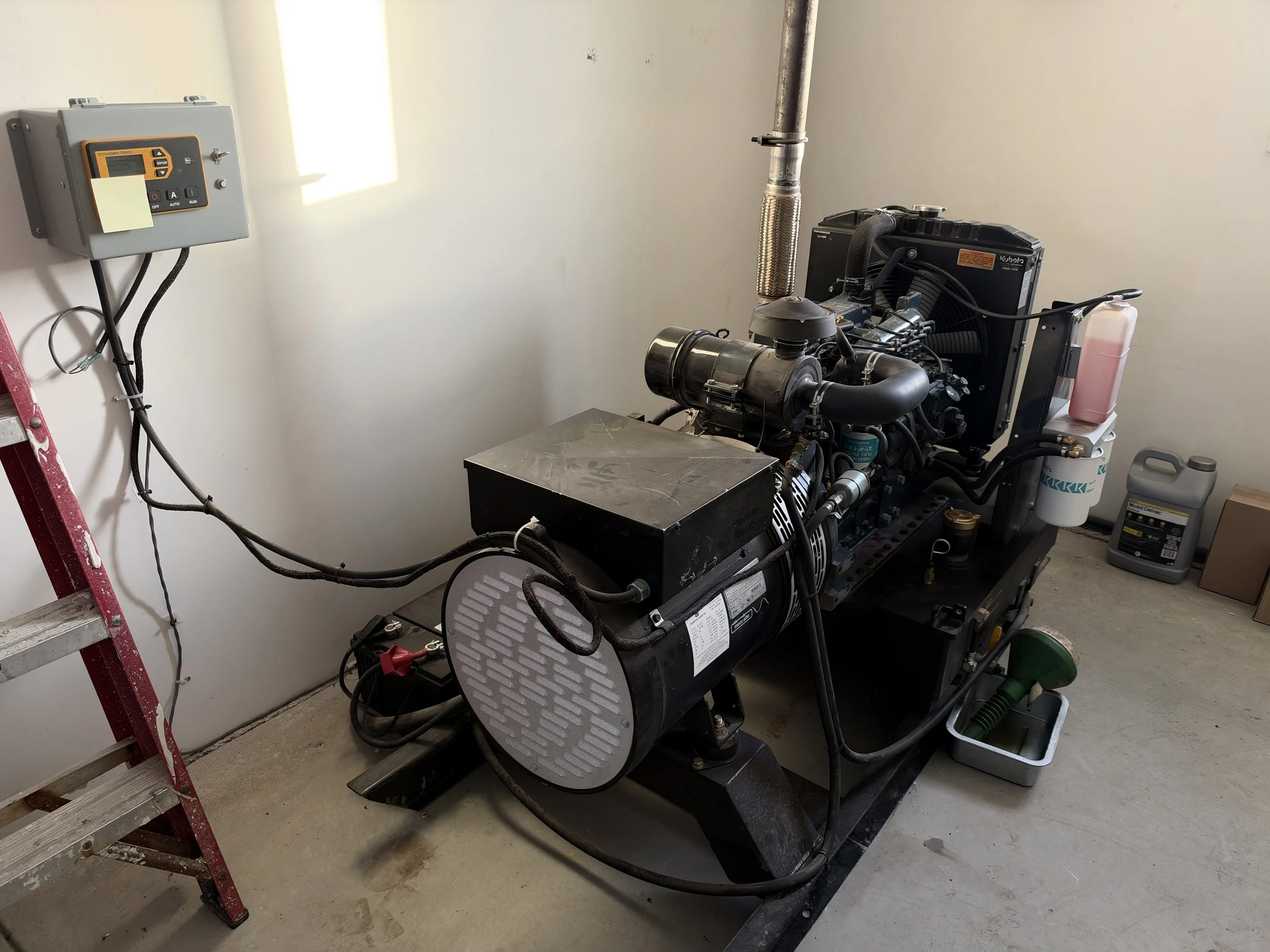
Photo credit: Kjrsten Schindler
Our family’s generator provides electricity when our batteries need additional power. When the automatic start doesn’t work, we have to start it manually.
If I could go back in time and explain microgrids to my 11-year-old self, I’d start with something familiar–something I knew, used and had seen used many times: our welder. Because of its four-prong cord (a 250-volt plug, for all you nerds like me out there!), we could only use the welder by plugging it into a generator with the right outlet. The generator produced its own electricity, separate from the power that normally comes through power lines, and supplied the electricity we needed to run the welder.
I’d tell my younger self to take that same basic idea and expand it. Instead of powering one welder, imagine a small electrical system that can power your home—or even an entire town like Bath, South Dakota, where we lived before. It might use generators, batteries, solar panels or other energy sources, all working together without depending on the main power grid. That’s a microgrid.
It turns out, my 11-year-old self was about to become much more familiar with that idea than she ever expected.
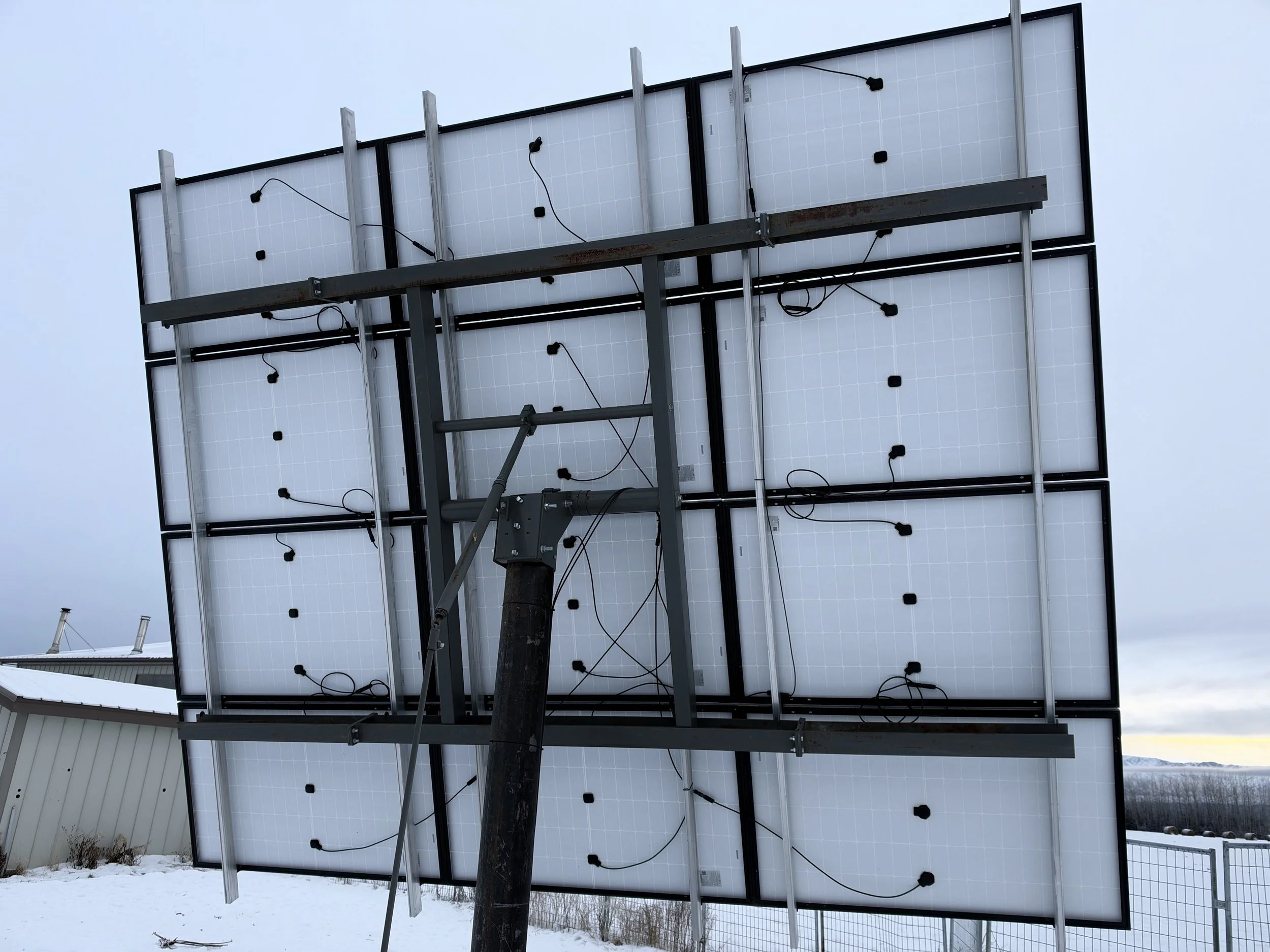
Photo credit: Kjrsten Schindler
One of our family’s solar arrays (4 total), which is part of the microgrid that has powered our off-grid system for years.
If, like my 11-year-old self, you’re new to microgrids—or if you want to understand them beyond my welder analogy—UAF offers the online course The Resilient and Renewable Grid: How Microgrids are Revolutionizing Energy Systems through edX:
https://www.edx.org/learn/engineering/university-of-alaska-fairbanks-the-resilient-and-renewabl e-grid-how-microgrids-are-revolutionizing-energy-systems
ACEP also offers short courses that give students, professionals, and community members opportunities to learn about energy through hands-on, place-based experiences: https://www.uaf.edu/acep/education-workforce-development/shortcourses.php
And now that you know what microgrids are, how would you explain them to your younger self?