

UAF Archives preserves history, makes it accessible
By: Jonathan Wasilewski
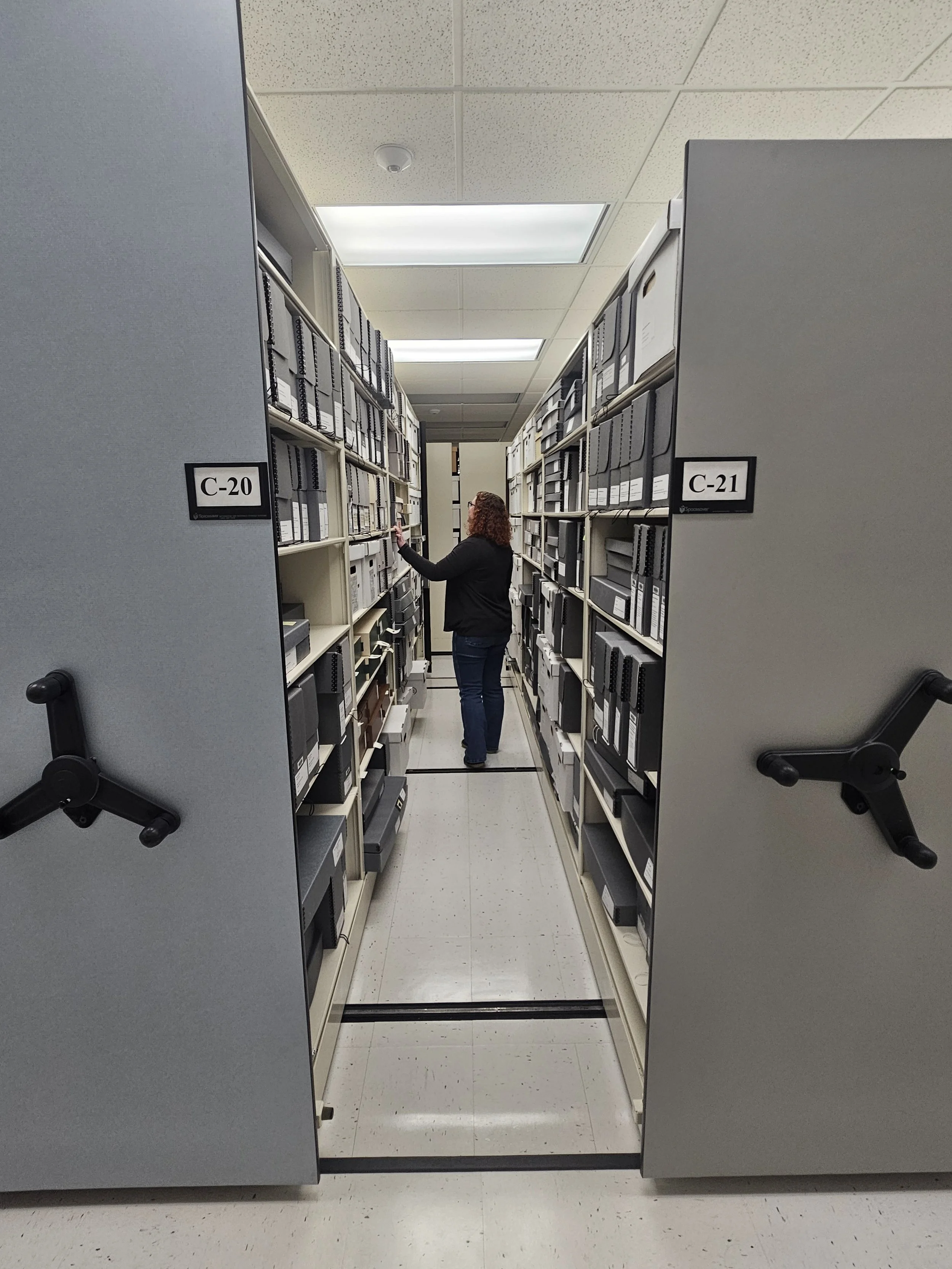
Archivist Fawn Carter pulls a box of records from the shelves while discussing the challenges of physical storage space, June 3, 2026.
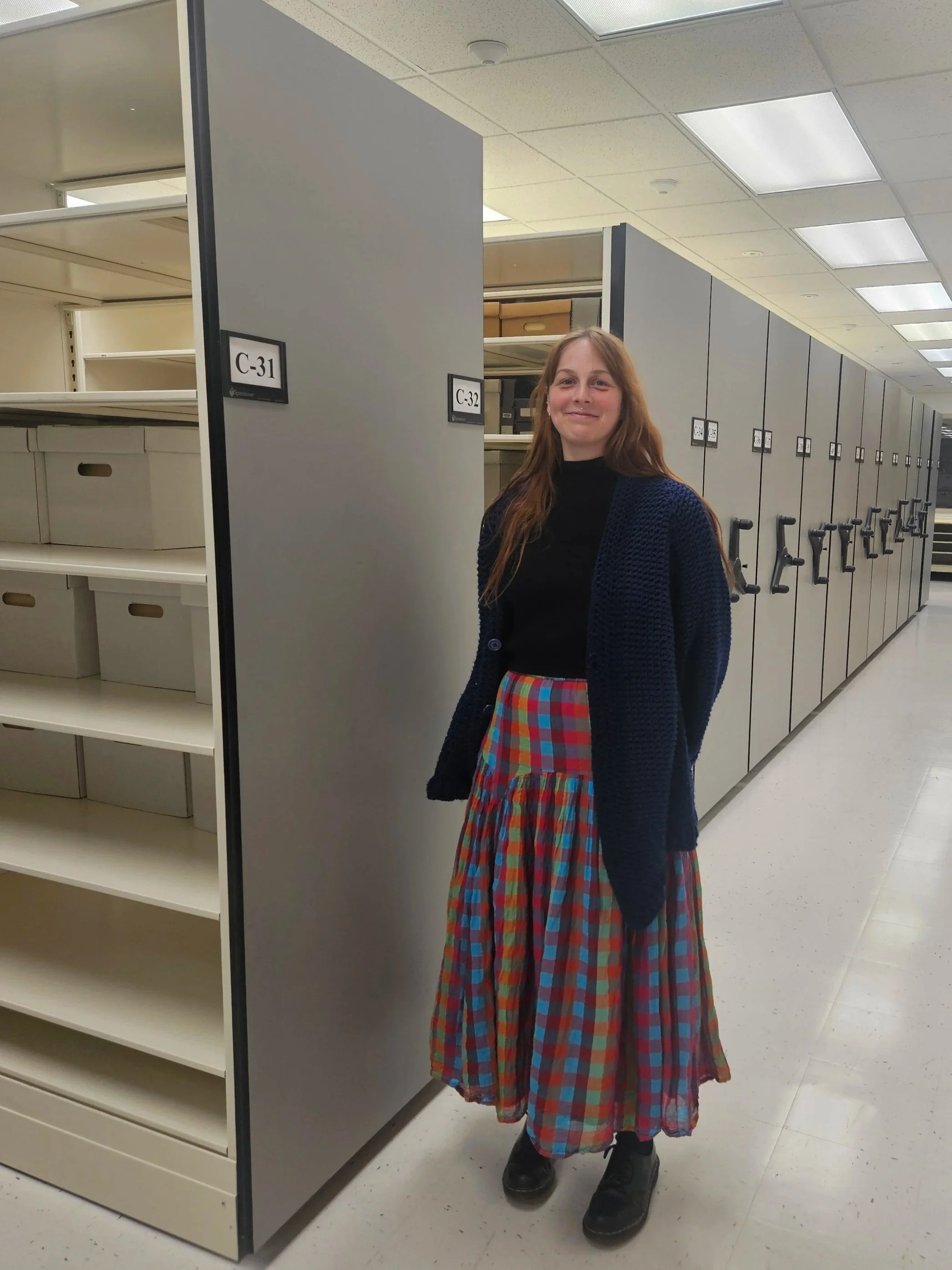
Assistant Archivist Monica Oatman smiles inside the climate-controlled archival room at the UAF Rasmuson Library, June 4, 2026.
From century-old journals to hard drives full of digital data, the University of Alaska Fairbanks’ Archives is on a mission to preserve the diverse history of the Polar North and make it accessible to the world. Located on the second floor of the Elmer E. Rasmuson Library, the archive serves global researchers while navigating the modern challenges of space limits and digital decay.
The Alaska and Polar Regions Collections and Archives was founded in 1965 by Paul McCarthy and H. Theodore “Ted” Ryberg. Archivist Fawn Carter mentioned that the two went down the Yukon River, stopping at old gold miners’ cabins along the way to collect materials and start an archive at the University of Alaska Fairbanks.
Carter spoke on the two main goals of the Archives: preservation and access to materials. She said people’s perspectives could be lost forever if they are not preserved in their journals, photos and other media.
“It’s so important to capture those for various reasons: for history’s sake; for accountability; to see different people’s perspectives. Those are all vital for understanding how we are today,” she said.
Carter mentioned that preserving history gets trickier in the digital age.
“It sounds like it would be easier, but it’s way more complicated than paper,” she said.
She noted that digital things still degrade; if the materials are not switched to safer formats like TIFF and RAW or PDFs, which degrade less than other formats, they could be lost.
“There’s a big gap in [preserving] digital materials,” said Carter.
Archival Process and Applications Technician Tyler Walker explained the difference between UAF’s archives and museums.
“A lot of people mix up museums and archives, and they serve a really similar function, but they’re not the same,” he said.
Whereas museums focus on the preservation of artifacts in general, the UAF Archives is focused on preserving information.
“We collect, oh my gosh, anything pretty much that’s paper and is unique,” said Carter. “We’re almost at capacity down here.”
To conserve space, Carter said consolidation can be done and archival materials that haven’t been signed over to the UAF Archives can be given back to the donors.
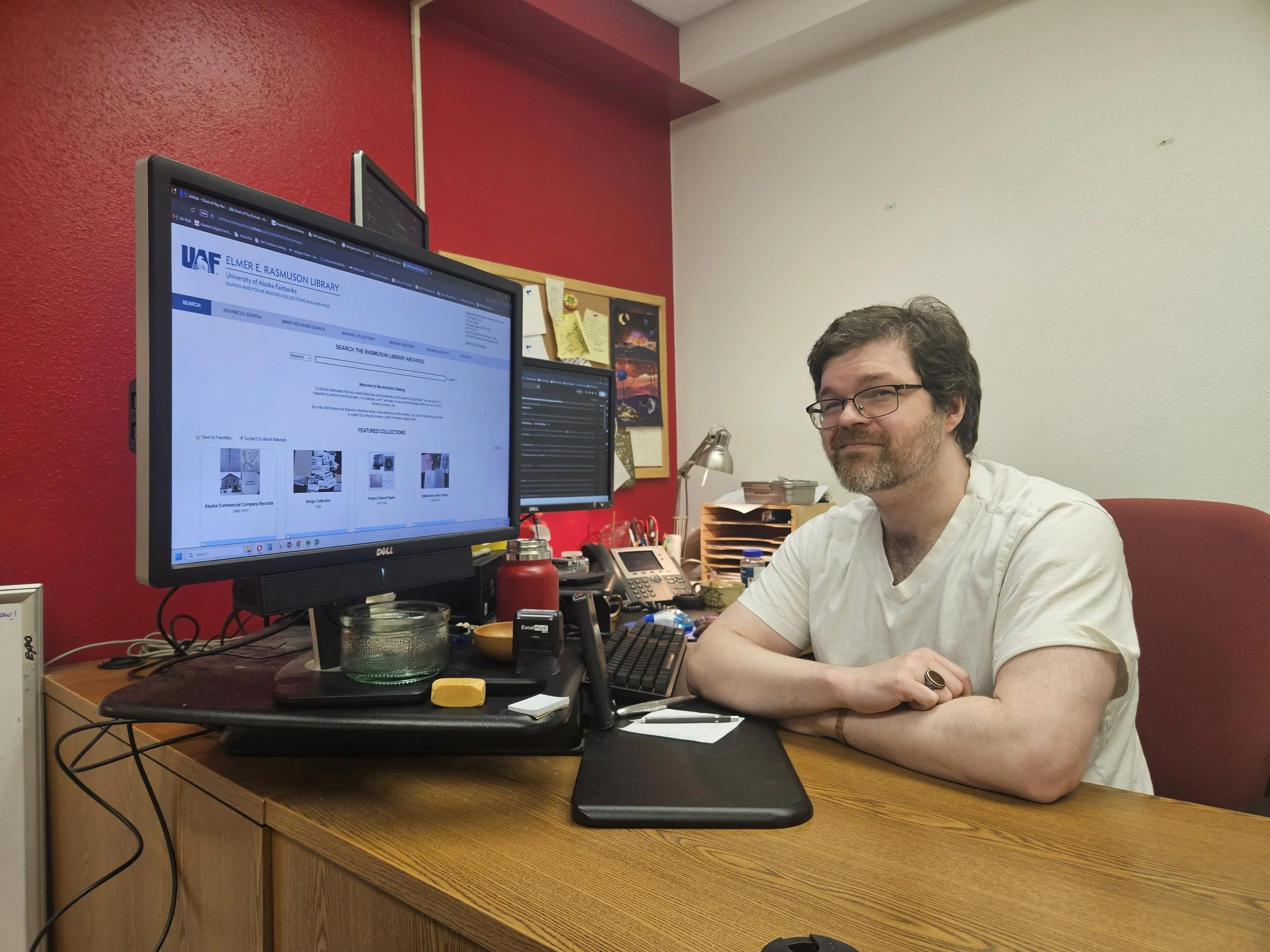
Archival Process and Applications Technician Tyler Walker displays the UAF Archives’ website in his office, June 3, 2026.
The staff echoed that access to materials is crucial. Assistant Archivist Monica Oatman helps bridge the gap to the public by managing a Reddit account and a YouTube channel dedicated to the Archives’ film collections.
Visiting the Archives or contributing to them is also straightforward. The public can explore materials online, book an in-person research appointment, or contact staff directly to donate historical artifacts.
“We have people from Europe [and] all over who’ve come here to do research,” said Carter. “We just ask for a one day notice, at least, to make sure that we have enough staffing and that we can actually find the materials that they want.”
Whether it’s a century-old journal, a box of photographs or a hard drive full of digital files, Archives staff say preserving these materials helps ensure that individual stories and perspectives are not lost to time.
Walker mentioned George Santayana and what the philosopher wrote in 1905: “Those who cannot remember the past are condemned to repeat it.”