

No place like Nome: Finding faith and friendship at Salmon Lake
By: Jonathan Wasilewski
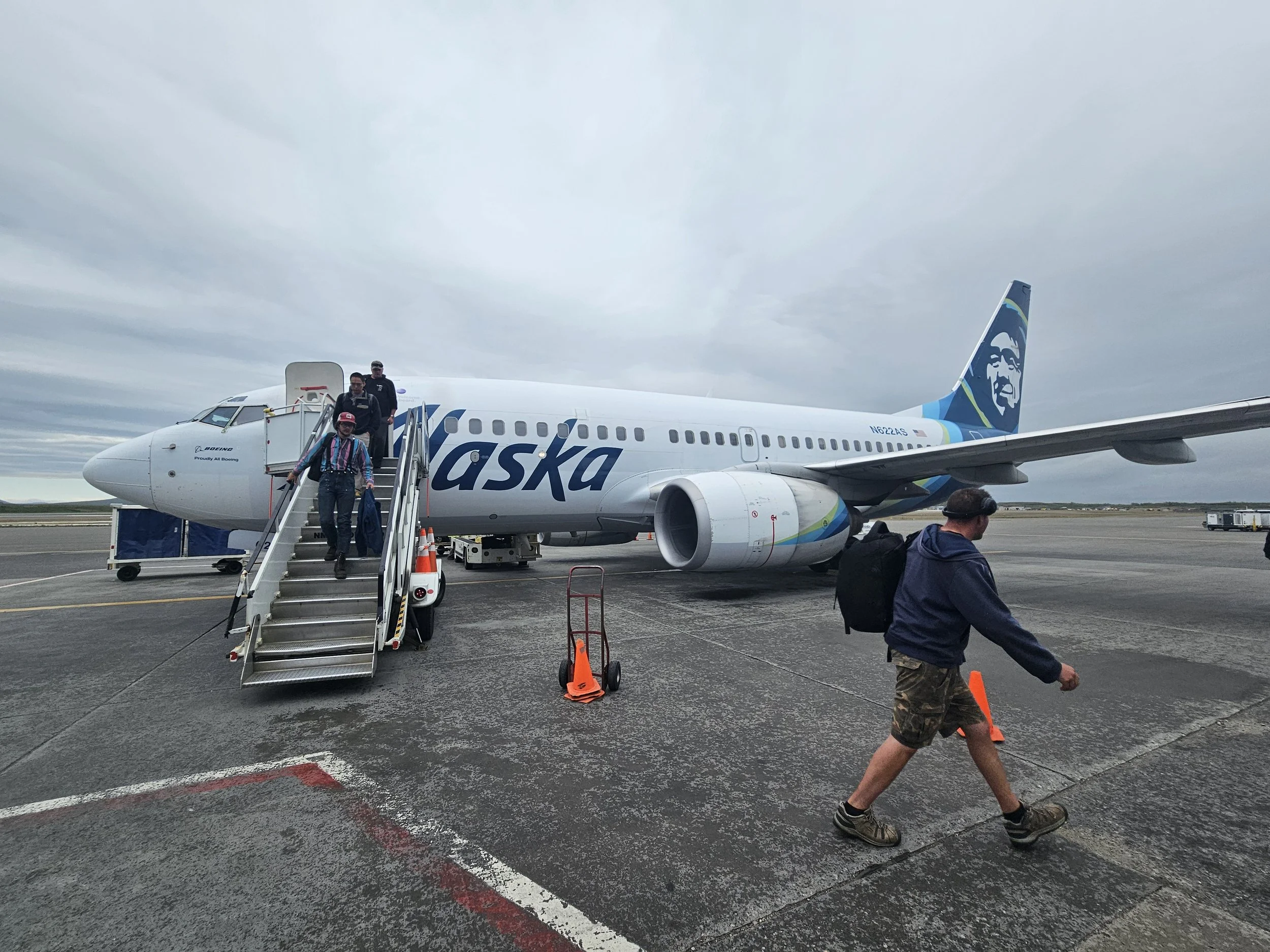
The plane the Salmon Lake Bible Camp counselors boarded in Anchorage unloads passengers in Nome July 26.
As the plane descended through the clouds over the Bering Sea, the city of Nome slowly appeared below. I had heard about Nome my entire life, but seeing the remote Alaskan town from the air was different.
When I was given the opportunity to volunteer as a camp counselor with the University of Alaska Fairbanks’ InterVarsity Christian Fellowship chapter, I couldn’t resist. What began as weeks of planning and fundraising turned into months of preparation for the Bible camp. I smiled as our trip to Nome and the surrounding area grew nearer and nearer.
After flying from Fairbanks to Anchorage July 26 with one of my co-counselors, we met another counselor and flew over the mountains, valleys and the Bering Sea. The clouds were thick and low in the sky. I had left all I knew behind in Fairbanks and had no idea what to expect.
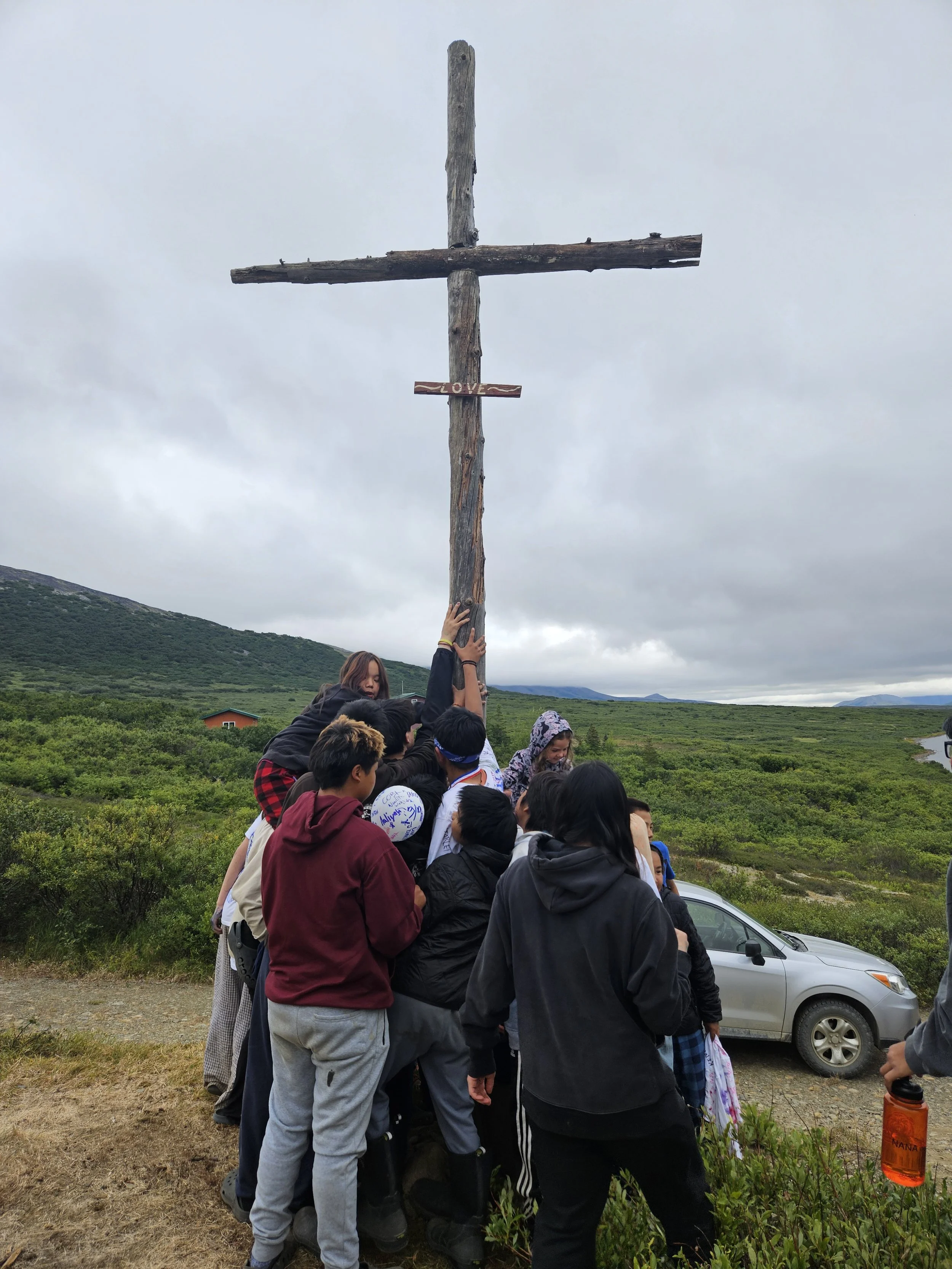
Campers touch the 20-foot-tall cross before leaving Salmon Lake Bible Camp July 31.
Nome is quite large for rural Alaska, but not by Lower 48 standards. In 2020, the city had 3,699 residents. Its airport had the smallest terminal I had ever seen, though I had passed plenty of landing strips on previous adventures.
After flying over the bright blue Bering Sea and landing smoothly in Nome, my two friends and I bolted down the stairs to the tarmac and into the airport building. It was jam-packed with people and luggage everywhere.
We eventually found Jake and Kate Taylor, leaders of the University of Alaska Fairbanks InterVarsity chapter, and our checked baggage was plopped into view without an automated carousel.
We all quickly piled into our rented Chevy van and headed to Kate’s aunt’s house. Wooden buildings sat on structures above melting permafrost, four-wheelers passed us, and remnants of previous mining operations reminded us that Nome was once a boomtown. We drove by a sign marking the end of the Iditarod and even the Nome Nugget, Alaska’s oldest newspaper.
Kate’s aunt’s house sat directly across from the Bering Sea, where waves crashed and active gold mining structures could be seen from her bay window.
Our team quickly settled into our roles. My fellow counselors were Anika Ylen and Kaykay Oquilluk. Phil Kugzruk, an Iñupiaq elder, came along with his wife, Margaret Kugzruk. Phil would preach, and Margaret would help cook. Pastor Amanda VanVhet-Snyder, who runs Our Savior’s Lutheran Church in Nome, would help prepare and serve food as well. Her husband, Jordan Snyder, also came along and helped move supplies with his truck. Pastor Bob Hattle was our camp nurse, and Pastor Brian Crockett taught the campers each day. Jake and Kate led the camp and also brought their three children, all under the age of five.
The evening passed quickly as we feasted in the house, took a stroll around the beach at Ft. Davis, made a campfire and slept in the Lutheran church.
After packing up my things July 27, calling my supportive mother and walking around the town, I once again jumped in the Chevy van. We stopped for gas at $6.29 a gallon at the Alaska Commercial Company and began driving on Nome-Teller Rd.
The condition of the gravel road and the worn-out shocks made the ride uncomfortable, but the scenery made the journey worthwhile. Jake and Kate’s children blasted the audio from Daniel Tiger’s Neighborhood while playing video games on their tablets. We passed rivers, mountains, rows of fireweed and scattered homesteads before crossing the Grand Central River an hour and a half later.
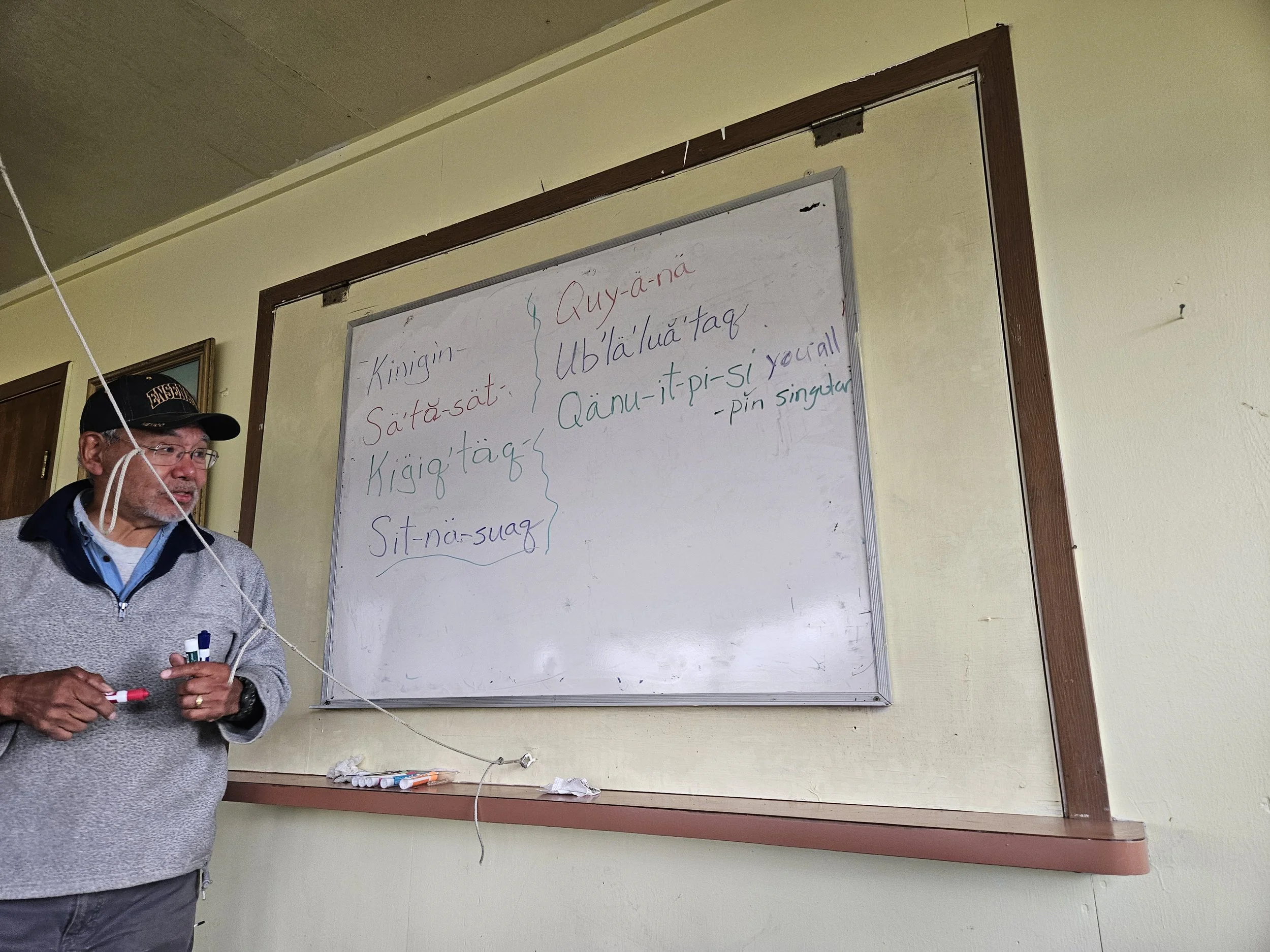
Elder Phil teaches the campers Iñupiaq words July 29.
We turned right onto a tiny gravel road and arrived at our destination. Everything was still. The bright blue waters of Salmon Lake shimmered in the sunlight as warmth spread across the landscape.
We surveyed the camp before Payton Amaktoolik, one of Pastor Amanda’s foster children, and I took up a monumental project: raising the 20-foot-tall wooden cross that had fallen sometime before the camp had last been used in 2023. We had no idea where to start, but we made a plan. We tried with all our might to dig into the hard earth with two shovels, but didn’t get too far. After we poured water from our only clean water source, a nearby stream, onto the ground, digging became much easier. The hole grew deeper quickly, but we still weren't strong enough to lift the cross. We then dug a ramp in the ground to the hole, slowly moving the cross so that its top was slightly off the ground. Then we positioned ourselves to raise the cross. I stationed myself at the end of it, and we both pushed. We took turns pushing the cross upward, each of us moving into position as the other pushed. After several rounds, the cross finally stood upright. Payton held the cross in position while I filled the hole with soppy mud and rocks. After we finished raising the cross, I gave a devotion I had prepared the night before. Soon after, the 32 campers arrived.
The campers, ages 11 to 17, came from Shishmaref, Wales, Nome, Teller and Brevig Mission.
From previous experiences working with youth in Alaska and in the Lower 48, I knew that trust takes time to build, especially among strangers.
We staff members had created four teams for the campers to be on, and I was in charge of the green team. Most of the campers on my team were reserved at first, so I directed individual campers to design certain parts of our flag. That gave the campers something to do and helped everyone participate. We also played get-to-know-you bingo, had a relay obstacle course on the beach and swam in the lake. During planning, I had come up with a skit for each day’s theme. On the first day, I used it to talk about making connections and being part of a community. We then sang worship songs in Iñupiaq and English before ending the day around a campfire with s’mores, smiles and laughter.
That first day offered a glimpse of the rhythm that would define the rest of the week. The adults woke early to prepare for the day. In the main hall, we sat drinking coffee, Iñupiaq tea, British tea and hot cocoa. The weather at Salmon Lake was warm during the day, but frigid at night. On the morning of July 28, some of us observed frost on the car windshields; it was 31 degrees.
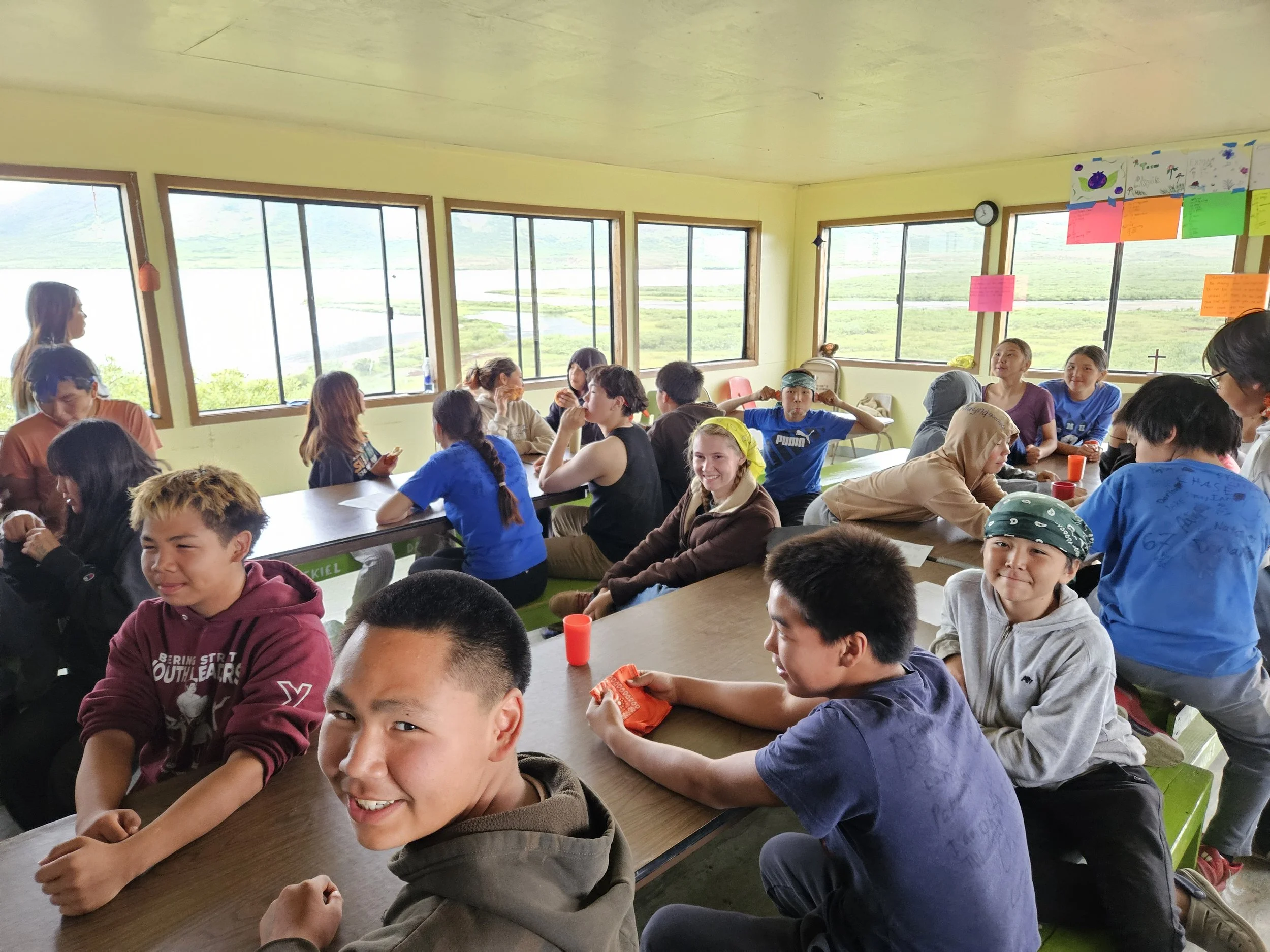
Campers wait for lunch, frybread, July 30 at Salmon Lake Bible Camp.
The pastor and her spouse returned to Nome each night and brought fresh food to prepare each day. Campers and counselors collected water from a nearby stream, helped prepare meals and washed dishes as part of their daily responsibilities. Everyone had a role to play, whether preparing food, cleaning up or rearranging the room for worship.
Free time filled much of the day as well. Campers could spend time playing games like capture the flag or basketball, go to the cabins to rest, or run down to the lake with an adult present to swim or canoe.
During the trip, our team had opportunities to share sermons and personal messages with the campers. In my message, I read the story of David and Goliath and reflected on the “giants” I have faced in my own life. I shared how my faith helped me confront fears that once seemed overwhelming and find strength and a sense of victory, much like David after defeating Goliath.
Following my message, our team handed out balloons and markers to the campers. We invited them to write down something troubling them or something they wanted to let go of. We prayed together before releasing the balloons inside the room. As the balloons floated away, we imagined our struggles leaving with them, reminding us that we did not have to carry our burdens alone.
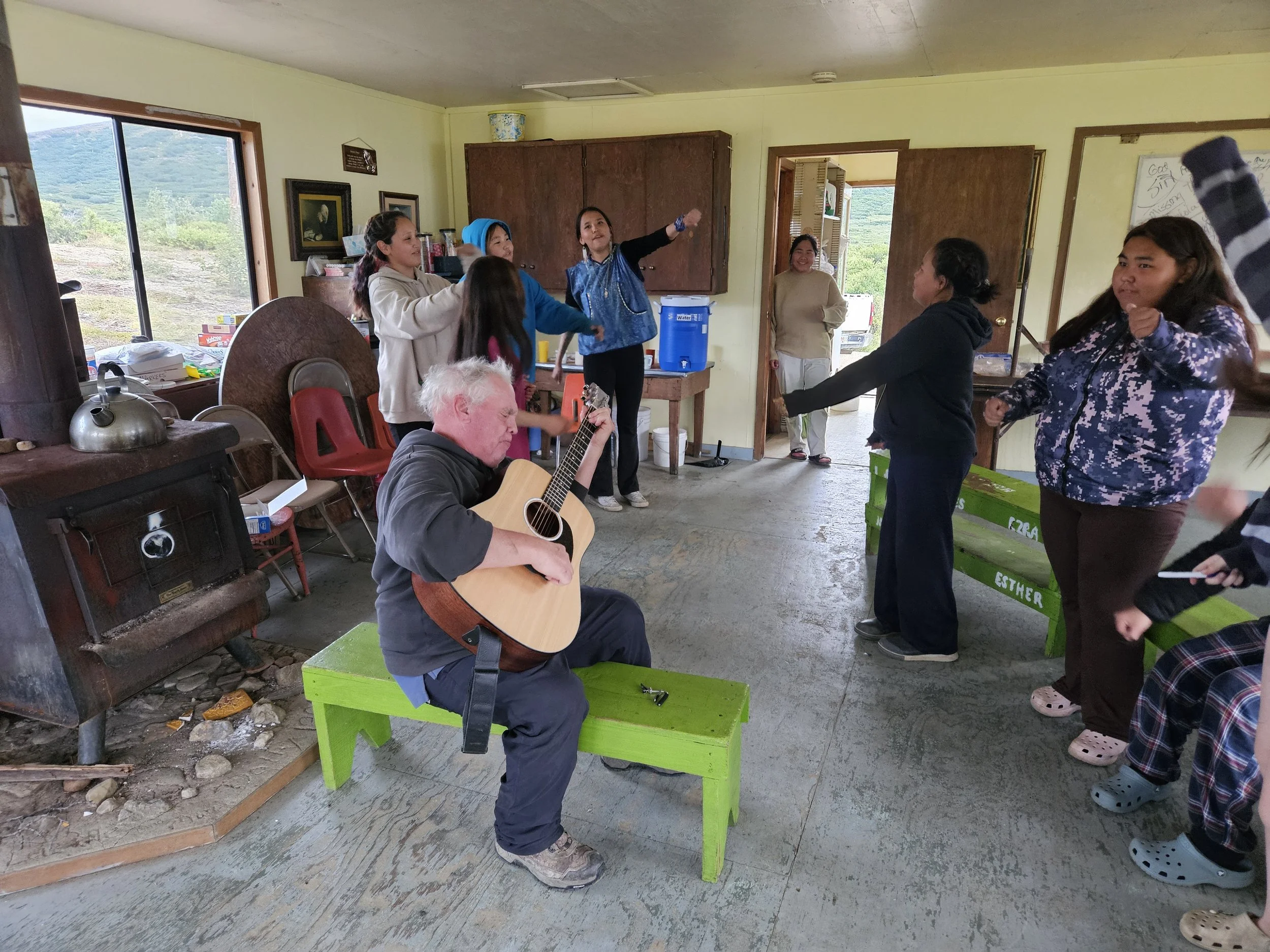
Pastor Brian Crockett plays Father Abraham for the campers July 29 before bed at Salmon Lake Bible Camp.
After our sermons, we divided the campers into smaller groups for discussion and reflection. Phil and I led one of the groups, asking questions about what the campers had learned and helping them discuss the messages. As the week progressed, campers who barely spoke on the first day were laughing, praying and joking around with one another. Days ended with games or with Pastor Brian’s worship.
Throughout the trip, our team participated in several excursions that allowed us to spend time with the campers outside of the usual activities. One evening, we drove the campers to the local landing strip at 7 p.m. for some Iñupiaq baseball. Iñupiaq baseball, a local game played on a narrow field such as a landing strip, brought everyone together. Campers and counselors raced between bases, laughing as they played.
On another day, we hiked near Dorothy Falls, climbing approximately 500 feet over several miles. Along the way, we stopped to pick blueberries and Alaskan blackberries, taking in the beauty of the landscape while creating memories with the campers.
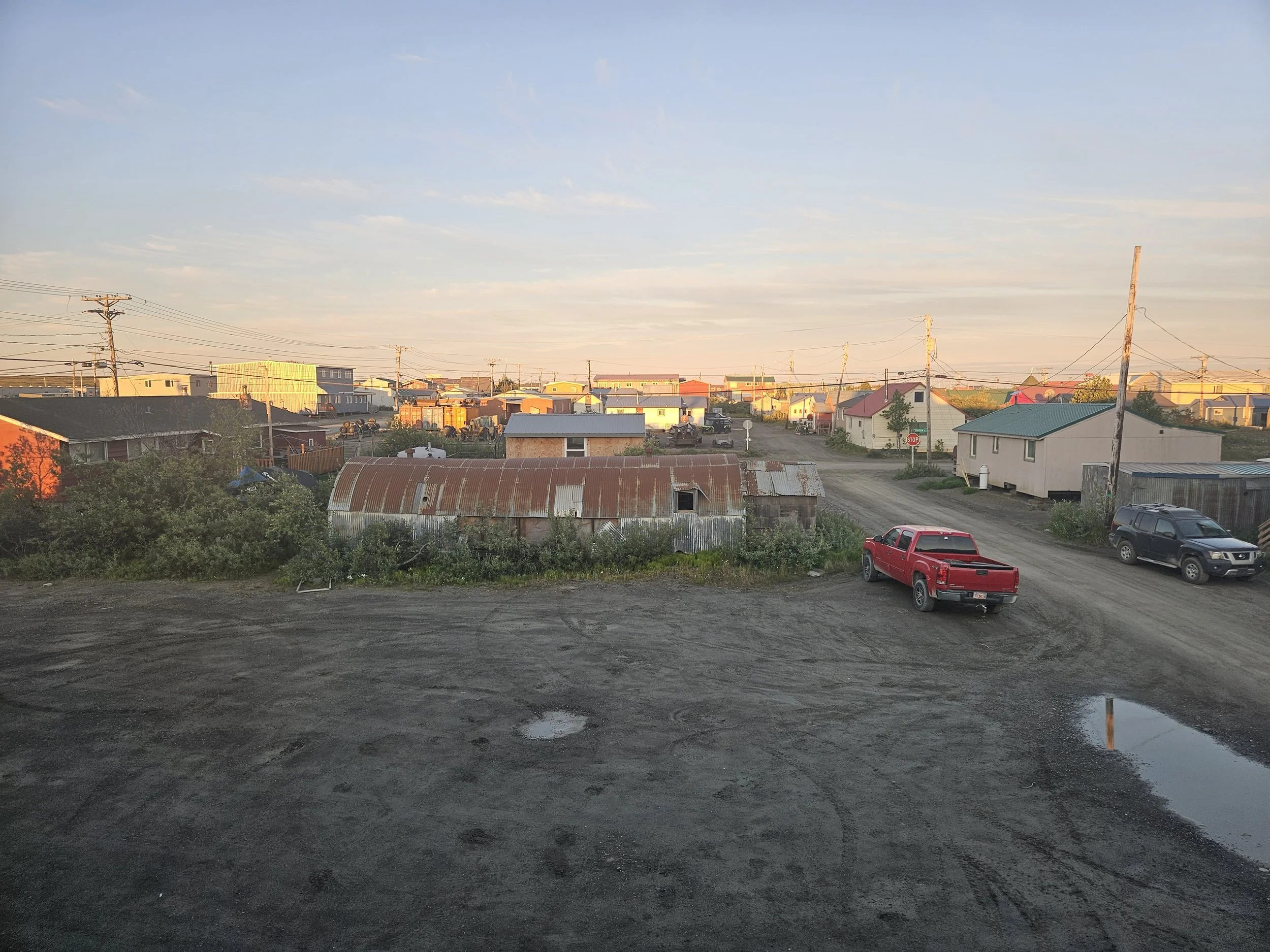
The city of Nome sleeps peacefully July 26 at 11:40 p.m.
When we reached a high point overlooking the landscape, Phil gave a sermon about his childhood and the Iñupiaq messenger feast, connecting his talk to the Bible. After the sermon, we devoured the lunches we had packed. Then the campers and I ran down the mountain as fast as we could, taking off our shoes and socks to cross an ice-cold stream. Some of us willingly carried others across.
At the end of the week, Jake and Kate’s five-year-old daughter saw the campers leaving and began to cry. She hugged them and said that she was going to miss her newfound friends. The campers said they were going to miss her and us all as well. They couldn’t wait for next year to come back to Salmon Lake.
There’s no place like Nome.