

Wine and Peonies at Georgeson Botanical Garden
By Aaron Thomas
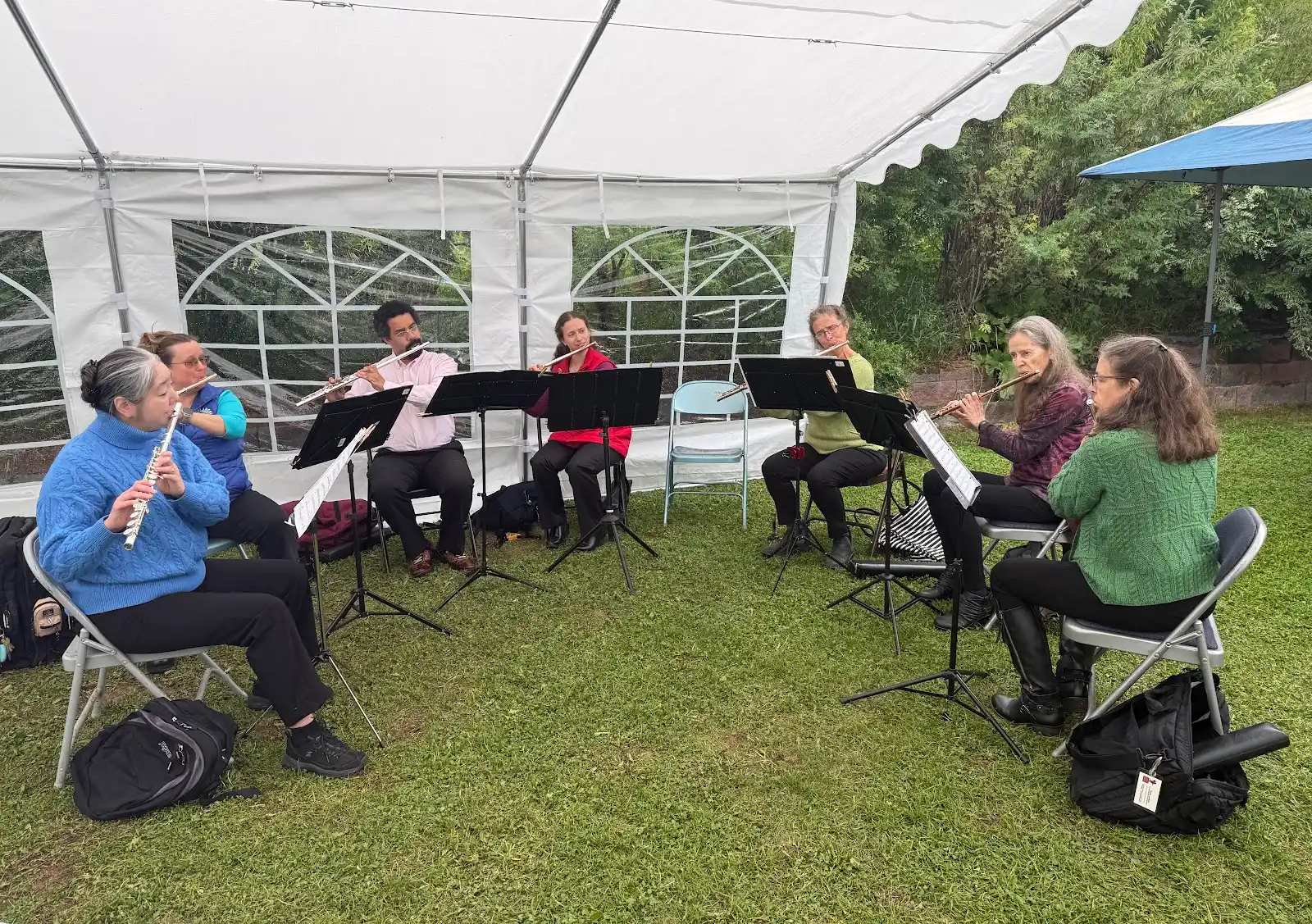
Fairbanks flutists Lillian Fortune, Kurt Hunter, Bobbi Janiro, Dorli McWayne, Therese Schneider, Anne Weaver, Hannah Weaver, and Rachel Willis perform at “Wine and Peonies” on July 15, 2026.
Peonies may be one of Alaska’s most successful specialty crops, and the Georgeson Botanical garden celebrated that legacy during its annual Wine and Peonies fundraiser July 15. Wine for the event was donated by Specialty Imports, Kathy Lavelle and Frank Eagle. in an effort to raise crucial funds for the botanical garden.
Music at the event was provided by Fairbanks flutists Lillian Fortune, Kurt Hunter, Bobbi Janiro, Dorli McWayne, Therese Schneider, Anne Weaver, Hannah Weaver and Rachel Willis. The group was recently selected to perform at the National Flute Association’s annual convention in Portland, Oregon. Dorli McWayne has performed at the convention since 1983 and the Wine and Peonies fundraiser for the past 5 years.
Choice wines at the event included Barnard Griffin Cabernet Sauvignon grown in Washington’s Colombia Valley and Old Vine Red, a proprietary red wine blend that evokes the bold, floral wines of Sonoma and Mendocino counties in California.
Sommelier Frank Eagle who owned Lavelle's wine bistro downtown for 24 years recommended the Pine Ridge Chenin Blanc and Viognier. “It's going to be the hit of the night,” said Eagle.
Peonies have a storied history at the botanical gardens, which was among the earliest places to cultivate the perennial flower in Alaska. Despite not being optimized for the harsh climate of Interior Alaska, the flowers have been known to thrive in Fairbanks with special care and expertise. The Botanical Gardens have tested 118 different varieties of peony along with differing growing and composting methods to find the best conditions.
An advantage to cultivating the flower in Alaska is that the flowers bloom far later in the season than in the flower’s native range in the Pacific Northwest. “They're the number one cut flower for weddings, and July is the number one wedding month across the globe. So we are able to produce peonies that are fresh cut at the same time that they're really high in demand,” said Lacey Higham, directing manager of the Georgeson Botanical Garden.
According to Higham, when it was first demonstrated that peonies could be grown in the Alaskan climate, the number of peony farmers in Fairbanks jumped from zero to over 220 farmers in the span of a few years. Though this figure has since stabilized around between 105 and 110 farmers.
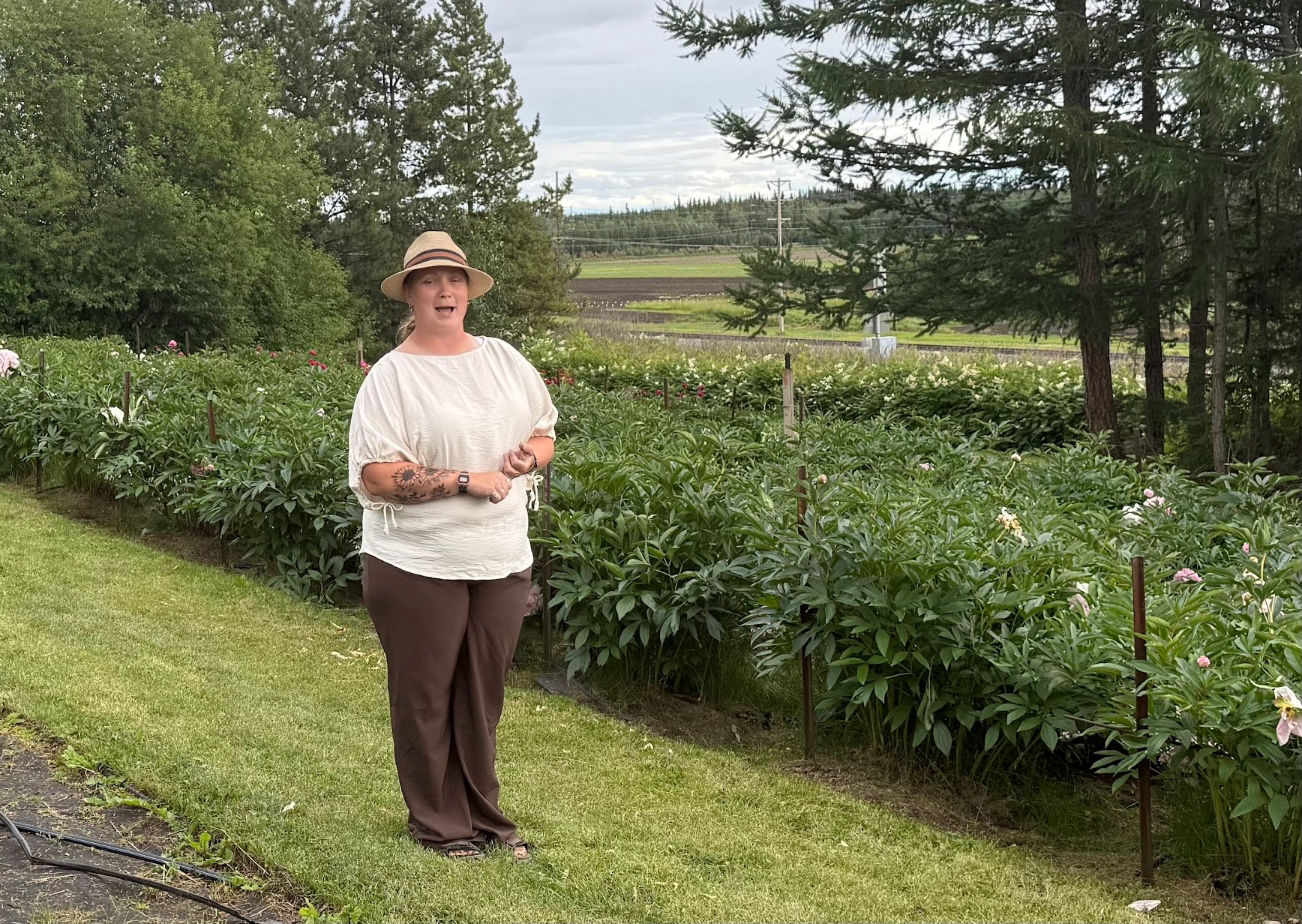
Garden Director Lacey Higham gives a tour of the peony fields at the botanical gardens on July 15, 2026.
Higham described the unique challenges that come with peony cultivation in the Interior. The root system of the plant is susceptible to deep freezing temperatures if not properly insulated by a layer of straw or mulch during the winter. If a low snow year or a particularly cold early winter takes place, the roots can be severely damaged.
The plant can also be susceptible to common pests such as thrips and being trampled by moose. If these issues are not addressed, the plant can develop “bud blast”, a condition where the plant stops sending the flower buds nutrients and the yield is significantly decreased.
Despite the challenges presented by the Fairbanks Zone 2 climate, the botanical garden is continuing research on peony cultivation.
“Our mission is research, education, and outreach in high latitude horticulture, but our real goal is to create a connection with people and plants,” said Higham.