

A fight against the invisible – How the Alaska State Virology Laboratory is hunting down measles
By Gabriele Rigaudo
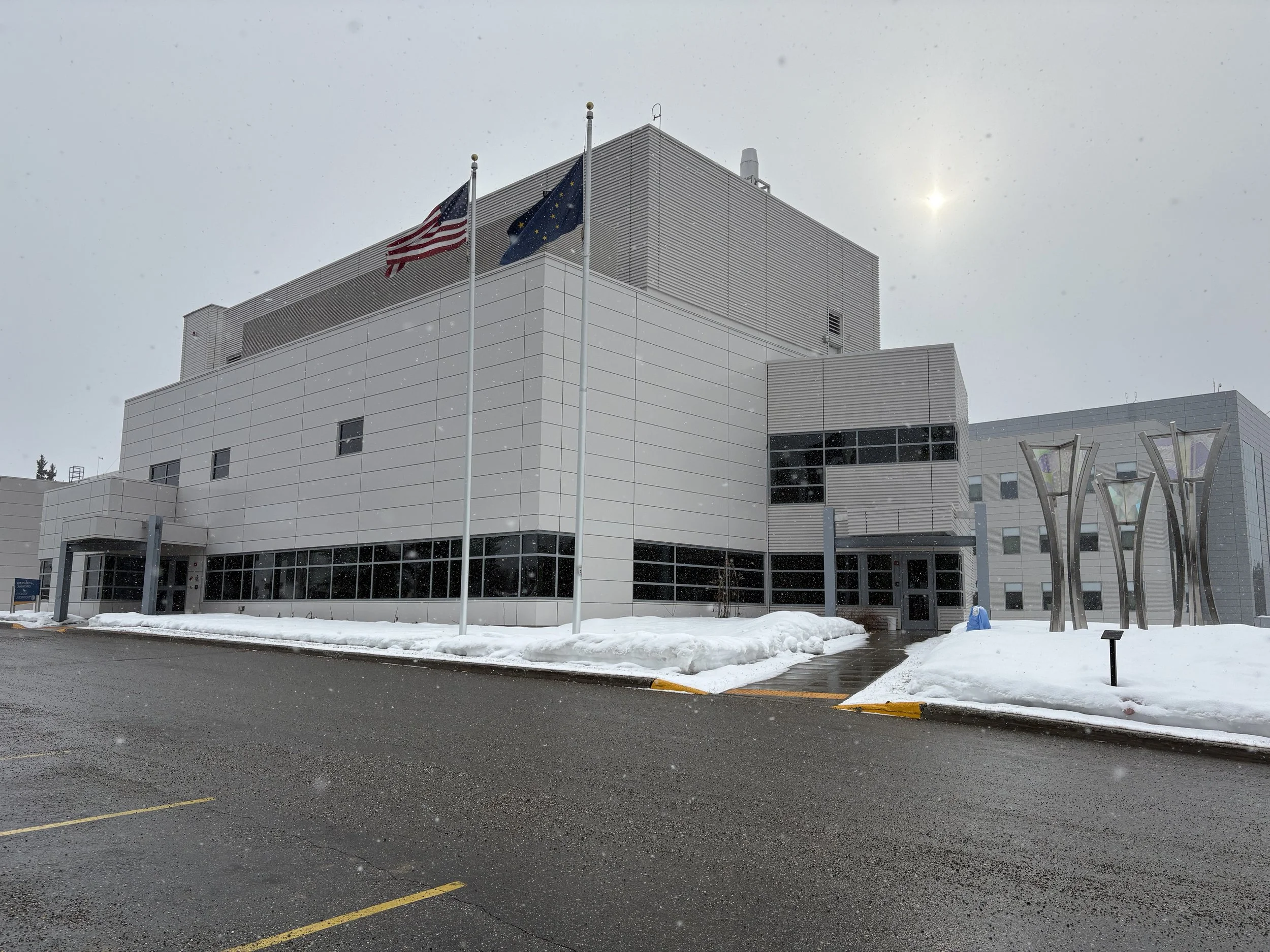
The Alaska State Virology Laboratory, located on UAF’s Troth Yeddha’ campus on April 19, 2026.
Each morning a vehicle containing hundreds of samples approaches an unassuming building located in UAF’s upper campus. As the packages are carefully handled and test tubes are collected, a meticulously coordinated system of scientists starts its daily routine: extracting viral genetic material, testing its contents, and reporting the results. Each step carefully studied, each movement repeated, over and over again. Behind these numbered tubes, each containing a small amount of fluid, there is a human waiting for answers. What caused their disease, how could they cure it, and what are the dangers others might encounter? With the recent increase in measles affecting the U.S. and vaccination rates remaining way below herd immunity levels in Alaska, concern is growing among public health officials.
“It is easy to disregard measles as a serious condition when we really haven't seen it at its full potential in decades,” said Jayme Parker, the Alaska Public Health Laboratories director. An airborne disease, a person infected with measles can, on average, infect 12 to 18 other people according to the Centers for Disease Control and Prevention (CDC). For comparison, the number of others infected by the Delta variant of SARS-CoV-2 is estimated to be around five as observed in a paper by virologists Ying Liu and Joacim Röcklov.
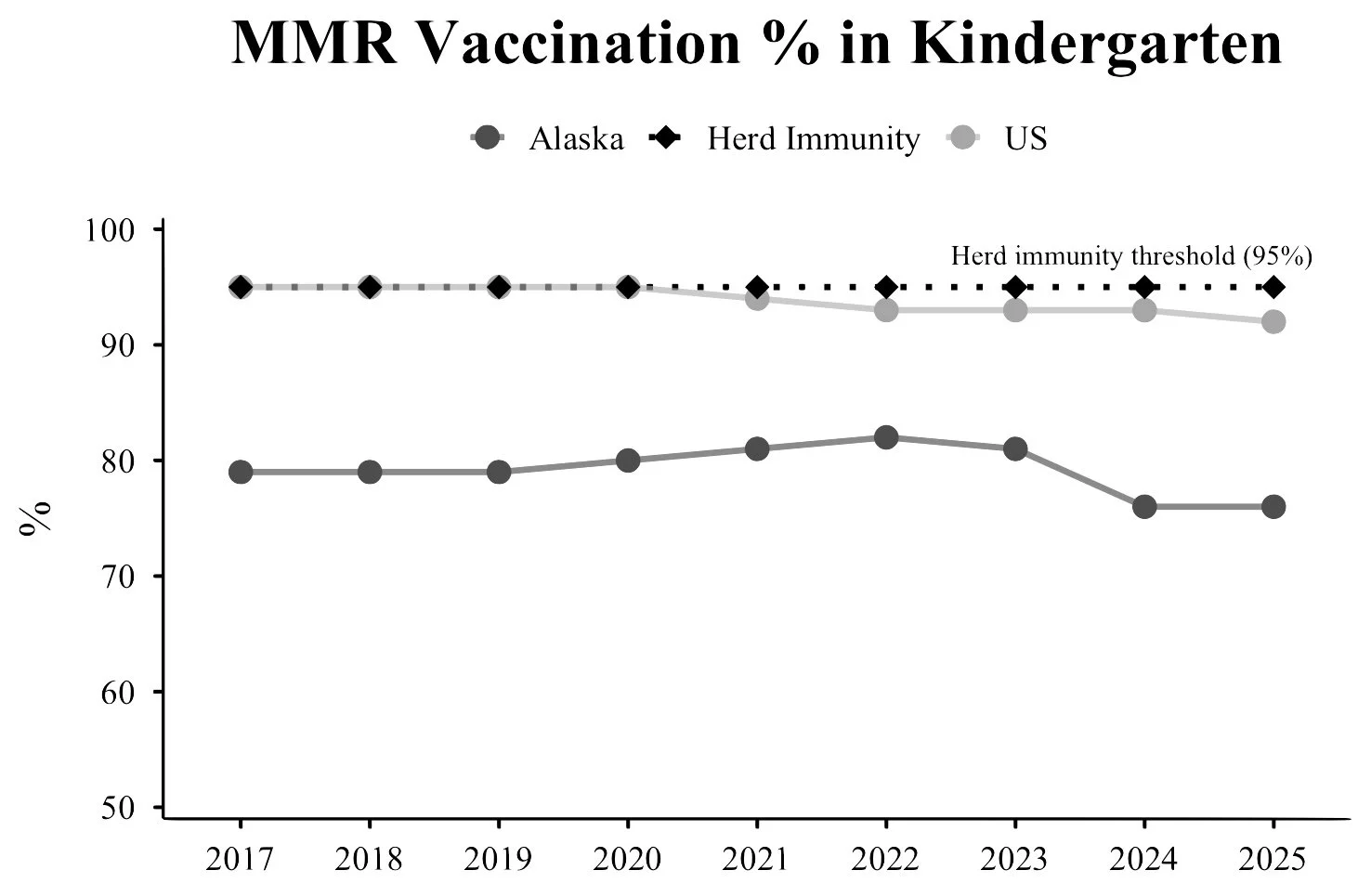
Graph by Gabriele Rigaudo. MMR vaccination coverage among kindergarten-aged children in Alaska and the United States, 2017–2025. Data from Alaska Department of Health Epidemiology Bulletin “Kindergarten-Aged Vaccination Coverage — Alaska, 2017–2024,” Alaska Vaccine Coverage Report, and the Centers for Disease Control and Prevention.
The U.S. is experiencing an alarming increase in measles cases. As reported by the CDC, 2,288 cases of measles were reported in 2025, and as of April 20, 1,748 cases were reported in 2026. From the year 2000 to 2024, 4,485 cases of measles were reported, the total number of cases in the last 18 months was 4,036.
Alaska sits in a dangerous place for potential measles outbreaks. Although the virus has been contained so far, with only four cases reported since the start of 2025, the low vaccination rates make Alaska fertile for potential outbreaks. As of the last quarter of 2025, the State of Alaska Department of Health reported a 78% coverage of the first dose for the measles, mumps, and rubella (MMR) vaccine in infants. These numbers are extremely low when compared to the World Health Organization’s guidelines of 95% coverage to achieve herd immunity.
The Alaska State Virology Laboratory was established in 1967. The newly modernized laboratory officially opened on June 15, 2009, and has since worked nonstop to provide fast, reliable diagnosis for any disease of viral nature in Alaska. During the COVID-19 pandemic, while most of the campus remained empty, the building’s parking lot stood out as the only full one.
From influenza and the common cold, all the way to fatal illnesses such as Ebola and rabies, viral diseases represent one of the biggest threats to public health. This is accentuated in sensitive groups such as infants, the elderly, and immunocompromised individuals. Alaska’s Virology lab has the complicated task of identifying and tracking down such threats to protect our population.
The Alaska Virology lab operates following strict protocols and procedures. This is to guarantee that each result has maximal accuracy and trackability. “To ensure that we are making sure we have quality in each step of the process, we have controls for each section,” mentioned Public Health Microbiologist 3 and lab manager Nisha Fowler. This is so that in the case of a problem, one can “pinpoint exactly where things broke down,” she continued.
In a setting where accuracy and precision matter more than anything, the training for a new employee of the Virology lab takes at least three months prior to being able to operate fully, Fowler explained. Still, competency assessments on laboratory techniques are taken by every single employee each year, with no exemptions made.
Individuals are not the only ones having to prove competency. To ensure that the lab is working correctly as a system, the College of American Pathologists tests each public lab in the U.S. three times each year for every test they offer. After two failures in a row, the lab is prohibited from reporting on the assay it failed until a new test is taken and passed, as stated by Fowler.
With many viral diseases still endemic in Alaska, the state’s Virology lab tests for a wealth of diseases. Rabies, for example, is a brain-affecting virus that can be transmitted from wild animals. According to the World Health Organization around 59,000 people die of rabies each year. Only 31 survivors have been recorded worldwide, among them, 29 suffered irreversible neurological damage as noted in a paper by De Pijper and colleagues. In Alaska, Arctic foxes are the natural reservoir for the virus. If an animal is suspected to be infected with rabies and might have had contact with humans, it is hunted, and the whole brain gets sent to the lab for testing. “When we get a sample (for suspected rabies), there is more likely than not an aspect of it that could have implications for the humans surrounding the case,” Fowler added.
While it is easy to worry about such catastrophic diseases as rabies, often more subtle viruses quietly take a far greater toll.
According to the CDC, before the development of a vaccine in 1963, measles infected approximately 500,000 people in the U.S. every year. With a mortality rate estimated to be 1 to 3 in 1000 cases, it represented a major cause of mortality in infants.
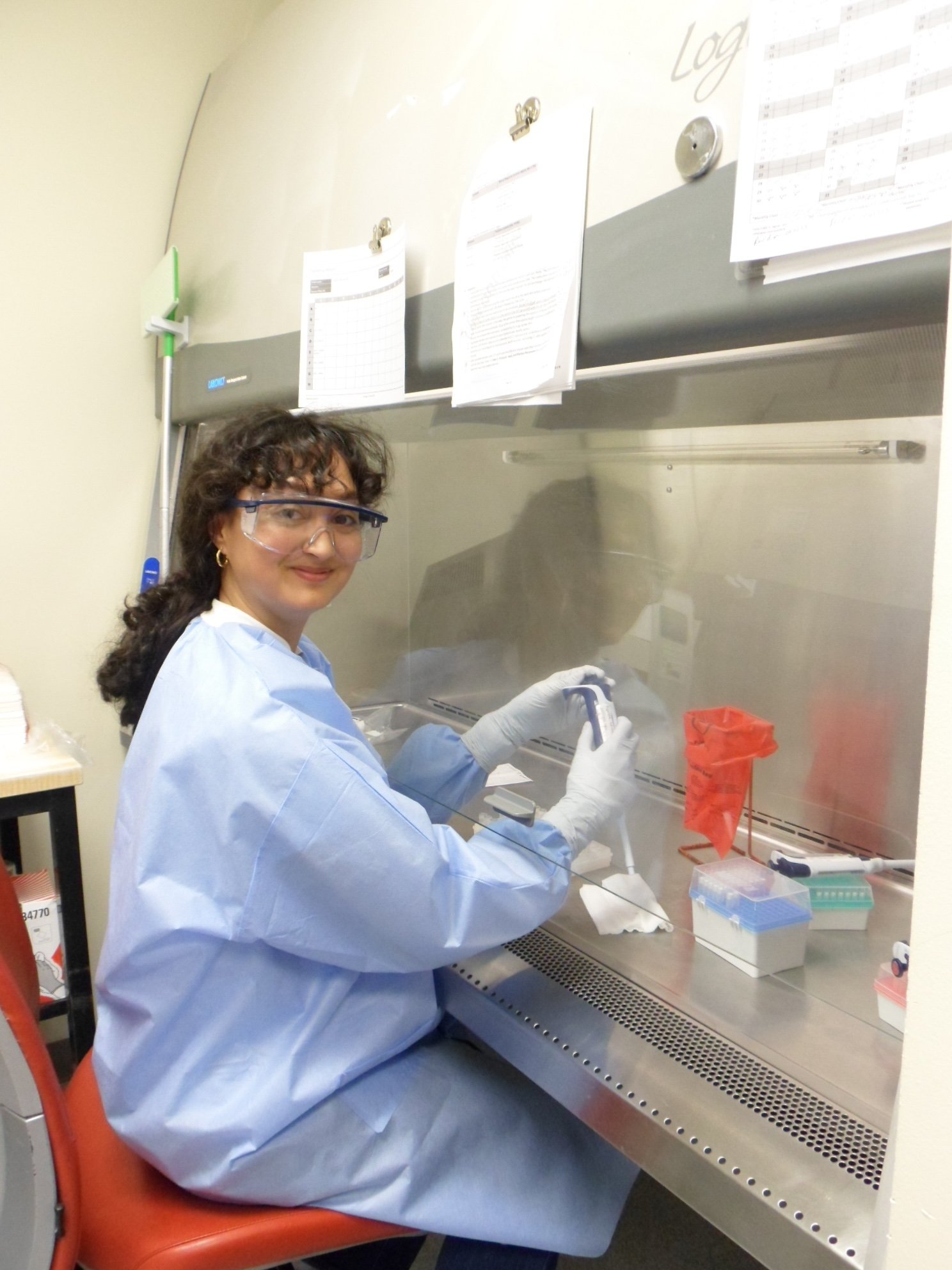
Photo courtesy of Jayme Parker. Daphne Mueller tests for respiratory viruses in the State of Alaska Virology Lab.
Cough, coryza (runny nose), and conjunctivitis are the early nonspecific symptoms. After approximately 7 to 18 days from exposure, the characteristic skin rash starts to appear, as described by the WHO. Although most measles infections are cleared with no long-term effects, some cases develop complications. This is where the real dangers start to expose themselves. “Complications… such as pneumonia, brain swelling, and long-term neurological damage, are severe and deadly,” Parker mentioned.
Parker mentioned another, even scarier aspect of measles infections. The virus acts on the immune system by destroying memory B and T cells. Such cells are responsible for a human’s immunological memory. An individual infected with measles becomes susceptible to dangerous diseases against which the host might have previously developed immunity.
Debilitating the immune response has another implication. Pre-existing infections can, in fact, exploit damaged immune cells to proliferate and cause so-called superinfections. Such infections can often be cured, but might still result in permanent tissue damage. By emerging in a moment of weakness for the patient, they can slow treatment and in severe cases cause death, according to the WHO.
“Vaccines are available and promoted in Alaska,” highlighted Parker, yet vaccine hesitancy is being “exacerbated by this age of misinformation.” MMR vaccine complications occur extremely rarely. In about 1 in 3,000 to 4,000 doses, the MMR vaccine causes a febrile seizure after one to two weeks of administration, as reported by the CDC. Still, such a complication is resolved with no long-term effects.
Other adverse effects mentioned online, such as relationships between the MMR vaccine and autism, have no scientific foundation. Misinformation is identified as one of the major causes of the decrease in vaccination rates by experts such as Parker, who mentioned how “misinformation travels faster and is more widely accepted than the truth.”
Decreasing trust in public health is not only decreasing vaccination rates, it also makes the sector vulnerable to budget cuts by politicians. According to Parker, “when public health is working well and is sufficiently supported, it is largely unnoticed since there are fewer outbreaks, fewer foodborne illnesses, cleaner water to drink, and generally life is perceived as naturally safe.”
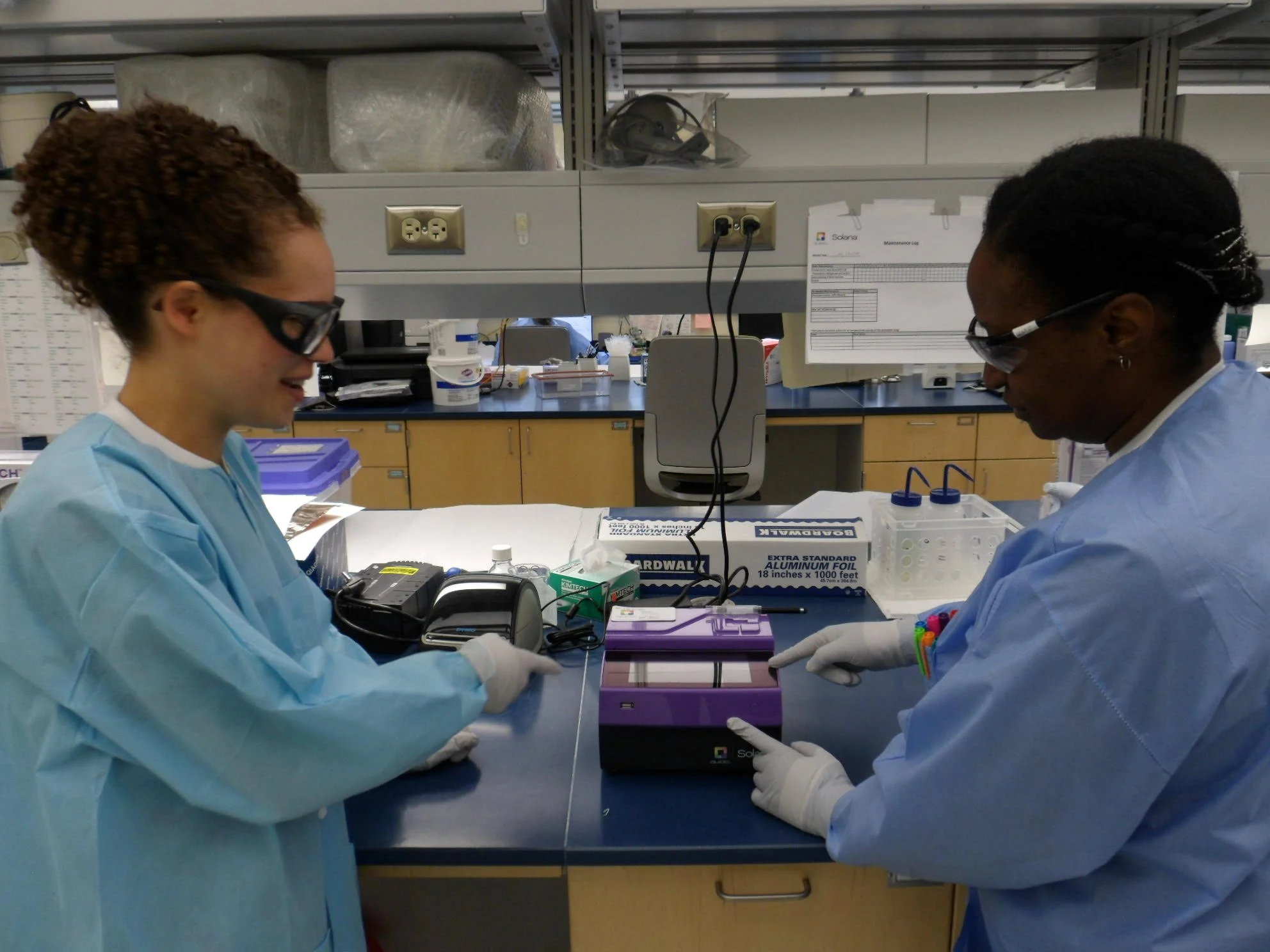
Photo courtesy of Jame Parker. Symcha Gillette and Nisha Fowler setting up a new instrument for herpes simplex virus testing and differentiation.
This “suffering from success” experienced by public health affects every level of it, but even more, it affects laboratories where one to one interactions with the public are minimal or absent. This lack of human interaction is recognized among laboratory technicians, and efforts are being made in order to try and improve.
Yet, a strong sentiment of duty and responsibility is what drives the work of public health laboratories such as the State of Alaska Virology lab. “We have to remember that behind every tube that has a number on it, it’s someone’s life,” as noted by Public Health Microbiologist 3 Jeremy Roe.
This sense of duty is not only metaphorical, but it is what drives the actual work being done in the lab. The concept of procrastinating tasks does not exist in Alaska’s State lab, according to Fowler.
One of the policies of public health is that “it is nonpartisan,” said Parker. Similarly, as viruses are able to infect any person, public health is meant for everyone, and everyone is treated equally, reflecting WHO guidelines on health equity and universal access to care.
When asked, students around the UAF campus did not know what happens inside that one building in between the Murie building and the Museum. Working behind the scenes, the Alaska State Virology Laboratory quietly defends the everyday health of the 49th state’s citizens.
The Center for Disease Control and Prevention updates its Measles Cases and Outbreaks page weekly
The State of Alaska Department of Health publishes an “Alaska Vaccination Coverage Report” each quarter. Information used in this article were taken from the quarter 4, 2025 report
The World Health Organization published recently an updated Measles overview on the viruses’ current status worldwide