

A new way of looking up – A peek into UAF’s new Walt and Marita Babula Planetarium
Story and pictures by Gabriele Rigaudo
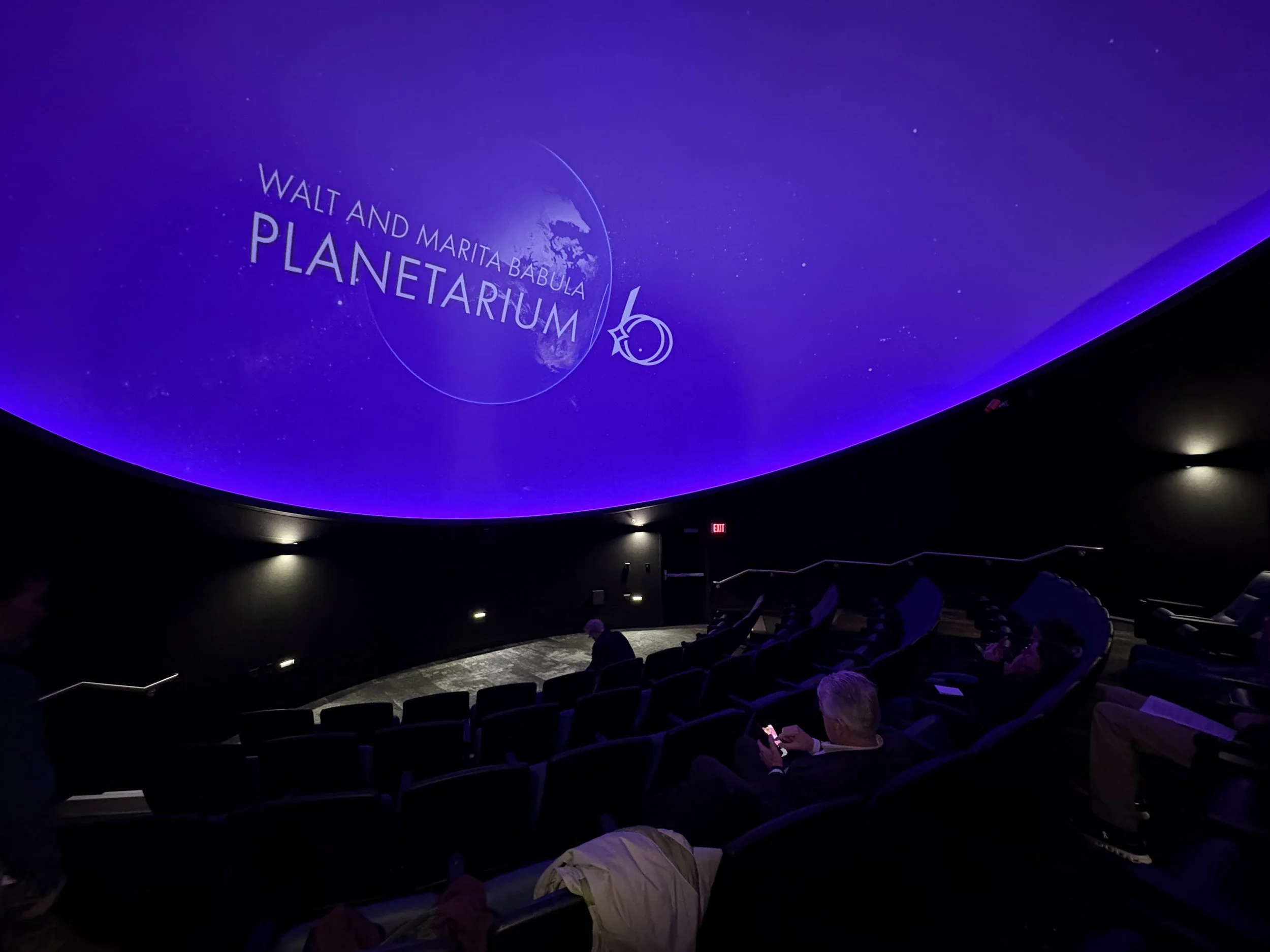
The Walt & Marita Babula Planetarium theater before the “A New Blue: The Exoplanet Movie,” on April 20, 2026.
Last Saturday marked a new era for the University of Alaska’s Museum of the North. After a project envisioned 30 years ago, and a construction that lasted 12 months, the new Walt and Marita Babula Planetarium is finally completed, and the museum is ready to welcome curious visitors wondering about space’s deepest secrets.
With its 11-meter-wide dome, the Walt and Marita Babula is the biggest planetarium in the 49th state, and the only one in Interior Alaska. The construction was made possible by the single largest donation from private living individuals the University of Alaska has ever received, plus other smaller contributions. The formerly anonymous donors Walt and Marita Babula donated a total of $7.4 million, added to the $500,000 donated by the M.J. Murdock Charitable Trust and the $250,000 donated by Sarah and Cary Keller, making it possible to realize a 30-year-old vision.
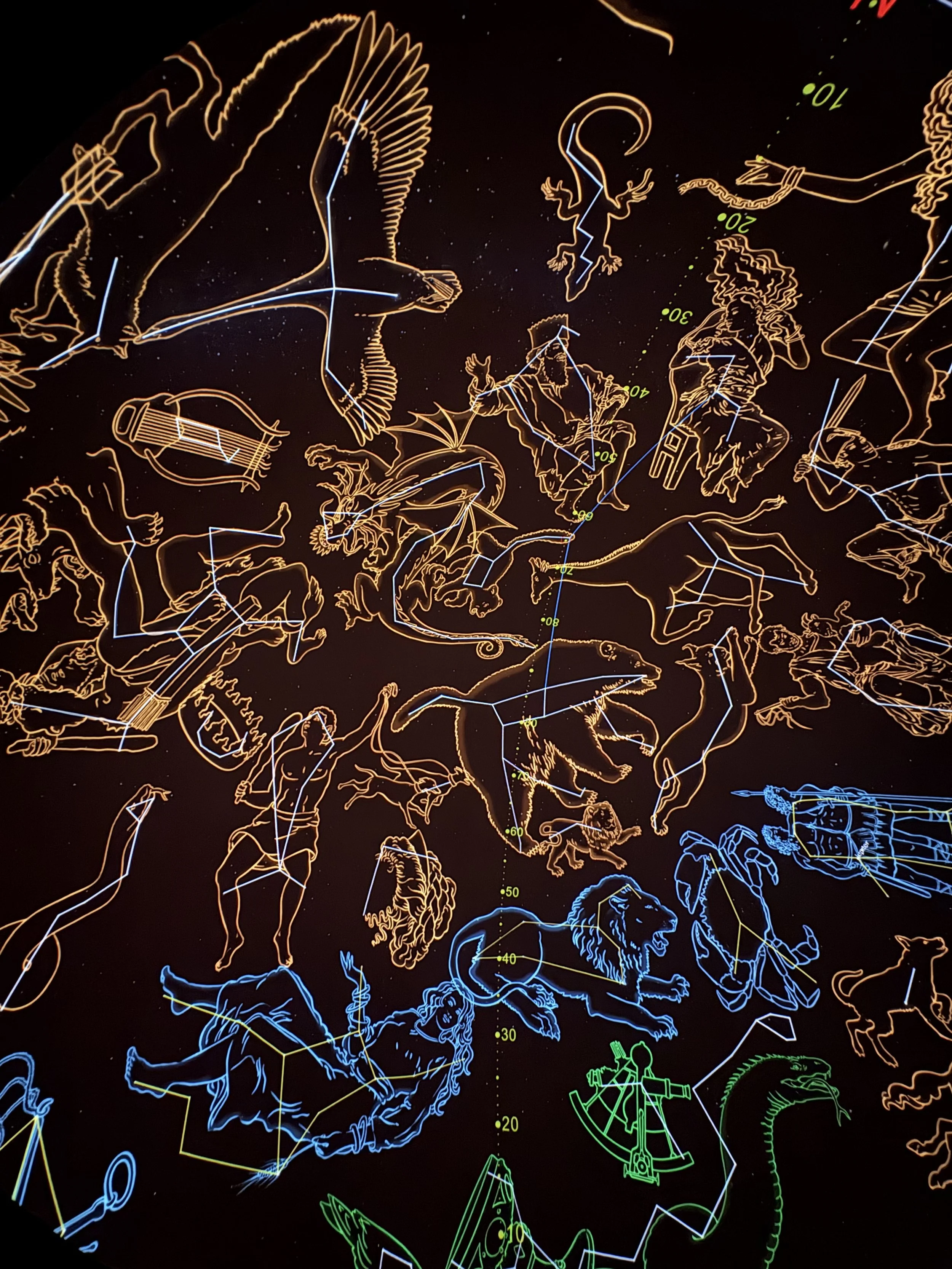
Post show look at the sky’s constellations, led by planetarium director Omega Smith.
With a theater containing two 4K-resolution projectors, four image-generation computers, and 5.1 digital surround sound, the experience projected on the 11-meter-wide dome aims to catapult viewers on a journey covering multiple fields. It can hold 65 viewers at a time.
Upon entering the planetarium – which costs $8 for UA staff, faculty, and students – one encounters an exposition of meteorites found in Alaska, rocket parts launched by UAF’s space program, and fine arts pieces related to the sky and the universe.
The highlight of the visit is inside the theater. The experience consists of the projection of a movie – see the planetarium’s program to decide on one of your interests – followed by a night sky exploration led by the museum faculty.
The shows projected in the planetarium will rotate seasonally, said Planetarium Director Omega Smith. The first rotation of movies will cover the latest discoveries on Earth-like planets, with the movie “A New Blue: The Exoplanet Movie,” the wonders and mysteries of the aurora, with the film “Aurora: Lights of Wonder,” and an odyssey starting from Earth to the farthest places of the universe with “The Pretty Cool Space Movie.”
Although gathering curious people trying to have an immersive space experience remains the main goal of the planetarium, its implications do not end with audience-purposed shows. As mentioned by Druckenmiller, the planetarium is “the newest and coolest classroom on the UAF campus.” In the coming fall semester, two classes offered at UAF will use the planetarium as a tool for learning, used by students interested in astronomy and space geology.
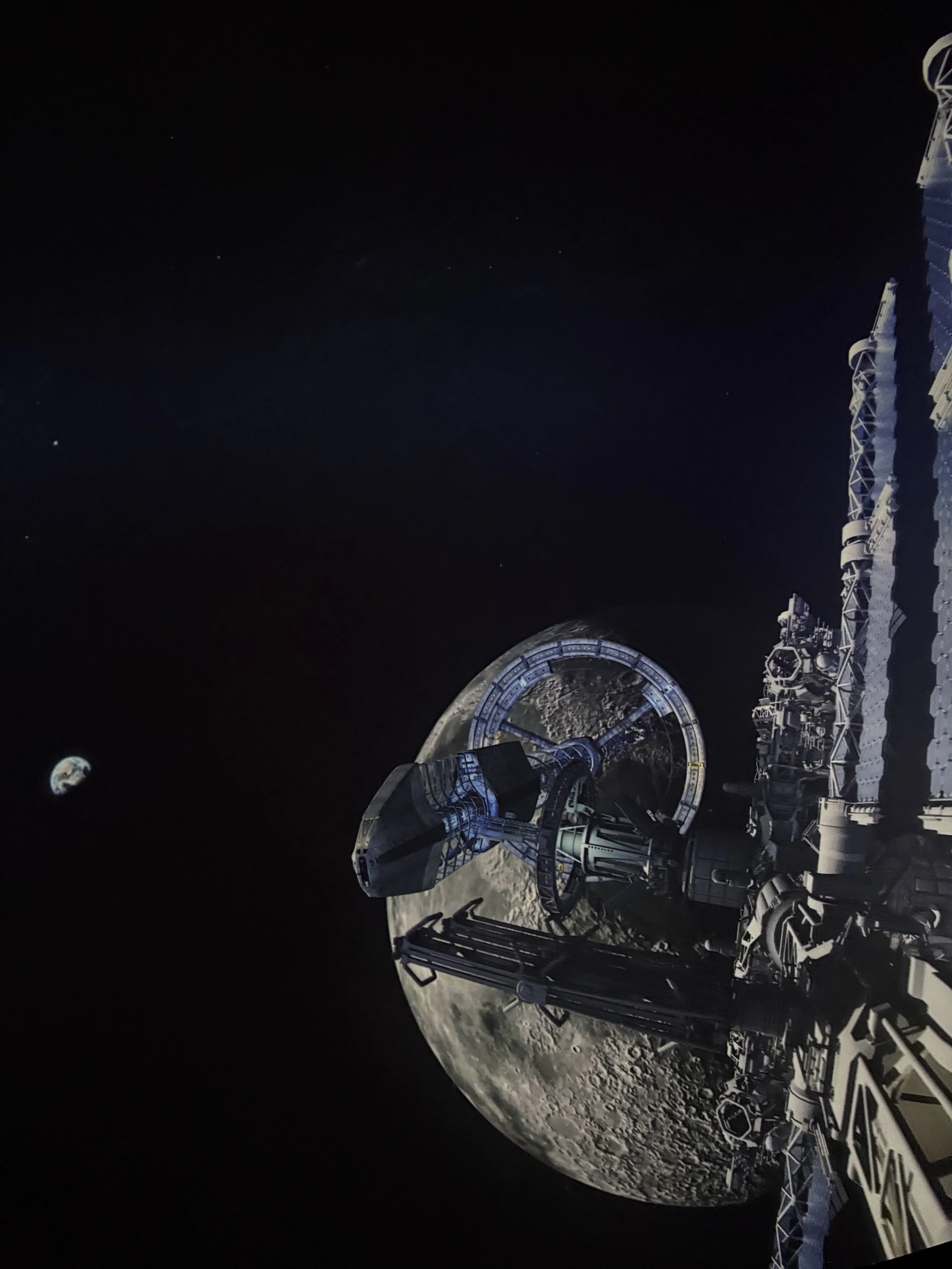
Still from “A New Blue: The Exoplanet Movie” captured during a screening in the Walt and Marita Babula Planetarium theater.
But UAF is not the only institution benefiting from a newly installed planetarium. Scott McCrea, CEO of Explore Fairbanks, stated that the company has been “yearning for a planetarium to be here in Fairbanks as long as the discussions have been going on over the last 30 years.” McCrea believes that a planetarium was the last piece that would allow Fairbanks to become a “world-class destination” for tourists interested in Alaska and what it has to offer.
McCrea believes that the planetarium’s focus on the Northern sky and the aurora will be a powerful incentive for summer tourists in evaluating Fairbanks as a destination for other seasons as well, with aurora watching being the most powerful draw.
The Planetarium is open 7 days a week. More info on the shows and tickets can be found at the Walt & Marita Babula Planetarium website
From April 26 until May 14 the Walt & Marita Babula Planetarium showtimes will display as it follows: 1:00 p.m. - A New Blue: The Exoplanet Movie, 2:00 p.m. - Aurora: Lights of Wonder, 3:00 p.m. - The Pretty Cool Space Movie, 4:00 p.m. - Aurora: Lights of Wonder.