

Board of Regents approves tuition change aimed at boosting UAF enrollment
By Amber McCain

The University of Alaska Board of Regents unanimously approved a policy change Tuesday, Aug. 4, 2026, that will eliminate the additional tuition charged to nonresident students beginning with the fall 2027 semester.
The board voted 10-0 during a special meeting to adopt resident tuition rates as the standard tuition charged to all students across the University of Alaska’s system, including both Alaska residents and nonresidents. The action is part of the university’s broader tuition transparency initiative and will take effect for the following 2027-27 academic year.
Administrators said the change is expected to improve the university’s ability to compete for students nationwide while supporting Alaska’s long-term workforce needs.
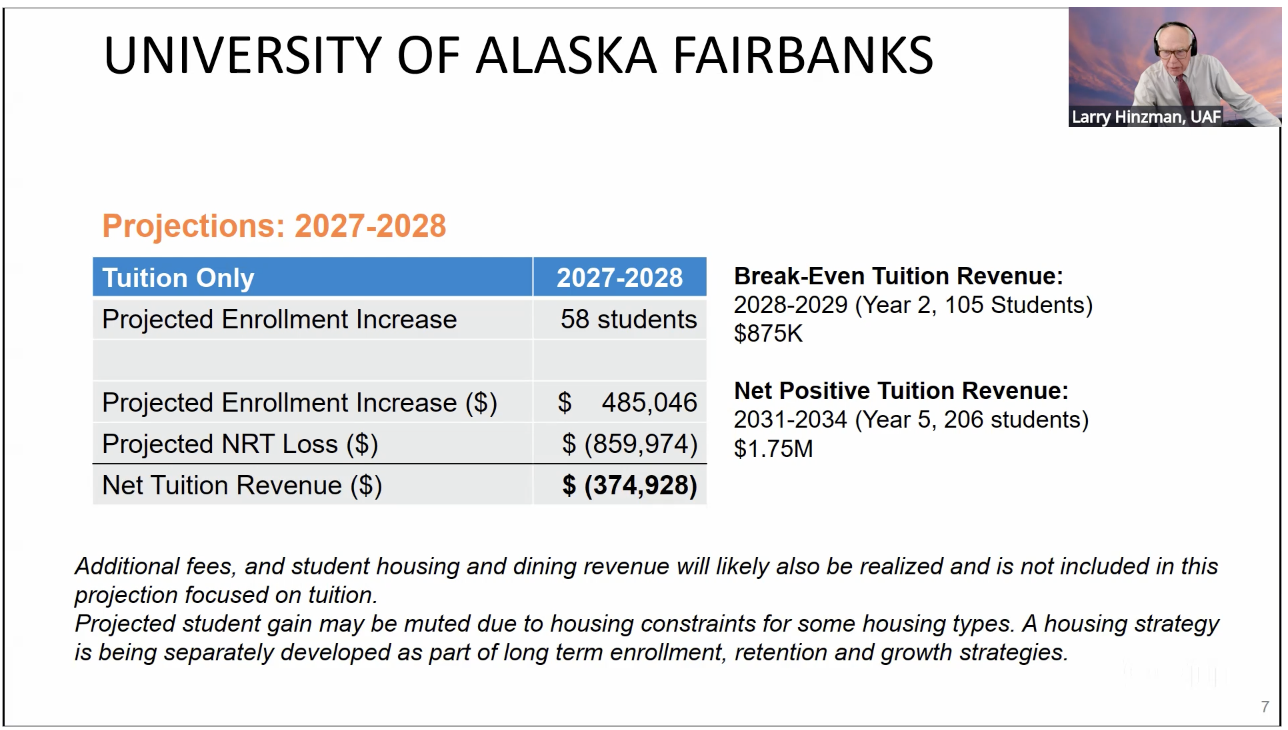
“From an enrollment perspective, this is the best thing since sliced bread,” UAF Vice Chancellor for Enrollment Management and Student Affairs Owen Guthrie told regents. He said UAF is preparing to market to approximately 260,000 prospective students in the Lower 48 and projects the tuition change could bring at least 58 additional students in its first year.
University leaders said approximately 75% of out-of-state students who attend the University of Alaska remain in the state after graduation, making student recruitment an important strategy for addressing Alaska’s workforce challenges.
Interim UAF Chancellor Larry Hinzman thanked regents for considering the proposal and credited collaboration among the three universities in developing the plan.
"I think this has been a rigorous analytical analysis,” Hinzman said. “It's been a real collaborative effort amongst all of our universities.”
The proposal eliminates a tuition surcharge that the university officials said had become increasingly complex to administer. According to Chief Financial Officer Luke Fulp, about 85% of nonresident students already receive partial or full waivers of the surcharge, creating additional administrative work and making it more difficult for students to understand their tuition costs.
University of Alaska Board of Regents members meet via Zoom on Tuesday, Aug. 4, 2026, before voting unanimously to adopt resident tuition rates for all students beginning in fall 2027.
Fulp said the surcharge currently generates about $1.4 million annually at UAF and the University of Alaska Anchorage, or roughly 1.2% of net tuition revenue. University officials believe enrollment growth can offset that revenue over time.
At UAF, enrollment modeling projects tuition revenue would reach a break-even point during the second year after implementation. The university expects additional gains through housing, dining and other student services that were not included in the financial projections presented to the board.