

EPA administrator visits Fairbanks, discusses energy, water regulations
By Amber McCain
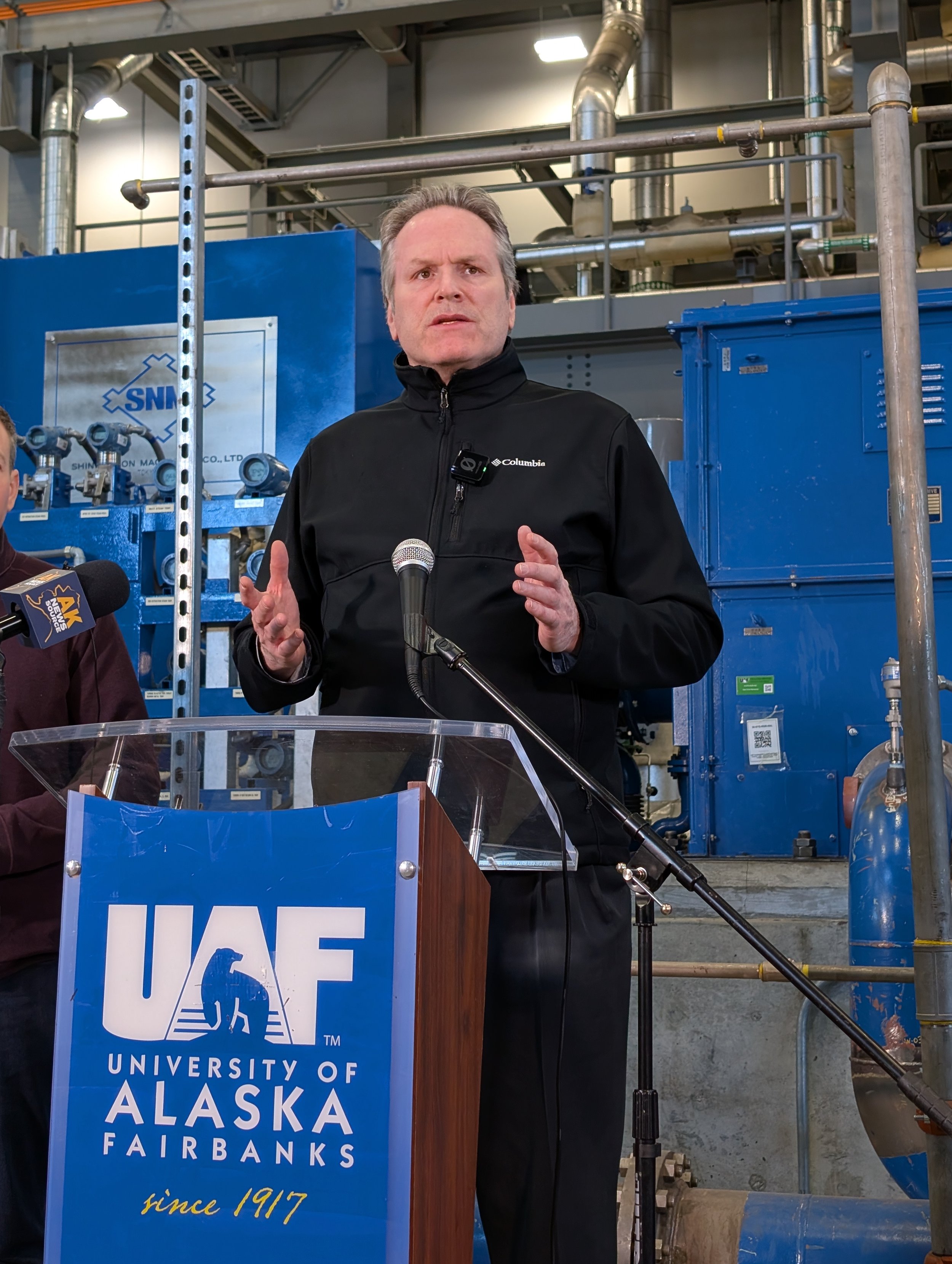
Gov. Mike Dunleavy speaks at UAF’s power plant on March 4, 2026.
Environmental Protection Agency Administrator Lee Zeldin joined Gov. Mike Dunleavy and Alaska Attorney General Stephen J. Cox at the University of Alaska Fairbanks power plant for a press conference following a series of meetings and visits around the Fairbanks area.
“We have very unique Alaska challenges to work through, permafrost specifically being very unique to Alaska,” he said. “The firsthand perspective of being here on the ground helps inform our agency to make the right decision.”
Zeldin was in Fairbanks this week to discuss federal environmental regulations that are affecting Alaska, including energy production, diesel emissions rules, and drinking water standards.
According to Dunleavy, Zeldin’s visit included discussions about energy production, diesel regulations affecting trucks in extreme cold and environmental policy affecting Alaska’s permafrost regions.
“The point being that we are enjoying, right now, a very close relationship with EPA,” Dunleavy said. “It’s a breath of fresh air.”
Zeldin said Alaska’s congressional delegation encouraged him to visit Fairbanks during winter to better understand the state’s environmental challenges.
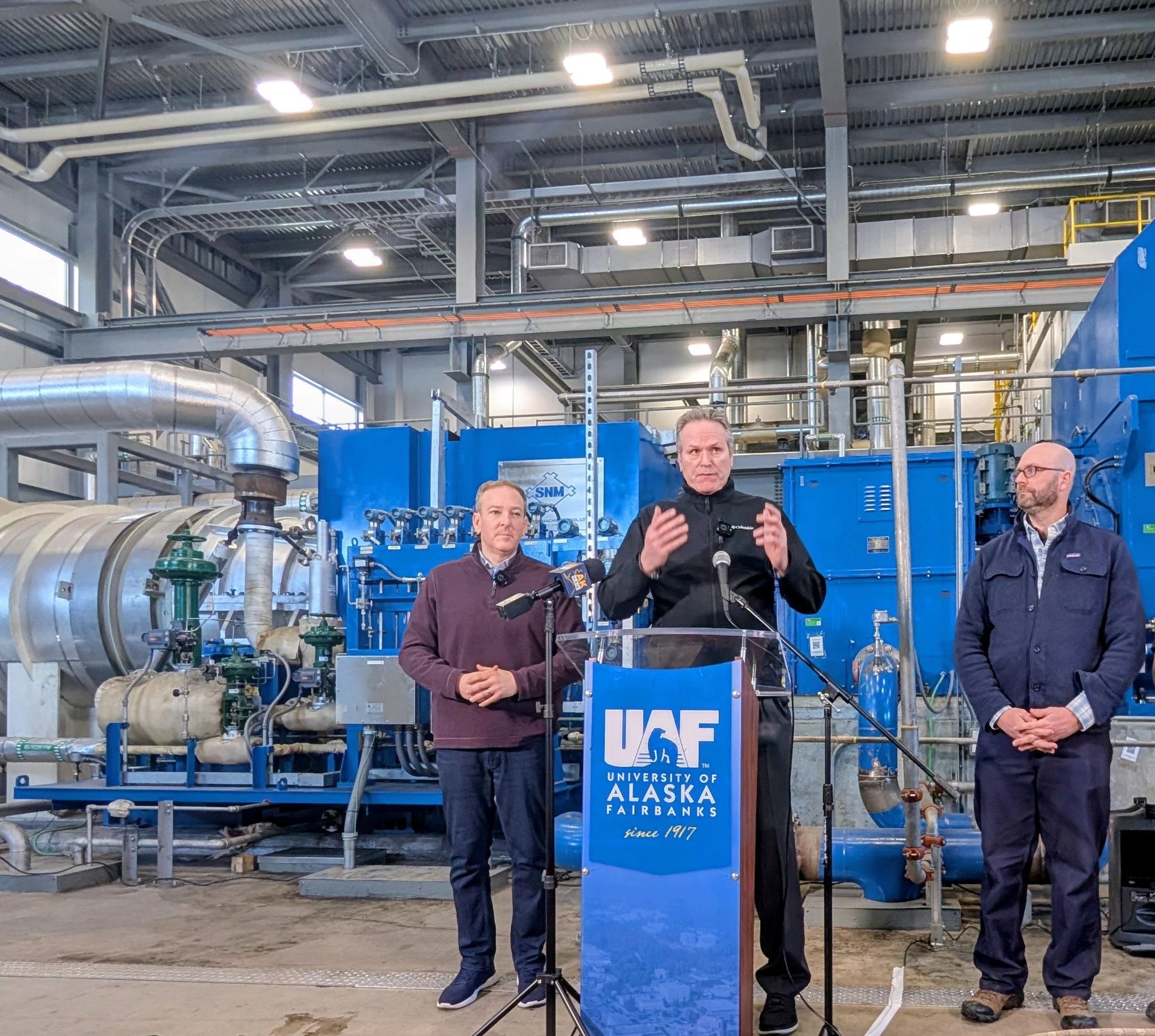
Left to right, Environmental Protection Agency Administrator Lee Zeldin, Gov. Mike Dunleavy and Alaska Attorney General Stephen J. Cox at the University of Alaska Fairbanks power plant on March 4, 2026.
“Both of them made sure to ask me to get to Fairbanks, specifically Fairbanks in the winter,” Zeldin said, referring to U.S. Sens. Dan Sullivan and Lisa Murkowski. “And I was very excited and honored to accept and I’m glad that we are here. It was a very productive trip.”
Zeldin said experience helps inform decisions currently being made by the EPA, including regulations relating to wetlands, emissions, and infrastructure.
During the trip, Zeldin said he visited a U.S. Army Corps permafrost research site and met with truck drivers that were concerned about diesel systems that can fail in extreme cold.
During the question and answer session, reporters asked questions about drinking water standards and federal regulations of PFAS, commonly known as “forever chemicals.”
Zeldin said the EPA is not rolling back federal PFAS limits.
“The PFAs standards are not being rolled back at all,” Zeldin said.
He said the agency is considering whether water systems need more time to comply with those standards due to the cost of infrastructure upgrades.
“Some water systems are struggling to be able to pay for the work in order to come into compliance,” Zeldin said.
He highlighted new technologies for removing PFAS contamination, which are expected to gradually become more affordable for communities to meet federal standards.
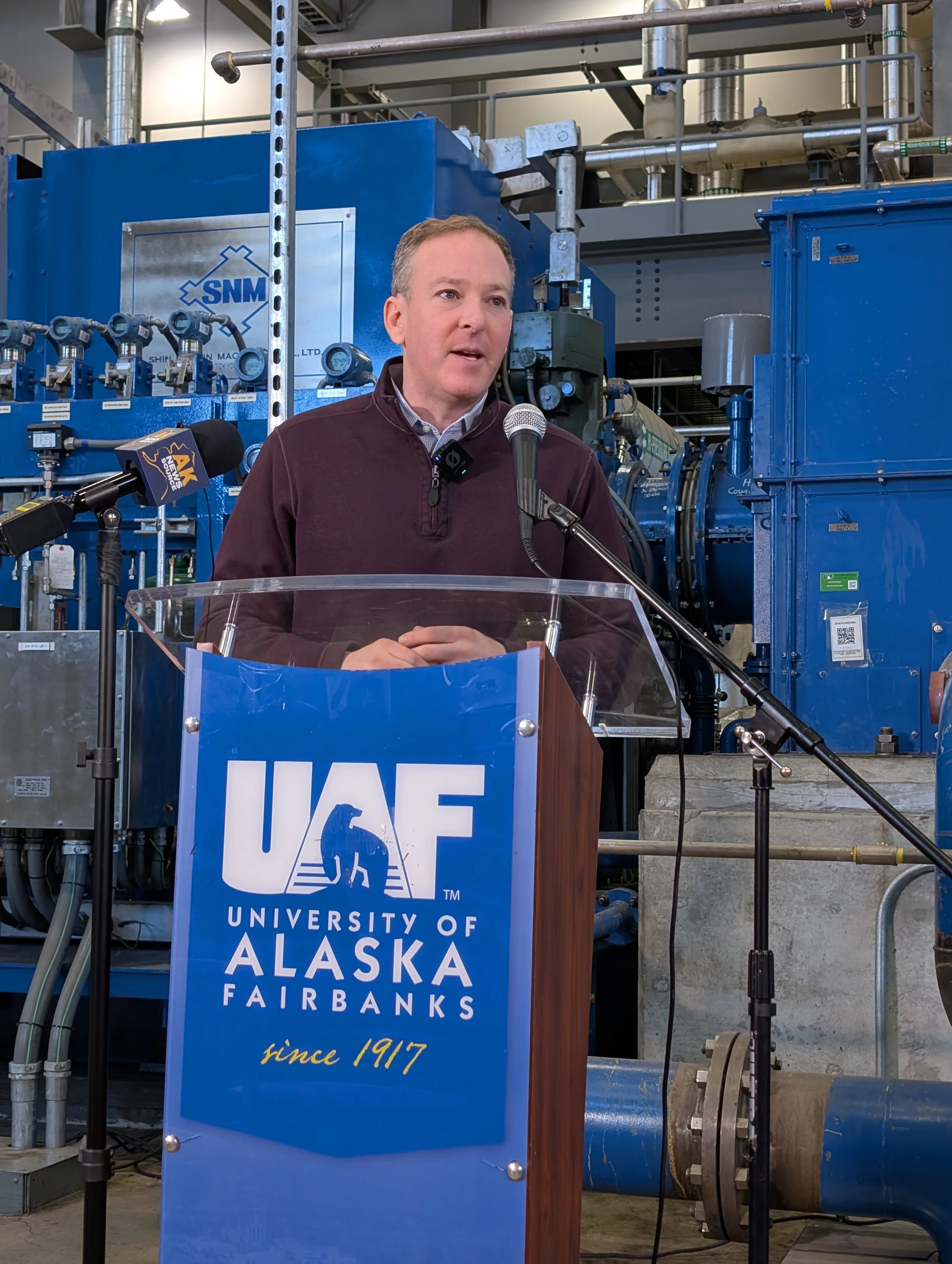
EPA Administrator Lee Zeldin comes to Fairbanks to discuss decisions currently being made by the EPA after Alaska’s congressional delegation encouraged him to visit Fairbanks during winter to better understand the state’s environmental challenges.
Alaska Attorney General Stephen J. Cox also spoke during the event. He spoke on cooperation between state and federal agencies.
“We in the Dunleavy administration really try to be a good partner and really go with cooperative federalism,” Cox said.
He said visiting Alaska can help federal officials understand the practical impacts of regulations.
“Sometimes you need to see it to see what it is,” Cox said.
Building on the water regulation discussion, Zeldin talked about the agency’s collaborative approach.
Officials also discussed Fairbanks’ longstanding struggle with PM2.5 particulate air pollution during winter months.
Dunleavy said the state is pursuing energy projects that could reduce emissions while maintaining affordable heating.
“We're working on consummating, hopefully very soon, a large gas line project that would bring clean burning gas at a very reduced rate,” Dunleavy said. The proposed Alaska gas line is intended to deliver natural gas from northern Alaska to Interior communities, providing a cleaner, more affordable fuel for heating and energy.
He said keeping energy affordable must remain a priority for residents in Interior Alaska.
“They’ve got to be able to afford to live,” Dunleavy said.
“There are decisions in front of our agency in this administration where the last 24 hours of visits throughout Fairbanks come back to D.C. with me,” Zeldin said.
He also encouraged Alaskans to participate in future public comment periods on proposed federal regulations.
“We will be relying on the engagement of Alaskans to be able to reach that final decision with the most durable solution possible,” Zeldin said.