

From classroom to capitol, UAF fights for funding, future workforce
By Amber McCain
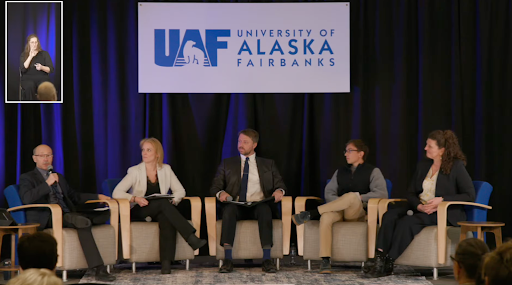
Photo courtesy of Chancellor’s Legislative Kickoff zoom.
From left, Mike Sfraga, Lisa Putnam, Chad Hutchison, Jackson Nelson, Theresa Bakker for a forum focusing on UAF’s state budget request and the broader fiscal landscape facing Alaska.
University of Alaska Fairbanks leaders and community partners outlined funding priorities, budget challenges and advocacy strategies during the Chancellor’s Legislative Kickoff on Thursday, Jan. 15, as the Alaska Legislature prepares for the 2026 session.
Interim Chancellor Mike Sfraga was joined by Greater Fairbanks Chamber of Commerce Board Chair Lisa Putnam, UA Director of State Relations Chad Hutchison, ASUAF President Jackson Nelson and Director of Development and Alumni Relations Theresa Bakker for the hour-long forum, focusing on UAF’s state budget request and the broader fiscal landscape facing Alaska.
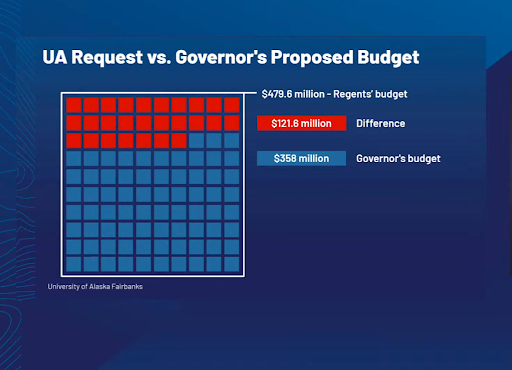
Photo courtesy of Chancellor’s Legislative Kickoff zoom.
Sfraga opened the forum with what he called “good news” from Washington, D.C., noting that the U.S. House passed appropriations bills for federal agencies including the National Science Foundation, NASA, NOAA and the Department of Energy. If approved by the Senate and signed by the president, that outcome would avert major cuts that could have some big impacts on UAF’s research enterprise.
“Flat funding is a victory for us,” Sfraga said.
He went on to talk about the importance of maintaining federal indirect cost recovery rates that support university research infrastructure and operations. UAF currently manages a research portfolio of nearly $250 million annually.
Shifting gears, the forum focused on remaining challenges. The UA system has requested nearly $480 million in state funding. Gov. Mike Dunleavy’s proposed budget allocates about $358 million, leaving a gap of more than $120 million.
UA Director of State Relations Chad Hutchison gave an overview of the state budget process. He noted that the governor’s proposal includes a projected $1.8 billion deficit driven largely by Permanent Fund Dividend allocations.
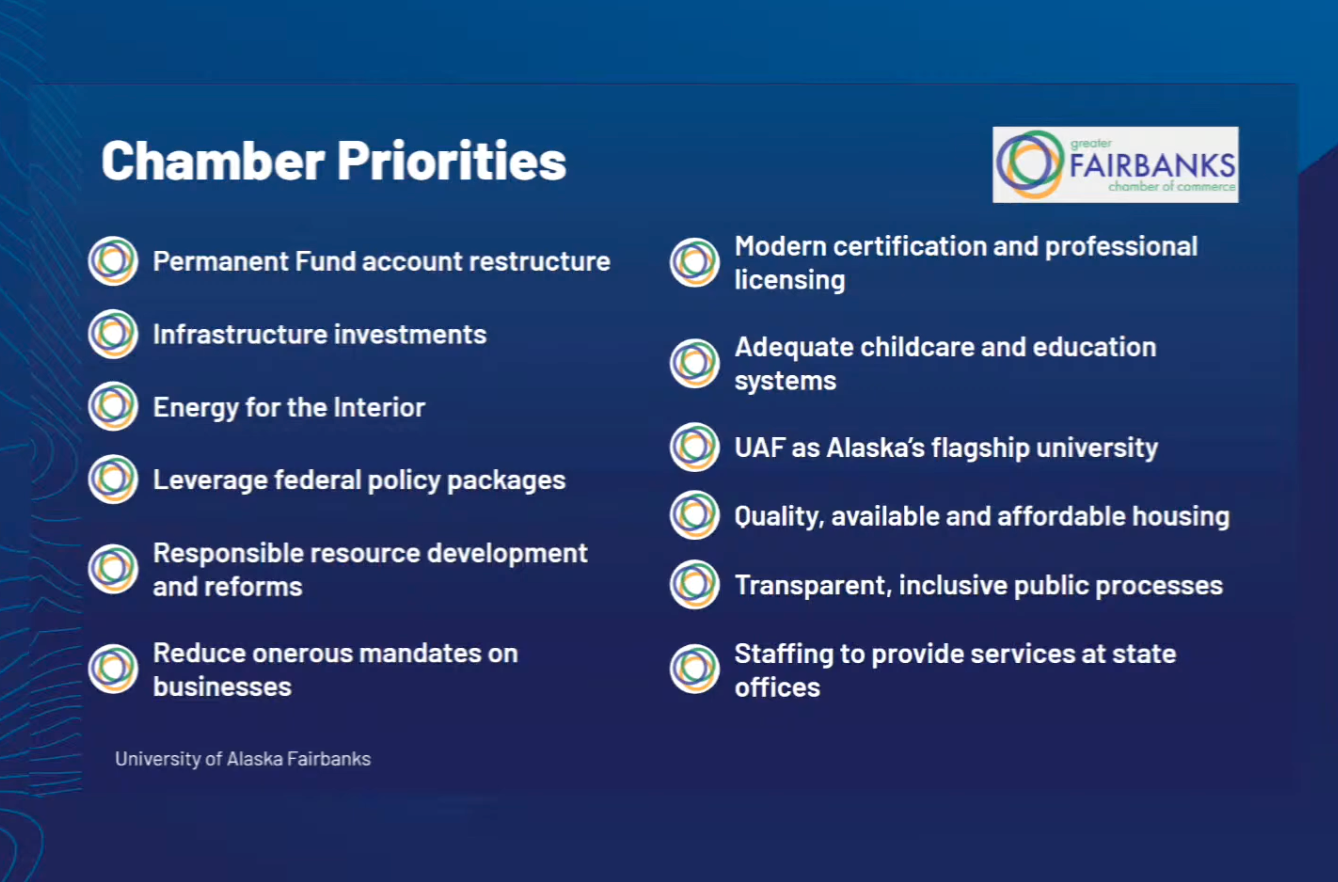
Photo courtesy of Chancellor’s Legislative Kickoff zoom.
He added that members of the House and Senate education and finance committees have expressed support for replenishing the Higher Education Investment Fund because of its role in sustaining Alaska Performance Scholarships that help to cover tuition for in-state students. The Alaska Performance Scholarship is Alaska’s merit based scholarship, awarded to high school students, up to $28,000 towards post secondary school.
“The legislature understands that these scholarships are about workforce and keeping Alaska students in Alaska,” Hutchinson said.
Greater Fairbanks Chamber of Commerce Board Chair Lisa Putnam spoke to the close relationship between UAF and the Fairbanks business community. She listed the chamber’s legislative priorities, including housing, infrastructure, workforce development and education.
“You can’t separate UAF from Fairbanks,” Putnam said. “What happens on campus impacts every business sector in this community.”
ASUAF President Jackson Nelson brought a student's perspective to the forum. His focus was on mental health services and the role of scholarships in keeping students in-state. He shared personal examples of students choosing UAF over prestigious out-of-state institutions due to financial support and community connections.
“Education is not just a cost, it’s the investment that makes everything else work,” Nelson said. “It builds the workforce and leaders Alaska depends on.”

Photo courtesy of Chancellor’s Legislative Kickoff zoom.
The University of Alaska Fairbanks’ budget priorities displayed on a slide during the Chancellor’s Legislative Kickoff at UAF on Jan. 15, 2026.
Theresa Bakker, director of development and alumni relations, used her time to discuss the role of alumni in advocacy. She stated that two-thirds of UAF alumni live in Alaska and have a vested interest in the university’s success.
“This work is about relationships,” Bakker said. “When alumni tell their stories, legislators listen.”
Sfraga closed the forum by stressing collaboration across the UA system and broader community.
“When we advocate together, students, alumni, faculty, staff and business leaders, we’re advocating for Alaska’s future,” he said.