

Give moose space: Staying safe in Alaska
By Adisen Thomas
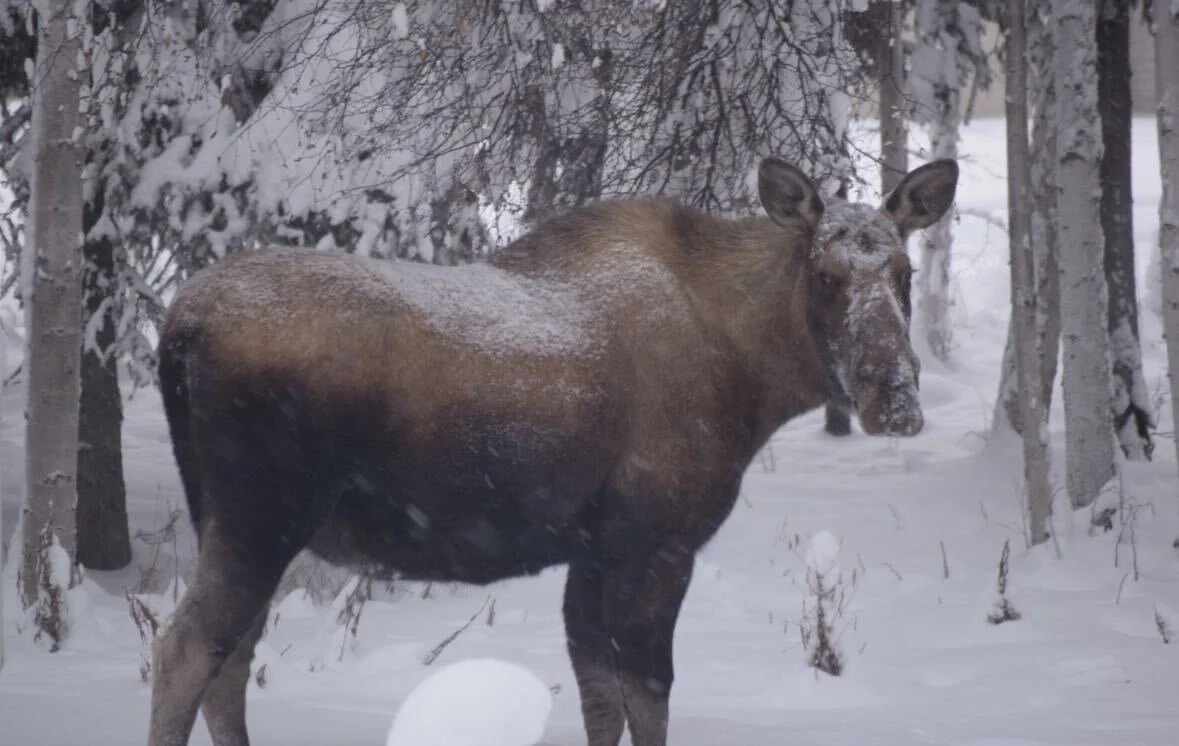
A calf browses through a North Pole backyard on Jan. 11, 2026.
The safest outdoor adventures always begin with preparation, especially in Alaska. Wildlife, from squirrels to bears, can be thrilling to see, but it is important to be prudent about how you interact with these animals.
A common sight on the University of Alaska Fairbanks campus is the moose. The key to coexisting with moose is to give them plenty of space. Save your carrots for reindeer farms. Moose typically do not attack humans without reason, according to Alaska Department of Fish and Game, ADF&G, but they can become aggressive if they feel threatened. By respecting their space, you can avoid a confrontation. It is illegal in Alaska to intentionally feed moose, bears and many other wild animals. So seriously, keep your carrots at home.
It is common to see moose along the road when traveling through Alaska, even in populated areas like Fairbanks. On occasion, moose will dart into traffic. ADF&G says, “Per mile driven, Alaska has one of the highest rates of moose-vehicle collisions in the world.” It is crucial to be aware of your surroundings, slow down when driving in low visibility or on slick roads, and use your headlights to spot moose along the sides of roads. During dark winter months, when road conditions are worse, it is especially important to practice safe driving skills to prevent potentially fatal collisions involving moose and motorists alike.
If you encounter a moose unexpectedly, there are several warning signs that indicate it may become aggressive or attack. According to department officials, signs of an agitated moose can include the hairs on its neck or hump standing upright, smacking or licking its lips, lowering its ears, or grunting. Whether you are walking around campus, going for a bike ride or hiking along a trail, you should always be aware of your surroundings.
Many moose charges start as warnings or bluffs. If a moose charges, take it seriously. The department recommends backing away and putting a solid object, such as a tree, car or fence, between you and the animal. If a moose knocks you down, curl into a ball and protect your head until it moves away.
Certain times of year can be more dangerous for moose encounters. Late May through June brings calving season, meaning cow moose may be accompanied by their calves. Give them plenty of space, and never approach, follow or attempt to separate a calf from its mother. On a busy campus, it can be easy to miss a moose nearby, especially when you are distracted or not paying attention to your surroundings. Stay alert and keep your distance, as a cow moose may become aggressive if she feels her calf is being threatened. Mid-September through early October is mating season, or rut, when bull moose can display increased aggression and unpredictability, leading to more charges. Mid- to late winter brings deep snow and limited food availability, which can also heighten moose aggression.
If a moose poses an immediate threat to your safety, call 911. You can also report wildlife conflicts or interactions to ADF&G through its wildlife encounter form.
When it comes to moose encounters, a little caution goes a long way. Stay smart, stay safe and enjoy the outdoors in Alaska!