

Brutal cold, snow dominates trail during Yukon Quest
By Aaron Thomas
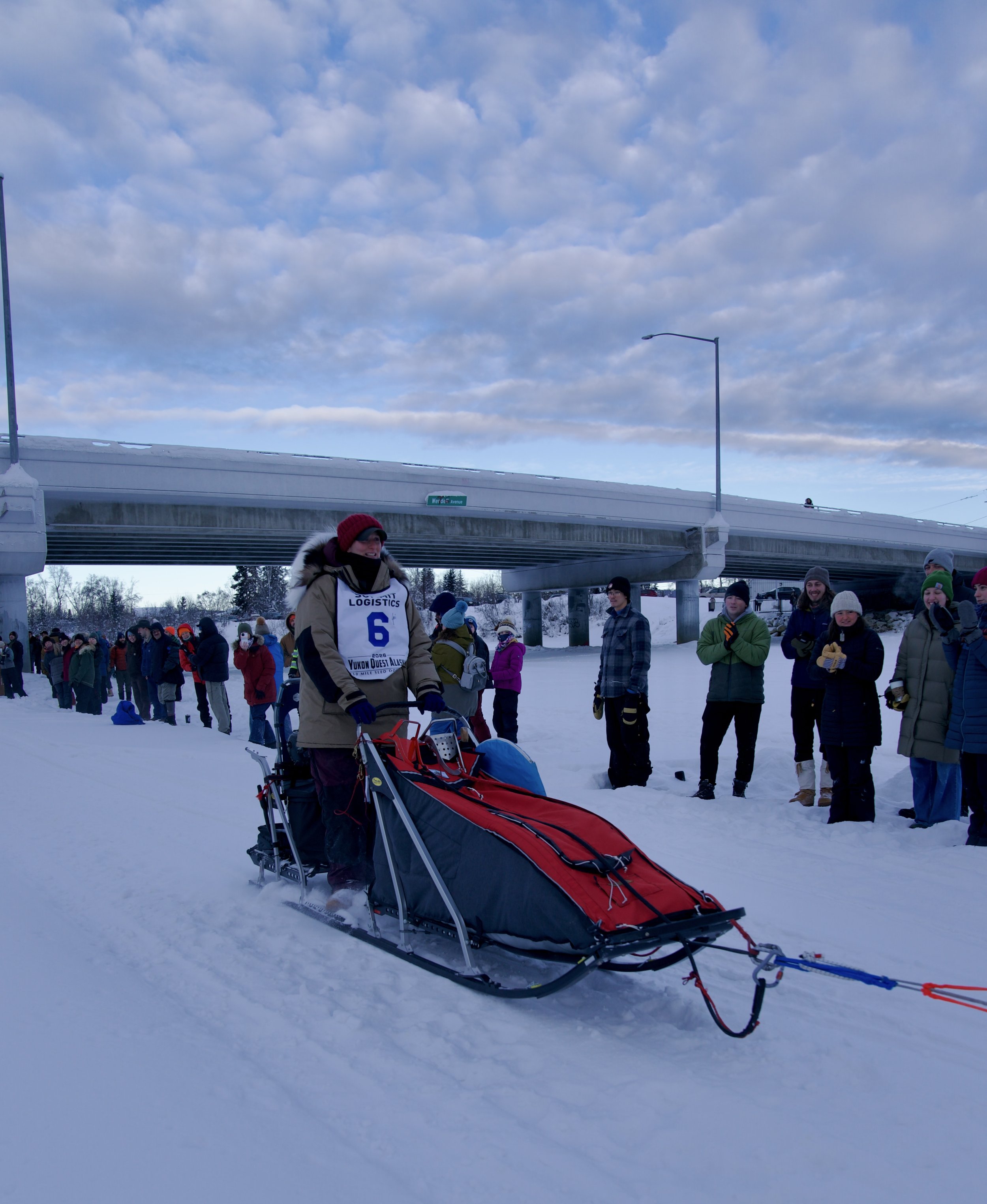
Photo by Lizzy Hahn
Yukon Quest 750-mile winner Josi Shelly takes off from the Morris Thompson Cultural Center in Fairbanks on Feb. 7, 2026.
Mushers across Alaska convened this February to compete in a particularly demanding iteration of the Yukon Quest Sled Dog Race. Following a new approximately 750 mile course, contestants battled a variety of weather, trail, and dog related challenges.
Beginning in Fairbanks, mushers travel to Circle and then down the Yukon River through Fort Yukon, Beaver, and Steven’s Village. Taking place nearly a month before the Iditarod, mushers in the Yukon Quest often face bitter cold and severe weather.
Josi Shelly won this year’s 750 with a 40 hour lead on the runner up, finishing the nearly 800 mile course in 9 days, 9 hours and 11 minutes.
The Yukon Quest began in 1984, following the historic routes of the Klondike gold rush. The race initially ran between Fairbanks, Alaska to Whitehorse, Yukon, but since 2022 has been split between a Canadian and Alaskan event.
Seventeen-year-old musher Kira Irish took first place in the 80 mile with a time of 14 hours and 7 minutes. Irish mushes a team from ReRun Kennel, a Fairbanks based kennel that rescues sled dogs. This was her 11th mid-distance sled dog race and her second year competing in the Quest. Irish’s main race is the Junior Iditarod, which is roughly 150 miles.
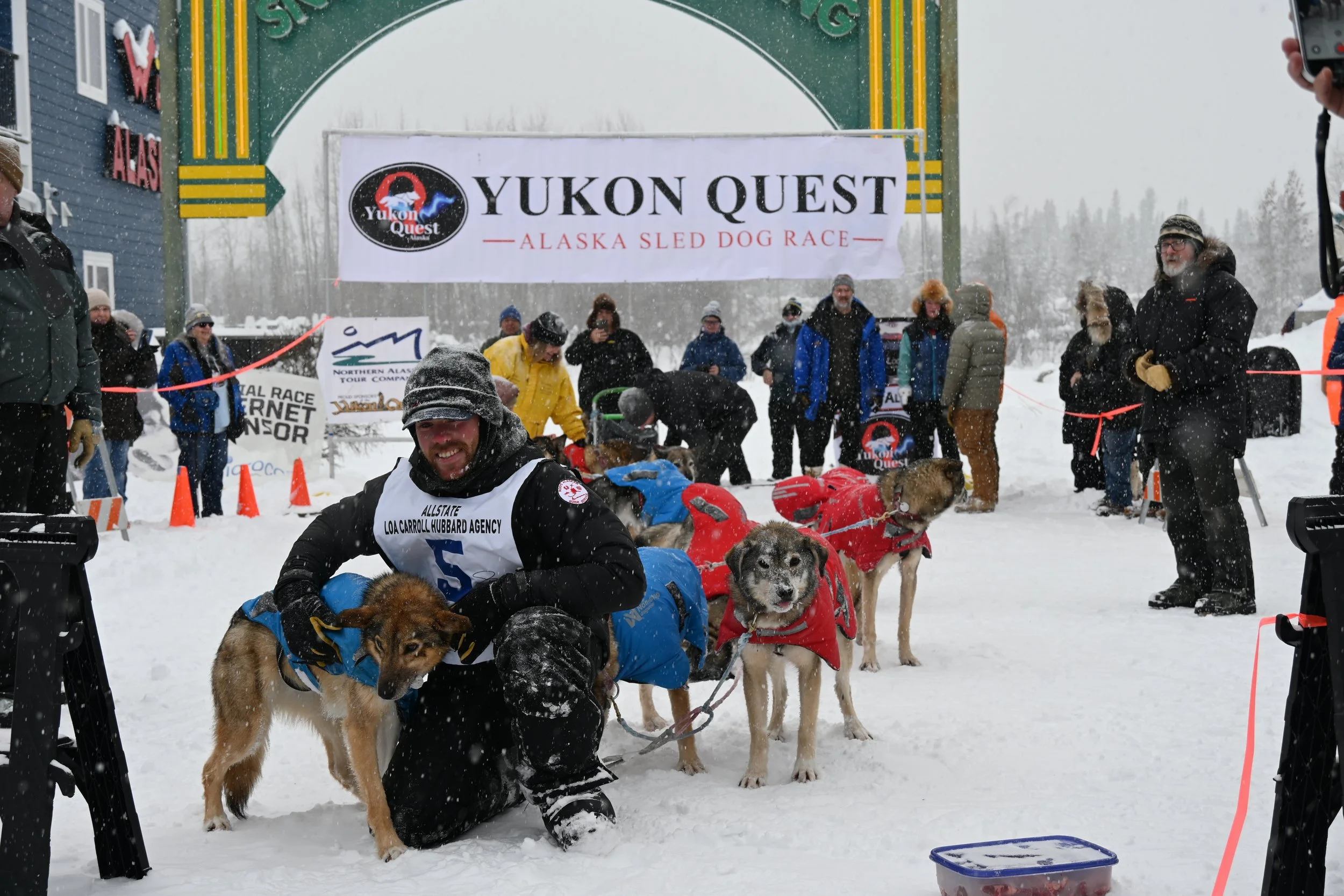
Photo by Aaron Thomas
Jonah Bacon placed second in the Yukon Quest 750-mile race. He finished on Feb. 19, 2026 at Pikes Landing.
Jonah Bacon, a University of Alaska Fairbanks alumni who took second place, described the race as “the most challenging mushing I've ever done.” He said the sections between the Yukon River Bridge and Rampart were particularly difficult, with stormy weather and fresh snow on the trail.
“I was really happy with how the dogs did and how we took care of them,” said Bacon.
During the race, Bacon contended with 55 degree below zero temperatures, multiple snowstorms, and rough trail conditions. Bacon had to leave three dogs behind at checkpoints and finished the race with 11 remaining. Mushers drop, or leave, dogs in checkpoints to be flown home for a multitude of reasons.
Mushers are not the only ones that have to contend with the brutal conditions. Sharon Hartshorn, a veterinarian for the Yukon Quest, said that terrain and temperature are the greatest challenges that the dogs face. Hartshorn has been involved in the Yukon Quest since 2011 when the former chief vet convinced her to join.
According to Hartshorn, it is fairly common for mushers to have to drop dogs throughout the race due to health concerns. Wet paws from overflow on frozen rivers can lead to frostbite and sore joints from overexertion can cause poor performance and exhaustion.
To mitigate risk to the animals, the race has three mandatory rest stops and vet posted at every checkpoint. Dogs additionally wear protective gear such as boots, insulated vests, and “peter protectors,” which are pieces of fabric or fur to cover exposed genitals, to prevent frostbite.
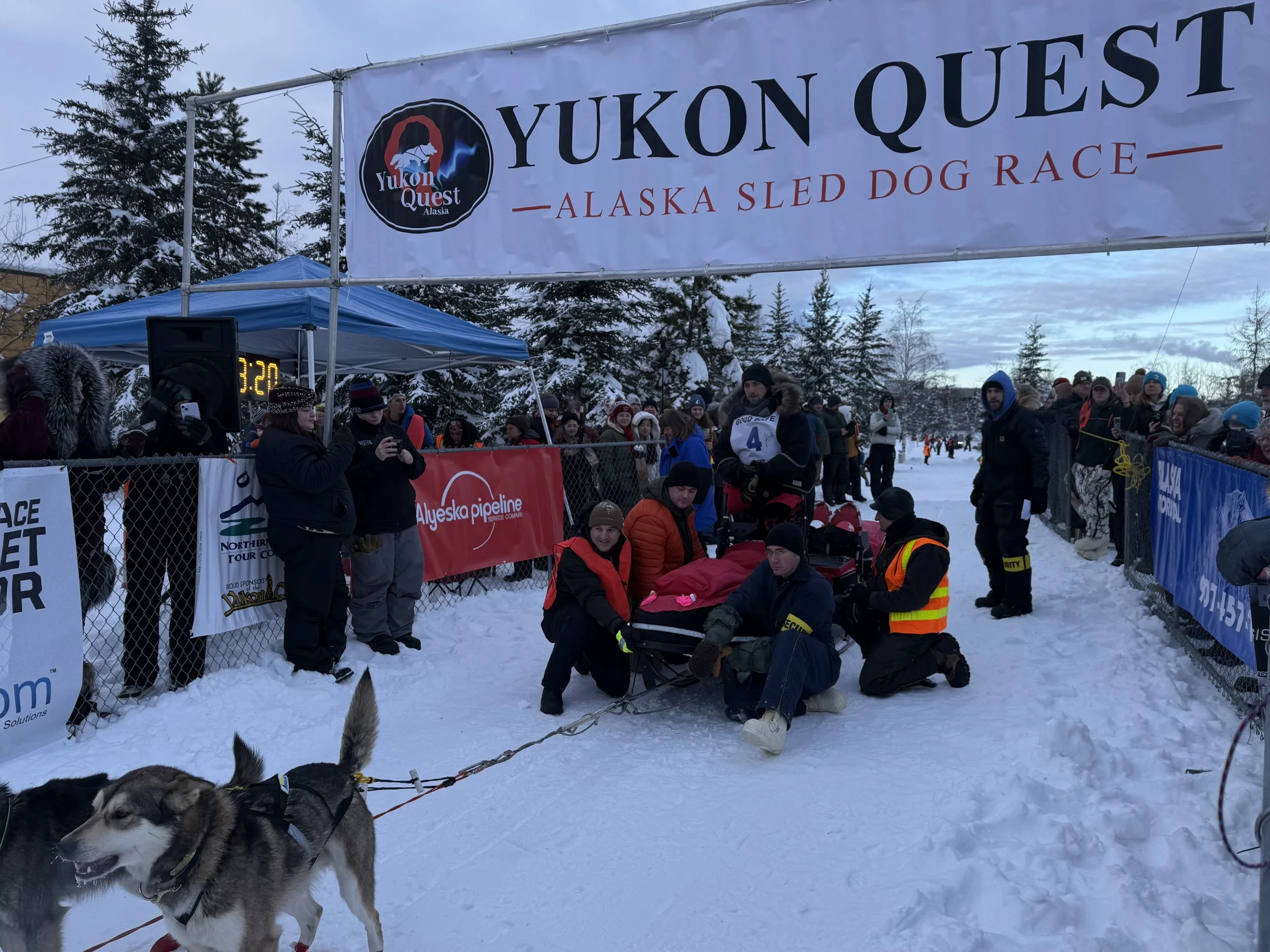
Photo by Aaron Thomas
Jeff Deeter waits for the count down to start his 750-mile race on Feb. 7, 2026. Deeter withdrew at the Yukon Bridge due to dog illnesses and poor trail conditions.
Defending champion and contestant in this year's 750 race, Jeff Deeter, dropped out of the race around 300 miles from the finish near the Yukon bridge. He attributed his decision to a combination of “team illness, poor trail marking, and associated-decision making on my part.” With his team still recovering from the Kuskokwim 300 dog race, Deeter made the decision to scratch the race and focus his efforts on the upcoming Iditarod.
Deeter, a Fairbanks local, described this season’s training as particularly challenging. With December and January temperatures reaching 40 degrees below zero for weeks on end, Deeter encountered difficulty carrying out his regular training regime. “It kind of dampened a little bit of the camping that we typically do, but we were able to make that up with a lot of back-to-back runs, " said Deeter.
Deeter runs Black Spruce Dog Sledding along with his wife KattiJo; they both compete in other races such as the Iditarod.
Several mushers noted a particularly challenging training season leading up to the race. “It was a real struggle,” said Jennifer Nelson, a competitor in the 80 mile race. She initially intended to compete in the 750, but was unable to compete in a qualifying race due to an emergency surgery. As soon as she was cleared to mush again, she said frigid temperatures made it difficult to get training miles in. Nelson will compete in other races this season such as the Su Dog 300 and the Kobuk 440.