

New immigration policies meddle with UAF international community
By Aaron Thomas and Colin A. Warren
The University of Alaska Fairbanks’ approximately 200 international students and faculty face a maelstrom of new pressures under the administration of President Donald Trump regarding visas, increased policing, and quashed political expression that have left many concerned about their future in the United States.
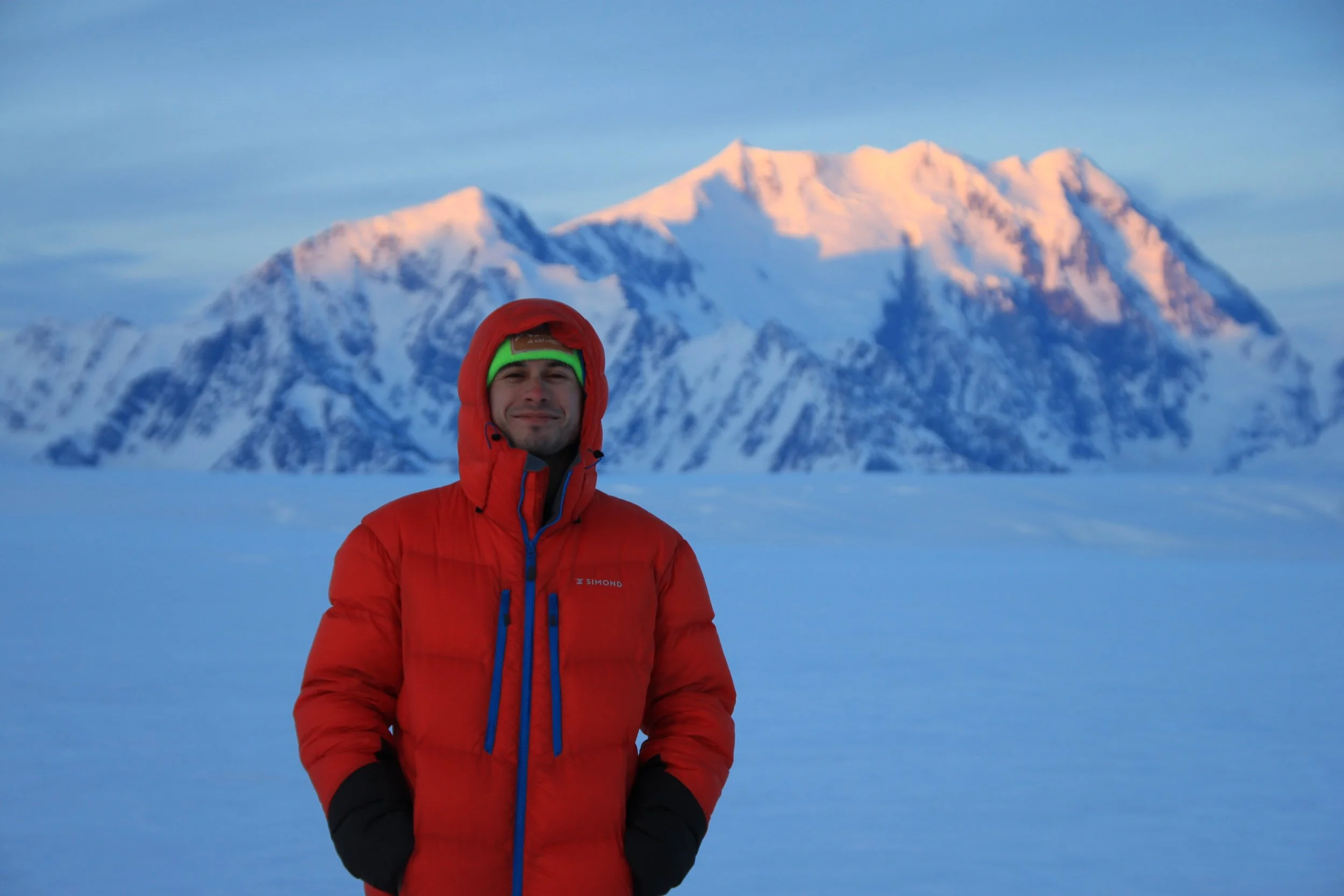
Photo courtesy of Victor Devaux-Chupin
French glaciological Ph.D. student Victor Devaux-Chupin stands on the Sit’Tlein glacier in the St. Elias mountains during his fieldwork for UAF.
“The simple fact that you might be thrown out of the country because you were partisan online, it’s kind of insane,” said Victor Devaux-Chupin, a French glaciology Ph.D. student with the Geophysical Institute at UAF. “Like, which other country that we consider, as you know, democratic, does that.”
Last spring, Rümeysa Öztürk of Tufts University was arrested by six masked plainsclothes federal agents for penning an op-ed critical the U.S. government; Moshen Mahdawi, a Palestinian student who organized protests at Columbia University was detained by ICE; and most recently, Lucia Lopez Belloza, a student at Babson College was deported to Honduras after being seized by the federal agents enroute to Texas during Thanksgiving break.
Devaux-Chupin fears deterrence and suppression of international students will stall American research.
“One of the most powerful things America has done in the last century is to draw the talent of the world,” he told The Sun Star. “Whether they grew up in Calcutta, or in Poland, or in France.”
After finishing his Ph.D. this fall, Devaux-Chupin aspired to work for NASA. However, he now plans to leave the country. He spoke of both his personal and professional life being stymied by uncertainty. “Do I limit my relationships, personal and professional, because I might be thrown out of the country?” He also pointed out what he described as the poor investment strategy of such immigration policies. By his estimate, his university-funded degree cost around $300,000 and instead of using his acquired skills in America, he’s now taking them elsewhere. “I wanted to stay here,” he said.
It’s not just Devaux-Chupin who has faced complications.
According to Reija Shnoro of UAF’s International Student and Scholar Services, or ISSS, this fall 12 new international students postponed their education.
“I’ve been in this office for 10 years and that has never, ever happened before,” Shnoro said.
New rules from the federal government require students to apply for a visa at the consulate in their country of origin, which adds cost and additional travel time for applicants already residing in other countries. While some have managed to negotiate the new rule, there are countries that simply do not have a consulate – particularly in Africa and the Caribbean – leaving them without any option for a student visa unless they have the money to travel internationally to acquire one.
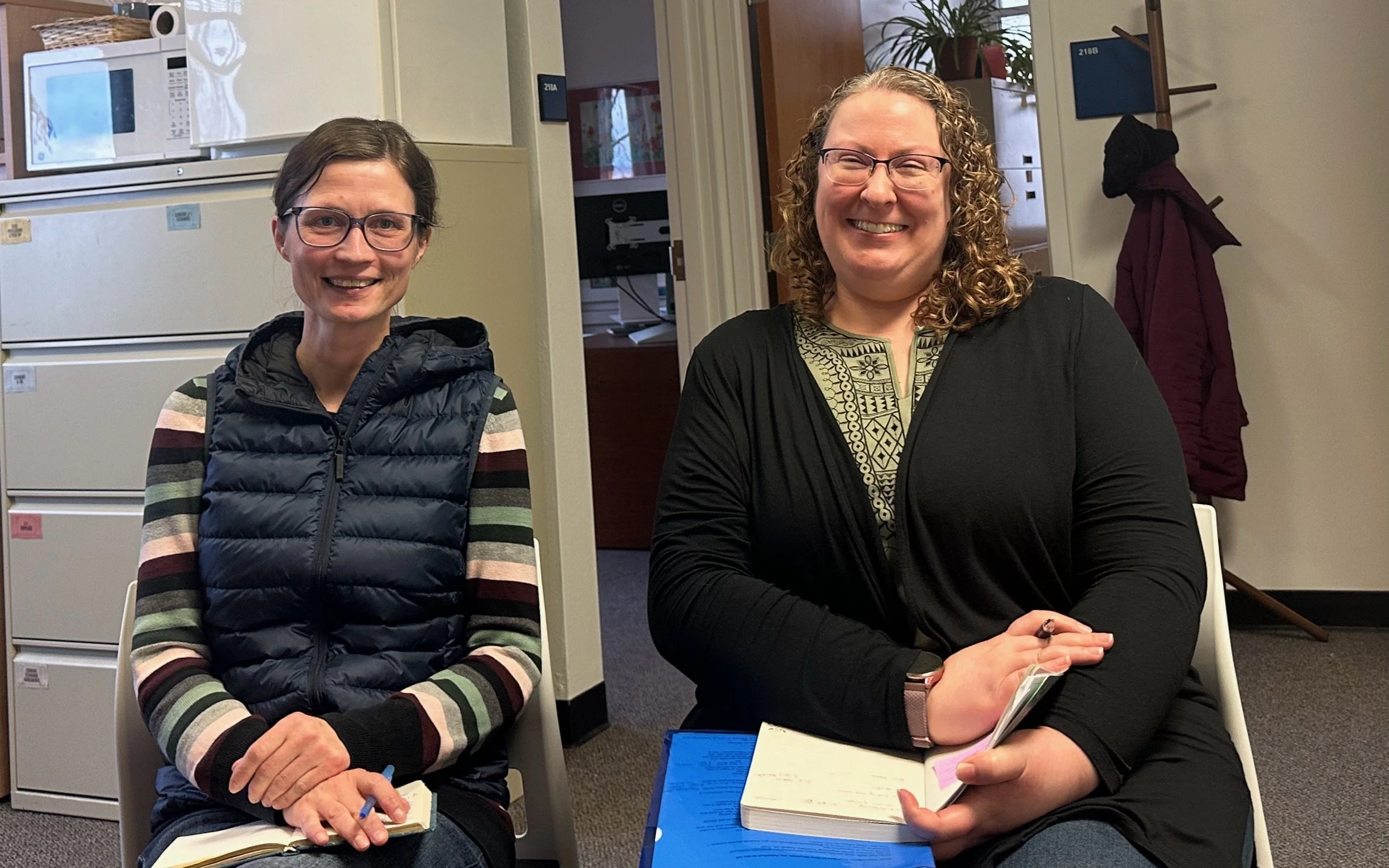
Photo by Colin A. Warren
Reija Shnoro, left, and Joanna Cruzan are the only two workers assisting the hundreds of international students and employees in the ISSS offices at UAF.
ISSS explained that students who have to postpone their arrival and start late face additional strain. Shnoro described students who in years past had moved to Fairbanks several weeks into the semester only to find themselves behind on coursework, without social connections, and in the coldest weather they have ever experienced.
It’s also making operations at ISSS more difficult.
“It definitely increases our workload,” said Shnoro. Because of late arrivals by students and the need to comply with rapidly changing rules and regulations, both employees at ISSS said they have been putting in many more hours, by doing things like hosting multiple orientation workshops, without increased compensation.
Kyra Bornong, the president of the Alaska Graduate Workers Association, or AGWA, said that among the legal challenges that international graduate students face, they also deal with the emotional uncertainty of feeling like the U.S. government doesn’t want them here. “We definitely have international students who are afraid of joining the union for fear of repercussions,” said Bornong.
The State Department now reviews personal social media accounts for anything pertaining to anti-semitism and “anti-American” sentiment. And if foreigners do not have any social media, they have to explain their lack of accounts. This has put a disproportionate number of student visa applicants in administrative processing by default, which significantly delays their visa or can outright prevent them from acquiring one, according to ISSS.
Alexander Glackin, the chair of the rules committee for ASUAF, UAF’s student government, said the reluctance of the University of Alaska Board of Regents to take stances on pressing issues such as immigration erodes the trust of the student body and stokes fears that the university will capitulate whenever placed under pressure by the federal government.
By contrast, at the K-12 level, the Fairbanks North Star Borough School Board of Education passed a resolution in September ensuring the safety of all students regardless of immigration status.
“[University] is a place where you can exchange ideas and be challenging your own thoughts,” said Glackin. “If you’re limiting the views you have allowed to partake in on campus, you’re also damaging the student body.”
In a study by the Global Enrollment Benchmark Survey, new international enrollment this fall semester in the U.S. has dropped by 6% at the undergraduate level and 19% amongst graduate students. According to Brookings, if international students were completely cut from the U.S. economy it would cost the nation about $44 billion, causing havoc to budgets and decimating college towns.
Glackin said his linguistics program was stifled due to visa issues, noting the Japanese students in his classes came three weeks late.
Scott Melnyk, a Canadian assistant geology professor was forced to teach his classes over Zoom this semester due to his unprocessed H-1B visa. Alex Patton, a student in Melnyk's class, said he was frustrated by expecting a lab class and paying lab fees for a class that takes place online.
Even if Professor Melnyk’s visa had been processed, there is still uncertainty around it because of the presidential proclamation signed Sept. 19 demanding employers pay $100,000 for H-1B visas.
Frank Olive, director of UAF Outdoor Adventures, described a substantial decline in the number of international students participating in the Wilderness Welcome Trip, an outdoor recreation adventure for incoming students to make friends and connect with other students. Olive said five students were unable to attend due to visa issues.
As U.S. Immigration and Customs Enforcement presence swept through Fairbanks this fall, Devaux-Chupin said several of his friends from Central and South America socialized less, drove less, and avoided longer trips across town for fear of being detained. ICE arrested Fairbanks resident Atcharee Buntow, a Thai woman who has lived in the U.S. for 30 years, this fall while running errands; she spent eight weeks in detention, leaving her husband to care for their toddler while attempting to maintain his full-time job.
Pond Namutawong, a senior English major at UAF and family friend of Buntow, described the shock he and his family felt at the news of her arrest. He said the Thai community in Fairbanks felt a growing sense of paranoia and the incident caused a rush to update personal documentation.
“Even if you have the right things,” said Namutawong, “you might still get arrested.”
UAF Police Chief Max Becker confirmed that there have been no known arrests or detentions of UAF students or faculty by ICE on campus. He said that while the university has no official policies regarding ICE agents on campus, the University Police Department would take no role in detentions or raids. If foreigners are approached by masked agents demanding cooperation, Becker urges them to seek legal counsel, reach out to ISSS, or call the University Police Department.
“We are here to respond to all situations and make sure that everyone on campus feels safe,” said Becker.
Devaux-Chupin is headed to a postdoctoral position at the University of Northern British Columbia next month.
“I cannot express political opinions in this country,” said Devaux-Chupin.