

Vander Lugt’s next mission: Leading UAF into the Arctic century
By Gabriele Rigaudo
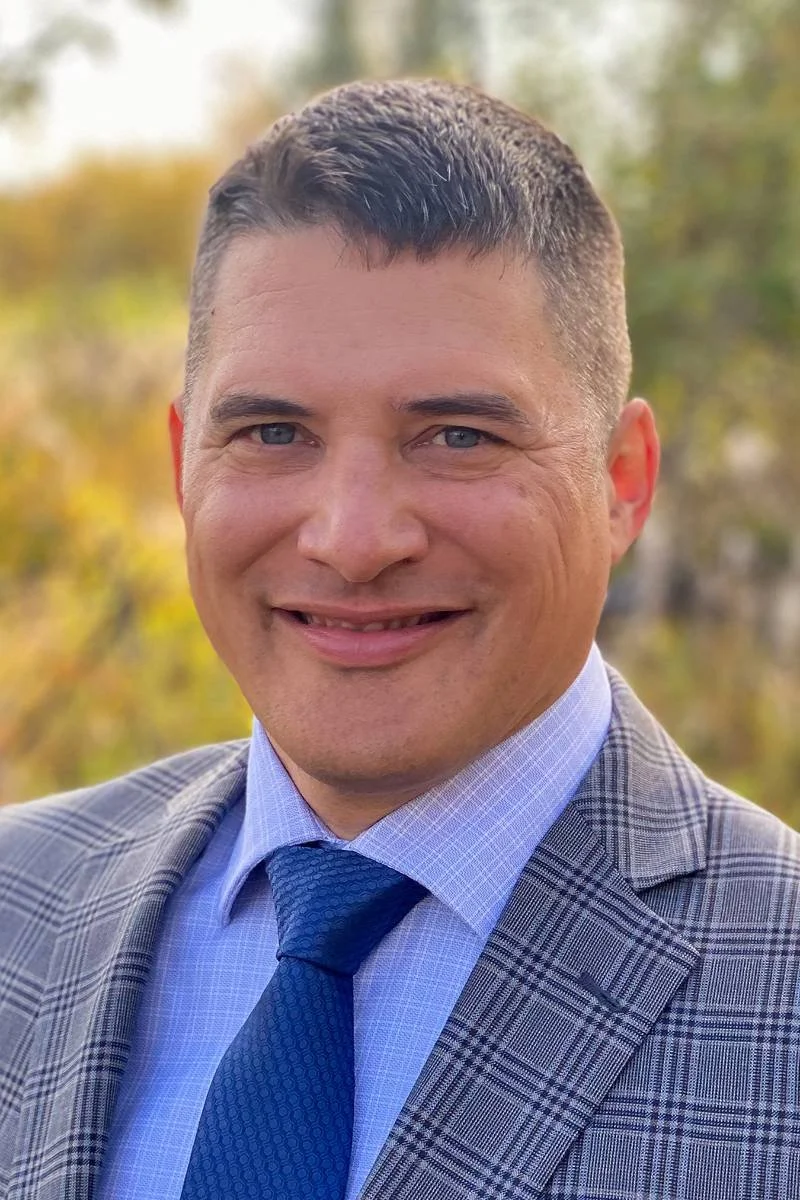
Photo courtesy of the University of Alaska.
Twenty-six years ago, Russell Vander Lugt first set foot in Alaska as a newly commissioned second lieutenant, during his honeymoon with his wife, Rebekah. Today, he is retiring from active duty to become the next Chancellor of the University of Alaska Fairbanks. While this transition might seem abrupt, Vander Lugt sees the role as a different way of serving both the state and nation, hoping to shape the growth and future of the 49th state. To Vander Lugt, this opportunity comes at a timely moment as Alaska sits at the dawn of what he calls “Arctic Century,” a moment in which UAF needs to capitalize on growth, opportunities, and ever-increasing geopolitical importance.
“When I first visited Alaska… It was love at first sight. We found a sense of place and purpose in Alaska that we had not previously known...”
While not born in Alaska, Vander Lugt chose the state for his first assignment, to raise his children and settle down. After completing flight school in May of 2002, the Vander Lugts asked to be assigned to Fairbanks for their first military assignment, making Fairbanks their home ever since. To him, “being an Alaskan means being in Alaska.” Being born outside the state does not represent a limit, nor should it prevent people from moving to the state. This idea applies to the university as well. As Vander Lugt stated, the institution should always try to do its best to welcome talent from outside the state. Much like Alaska welcomed him and his family, the same can be done with other people who fall in love with the place and may decide to call it home. “When outsiders arrive, we welcome them and hope they stay – Alaska may cast its spell.”
While being deeply in love with the state, Vander Lugt recognizes the challenges and commitments each person who decides to move to Alaska encounters. Being in Alaska means choosing to be in Alaska, and this comes with a series of qualities Vander Lugt highly considers: “Arctic grit is part of our values. A case in point occurred this past winter, one of the toughest interior winters in recent memory.” Vander Lugt believes UAF’s future success must revolve around Alaska and Alaskans, investing in the state and the people’s future.
Although Vander Lugt’s military career brought him to Alaska, his academic career at UAF helped define the kind of leader he became. While already having an impressive academic curriculum, Vander Lugt attributes a key role in understanding the value of rigor in research and scholarship to his Ph.D.’s committee chair, Professor Emeritus Mary Ehrlander. “Though she has since passed away, the academic standards that she modeled and instilled in me will never grow dim.”
“Much in life comes down to standards and discipline, coupled with the accountability that comes from being a member of a community, whether as part of a family, in the military, or in the academy.”
Growing up, Vander Lugt took his first steps in the working world early as a construction foreman for his dad’s business. To him, his parents were instrumental in learning faith, family, work ethic and leadership. For his bachelor’s, he decided to major in Music and Historical Theology at Wheaton College in Illinois, while being a Student and Army ROTC cadet. His first UAF degree was obtained in 2010, a Master of Arts in Northern Studies and Historical Geography. After that, another master’s degree; this time, it was an MS in Management Science at Embry-Riddle Aeronautical University. Here, he got the opportunity to be introduced for the first time to the world of teaching, covering a role as assistant professor and department chair. His second teaching experience came at the United States Military Academy at West Point in 2012, where he served as Assistant Professor of History until 2014. From 2014 to 2017, he took a three-year break from academia. During this period, he served as Chief of Staff and Executive Officer in the 11th Airborne Division at Fort Wainwright.
In 2017, Vander Lugt returned to UAF, this time for his Ph.D. After being awarded the Goodpaster Scholarship Fellowship through the Army’s Advanced Strategic Planning and Policy Program, Vander Lugt applied and was accepted to several highly prestigious institutions. The decision, though, was clear to him: UAF. At our institution, he pursued and successfully defended his Ph.D. in Arctic and Northern History.
The same values that shaped Vander Lugt’s academic career are the ones that he hopes to cultivate in students. To him, UAF students must continue to live the university’s motto: “Ad Summum” – “To the Highest Summit.” This phrase represents more than a slogan for Vander Lugt. As he noted, it was conceived by the first UA President, Charles Bunnell, inspired by the majestic view of Denali.
This recurring theme of honor and discipline accompanied Vander Lugt throughout his whole career. Now, as the newly appointed chancellor,
“…right now, I would describe my vision for UAF as merely an “idea” or draft concept. It requires feedback, development, and endorsement by the UAF community – including faculty, staff, and students.”
Vander Lugt’s last military assignment before being nominated Chancellor was being a brigade commander of the 11th Airborne Division at Fort Wainwright. This past July, he officially retired from active duty.
The opportunity to become chancellor presented itself at a convenient time and place in Vander Lugt’s life. Having already achieved the goals he had set for himself in the Army, he began considering retirement from active duty. When the chancellor position became available, he saw it not as a matter of chance, but rather an opportunity to continue leading an organization that provides “purpose and value to our State and Nation.”
As a brigadier commander, Vander Lugt led thousands of soldiers. Leading a university, however, means guiding thousands of students, faculty, and staff. Still, Vander Lugt believes effective leadership is rooted in principles that apply across institutions. “A) Know each other and our stories. B) Provide purpose and sense of belonging. C) Provide a pathway to success.” In Vander Lugt’s experience, this leadership style works one-on-one and at institutional levels.
Another adaptation from military leadership will take place during the first months as Chancellor. As he mentioned, military leaders, upon arrival in a new unit, circulate the place. This allows them to get to know people, places, and structures. Similarly, Vander Lugt’s first 100 days will be focused on getting to know students, staff, and faculty. Vander Lugt said the summit will "help us identify a collective vision and shared purpose" while bringing participants together to discuss UAF's future priorities.
“I believe that UAF stands at this pivotal moment in its history – one in which strong, visionary, and adaptive leadership can position UAF to expand its influence as America’s Arctic University while strengthening its role as Alaska’s premier institution for education, research and public service.”
Vander Lugt believes Alaska is entering what he calls the "Arctic Century," a period of growing opportunity and responsibility for institutions across the region. In his view, UAF's role is not simply to exist in the Arctic, but to lead on Arctic issues through research, education and public service. He noted that the Arctic sits at a strategic crossroads connecting Alaska with Russia, Greenland and the Scandinavian countries, placing UAF in a unique position to advance scientific knowledge and prepare the next generation of Arctic leaders. "I am excited to serve as Chancellor because I believe that UAF stands at this pivotal moment in its history—one in which strong, visionary and adaptive leadership can position UAF to expand its influence as America's Arctic University."
While having the sights set firmly on UAF’s future, Vander Lugt does not fail to celebrate what has already been achieved by previous leaders and people at the institution. He mentioned how proud he is of everything achieved by the university in the last decade, as UAF has proved itself as an elite research institution.
Vander Lugt considers himself “incredibly optimistic, and always forward-looking,” seeing “…opportunities at every turn.” Still, UAF’s next chapter and next summit must be conceived and worked on by everyone, as he mentioned.
Between military service, teaching, research, and leadership, Russell Vander Lugt won the trust of former UA president Pat Pitney in consultation with the search committee, winning the Chancellor position among excellent candidates. Now, the future of UAF will be deeply shaped by his decisions, leadership and work. The plan for Vander Lugt is to be in “for the long game,” launching, over the next year, a new strategic plan, extending through 2035.
Vander Lugt plans to kick off the process with a campus-wide Vision Summit, explaining that it will “help us identify a collective vision and shared purpose.” The summit will also bring together participants to assess UAF’s strengths, weaknesses, opportunities and threats across operation units and the university as a whole. “Together we can build consensus, leverage collaboration, clarify priorities and advance UAF through disciplined initiative and shared purpose.”
Chancellor Vander Lugt plans to host regular informal opportunities for students to connect, including Coffee with Chancellor, Lunch with Chancellor, and Workout with Chancellor. More information will be shared at Convocation!