

There’s no one way to grieve, UAF students say
By Jonathan Wasilewski
Grief has no single language, yet no two people speak it quite the same. One summer morning, I experienced grief when my beloved cat was put down.
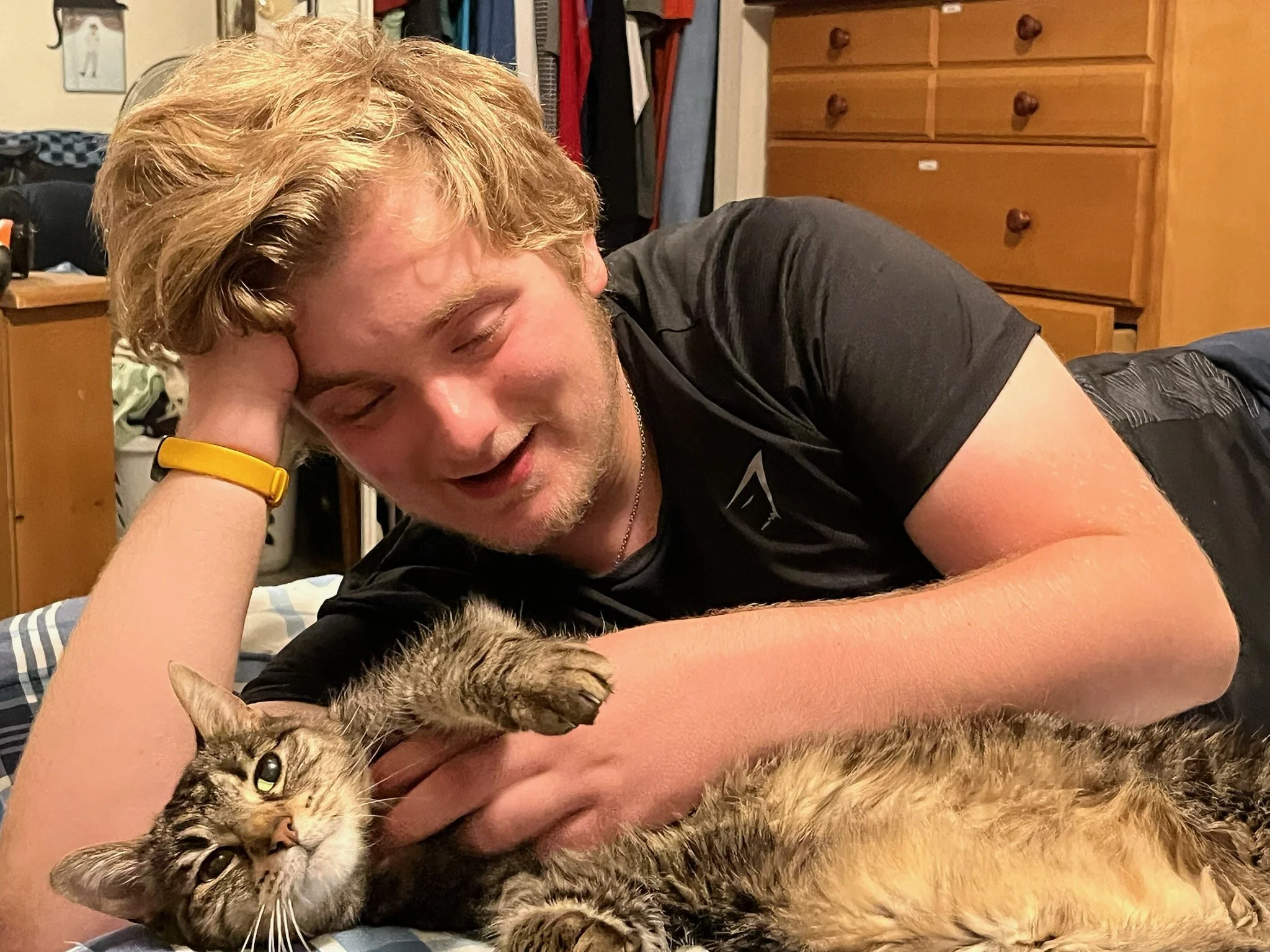
Jonathan Wasilewski snuggles with his cat, Hopi, before leaving for college July 31, 2025.
Hopi, a Russian tabby my family had gotten 15 years ago from my late aunt, was my best friend. She had been by my side since I was 5 years old, letting me cuddle and pet her through the fierce anxiety that haunted me, my parents’ divorce and the hate it caused, despair, alienation, hospital stays, new schools, graduations and everything else I had gone through.
On that summer morning, my mother called me. Although the sun shone vividly outside and numerous dandelions competed for light as seagulls, robins and chickadees swarmed the vicinity, my heart was aching. Losing her got me thinking about how grief is processed by people across contexts, religions and backgrounds.
“It’s a natural, completely normal response,” said Jenny Dunn, a therapist at UAF’s Student Health and Counseling Center. “When something’s taken away from us without our permission, something or someone, we’re going to feel something.”
Dr. Valerie Gifford, Director of the Student Health and Counseling Center, validated the feeling some have that they should experience grief in a certain way.
“We tend to look around to see how other people go through things,” she said.
But the people I spoke with described different ways of processing grief, shaped by their communities, faiths and personal experiences.
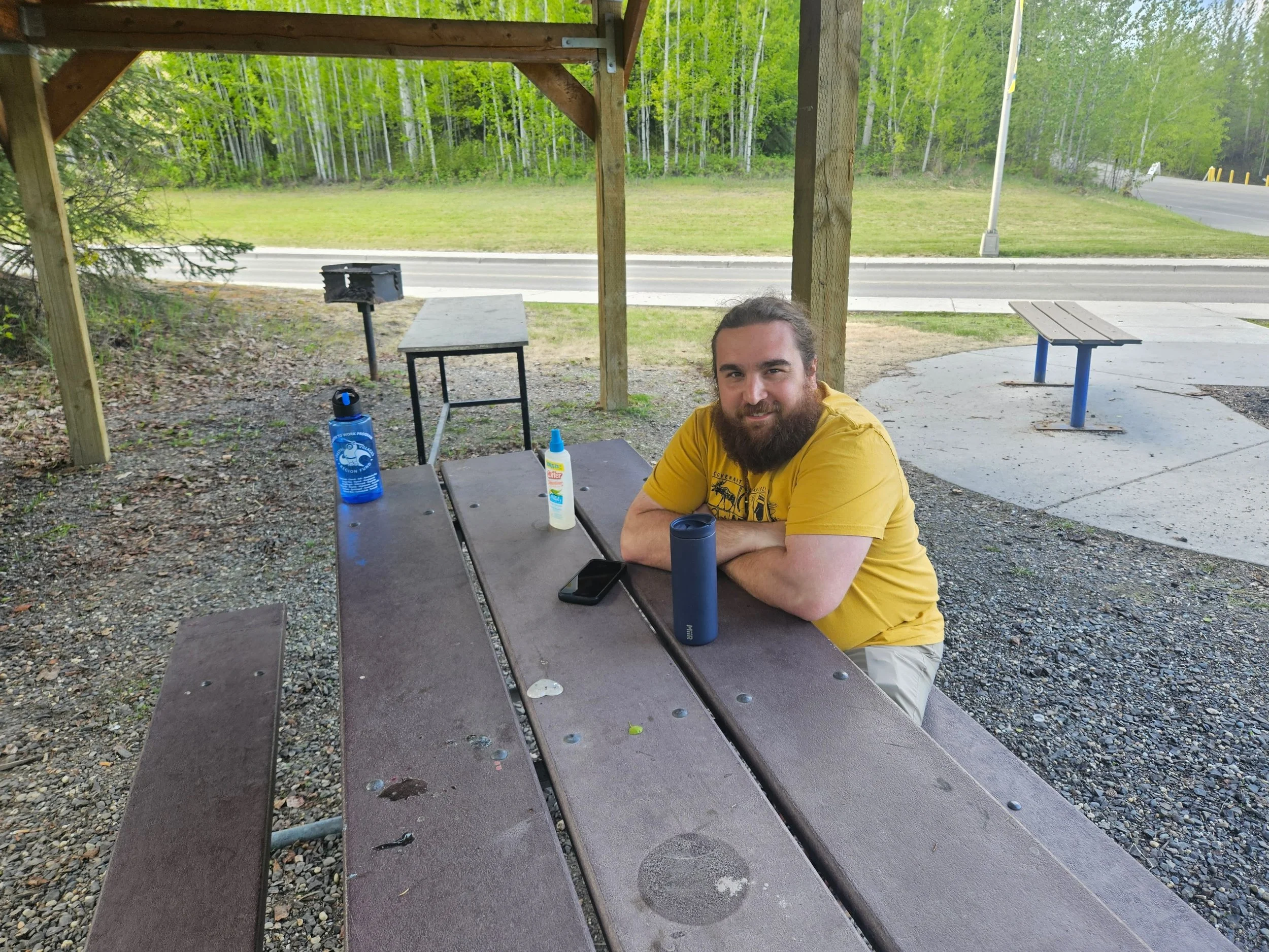
Jake Taylor, co-leader of the University of Alaska Fairbanks chapter of InterVarsity, poses for a photo before Bible study May 26, 2026.
Jake Taylor, co-leader of the University of Alaska Fairbanks chapter of InterVarsity, spoke with me on a Tuesday evening before Bible study. Taylor, a nondenominational Christian, moved with his wife and kids from Florida to Alaska a few years ago to accept their new jobs with InterVarsity.
“Grief is hard,” said Taylor. “I feel like our go-to is to do [it] alone and to do [it] without processing with the help of others or with the help of, who I would say is the most important, Jesus.”
Taylor said that it is crucial to process grief and give oneself space while grieving.
“Some people feel in our society that it is a weakness to show grief and to show hurt, but it is really okay,” said Taylor.
He brought up the shortest verse in the Bible, John 11:35: “Jesus wept.”
“Jesus showed grief over the things that broke his heart repeatedly,” he said.
Taylor said that it is also important not to grieve alone, as he believes doing so imprisons grief and hurt.
“It’s important to do it together and to do it with others, whether it’s a church body or friends or a mentor or a family member,” he said.
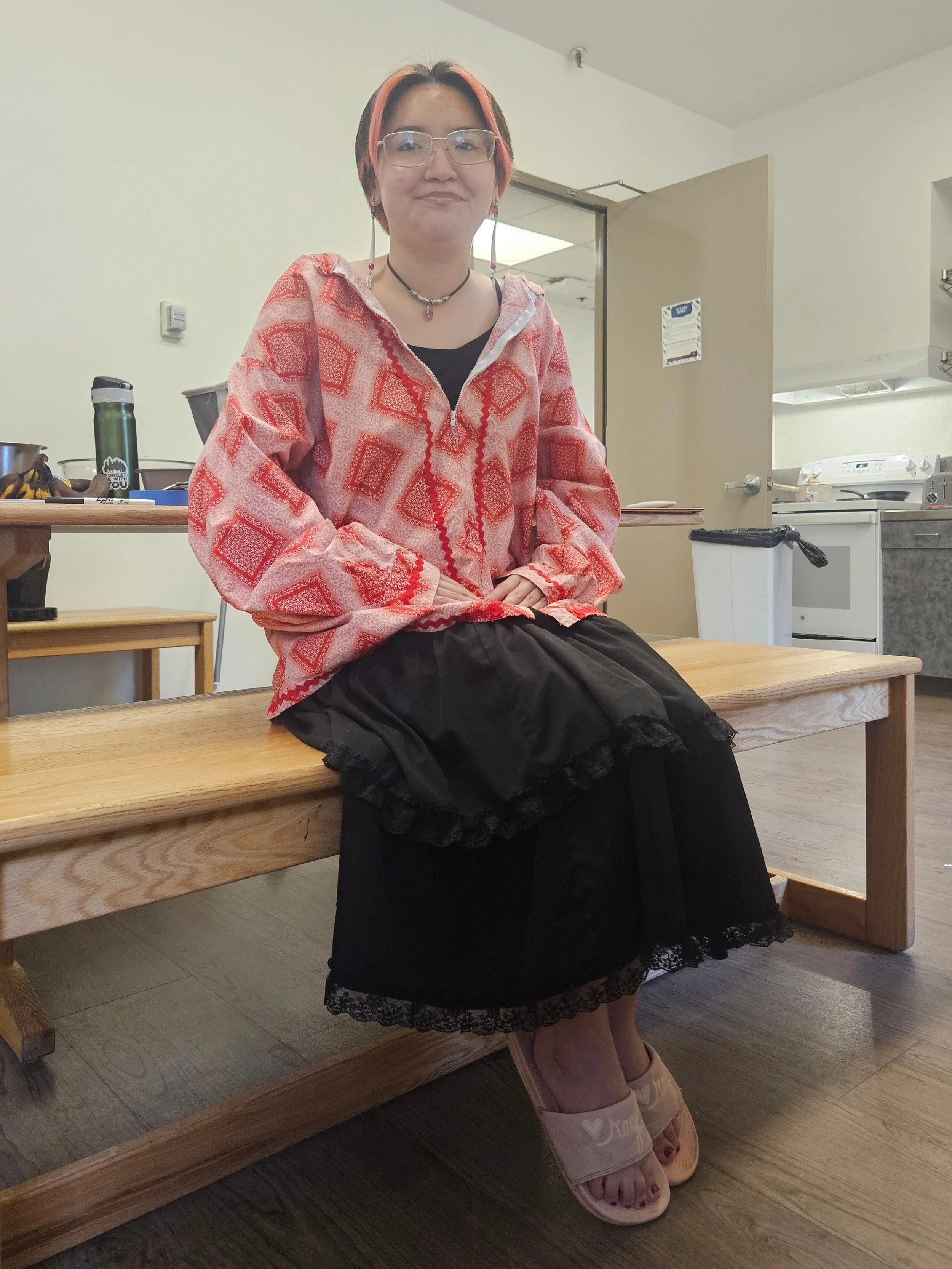
Tatiana Williams, whose Indigenous name is Gisoon, talks about grief in the Skarland kitchen June 13, 2026.
Tatiana Williams, a student who identifies as Koyukon Athabascan and whose Indigenous name is Gisoon, also spoke about the importance of grieving with others.
“Grief is like losing a family member. We usually bury the person where they said they wanted to be buried. We all come around as a community to make their caskets, their little fence of their grave,” she said.
In her village, people bring many flowers, cook, give the deceased’s things back to the community or to certain family members and give away their land if it was in the deceased’s will. The graves of the deceased are only visited on memorial days or if someone else passes, as a way to show respect and not disturb them.
Williams said that grief is a natural thing and that it shouldn’t be held on to for too long.
“We only have like 200 people [in the village], so grief hits us hard,” she said. “We just gotta let it go at a natural point and move on with our lives.”
Payton Winfield, a convert to Islam, also said that grief hit her hard.
Winfield’s father is a veterinarian; she grew up with animals constantly dying around her or getting sick. She got used to it.
“It seems like my way of life, as bad as it sounds. The only weird thing is that I don’t have that routine of taking them out[side] or feeding them,” she said.
Winfield said that the passing of humans felt different to her after attending her grandmother’s funeral in fifth grade.
“That was a very jarring and different experience,” said Winfield. “I just started bawling; it finally had hit me.”
She said that her grandparents will never see her graduate, get married or be there for any big life moments.
“I shouldn’t have regret that they didn’t get to experience these other big things with me,” said Winfield.
She said that feeling emotions is normal.
“When I’m reminded of them again, I force myself to feel those emotions. It’s completely okay and justified to let it all out; to just cry and have those moments,” she said.
Winfield also said that moving on from emotions is healthy.
“I can’t just let myself feel this underlying wave of anxiety of sorrow for so long. I’d rather just feel it at that moment and completely devote myself to grieving,” she said.
For Lukariah Archbald-Manning, a student who identifies themselves as transmale and atheist, grief can also come from the loss of a relationship.
Archbald-Manning said that they were in a relationship from 2021 to 2025 and had known their girlfriend for three years prior to dating as well. They thought about what they could have done to help her, listened to old playlists she made and got into an anime she wanted to watch.
They stayed active through their grief, whether it was mentally with writing about fantasy characters and worlds or physically with going on late-night walks with friends.
When people told Archbald-Manning that they would hurt more the more they thought about the breakup, they disagreed.
“In contrast, thinking about it helped me understand my emotions and how I felt,” they wrote.
Jocelyn Cypert, an agnostic student, agreed that suppressing painful emotions only delays healing.
“It’s important to me to acknowledge and express my emotions as they come, so that they do not manifest in harmful ways later on,” Cypert wrote.
She mentioned honoring the parts of the deceased that are still around. She wears a necklace with flowers in it that her late grandmother gave her, thinks of her as she bakes, shares stories and remembers her legacy.
“I aspire to be like her, and will always remember her generosity and strength,” she wrote. “These memories also act as inspiration for my writing.”
After conducting many interviews, I began to heal from my own grief. Across individual lives, religions and different experiences, the students and faculty I interviewed repeatedly emphasized the importance of processing grief.
“There is no right or wrong feeling to have,” said Dunn.